
Last updated October 15, 2026
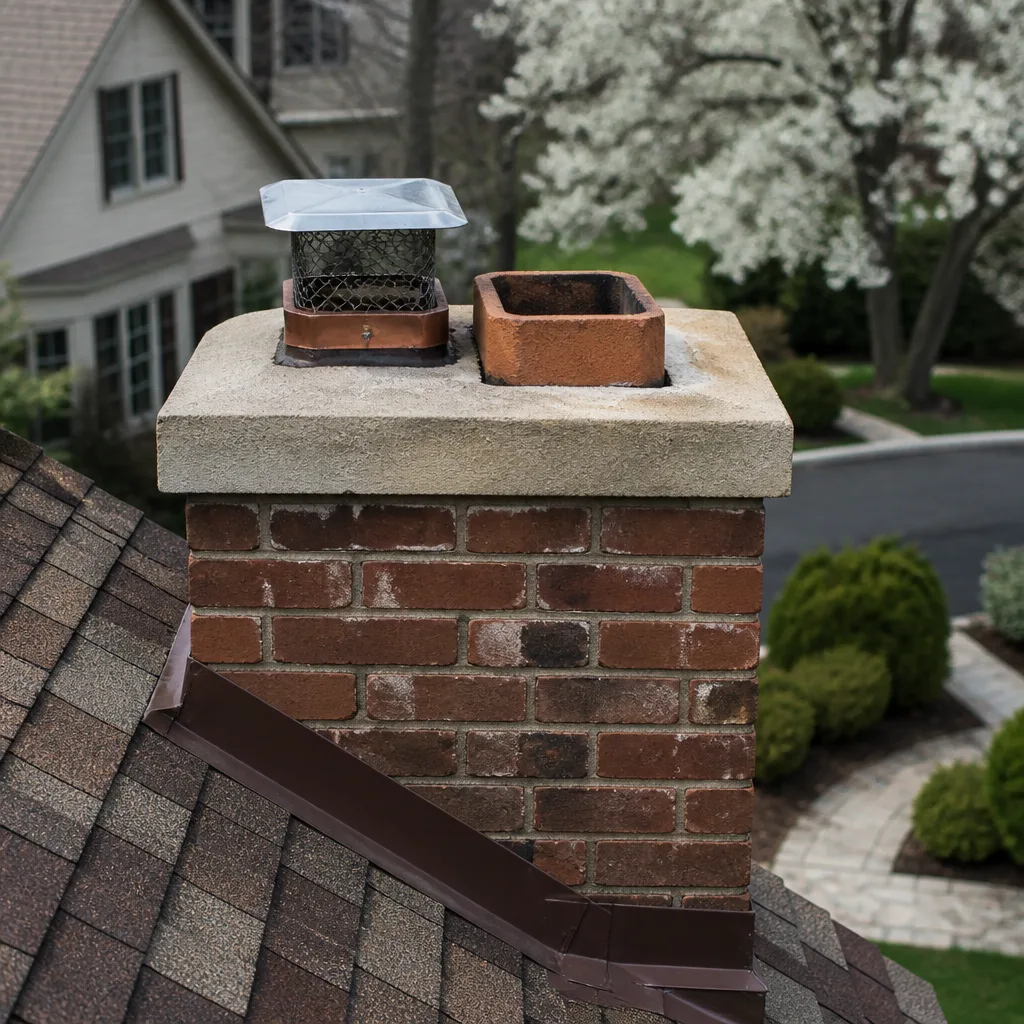 Sweep & inspection
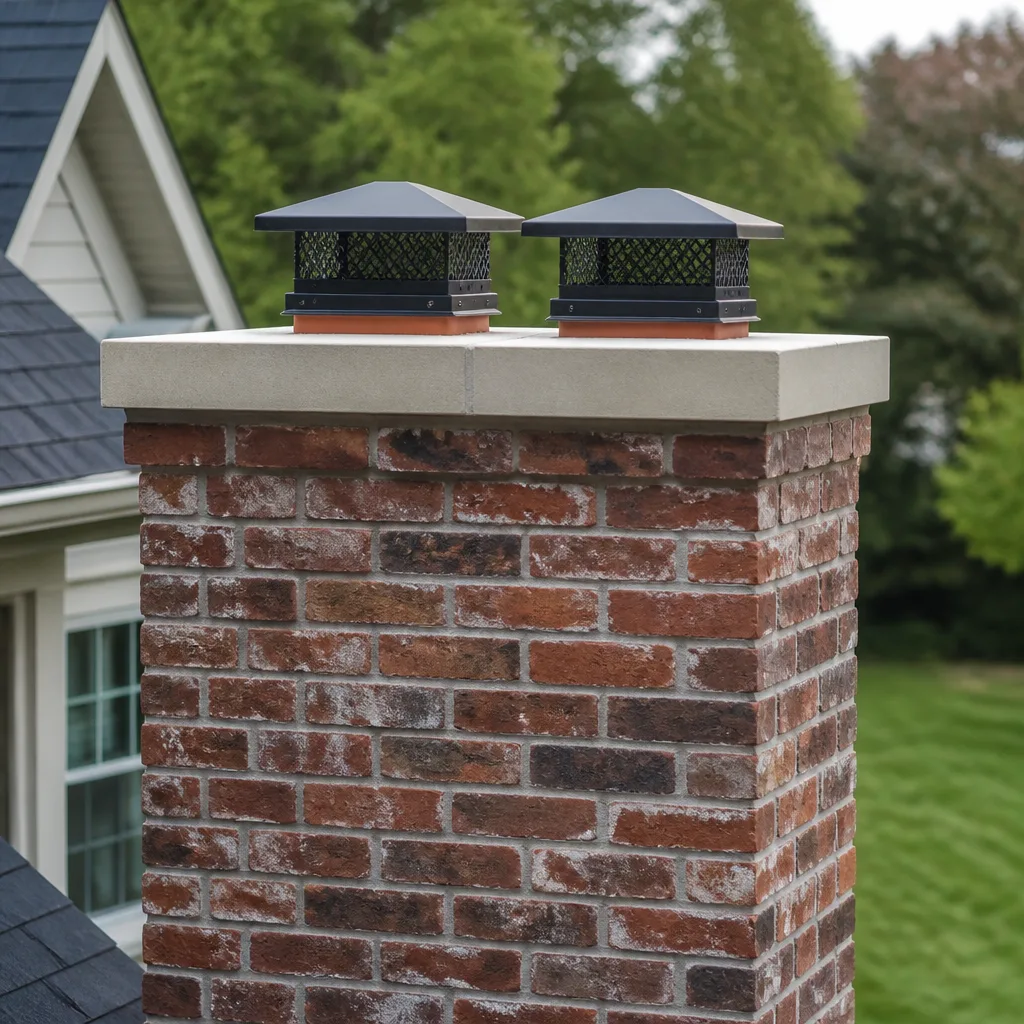 Caps & crowns
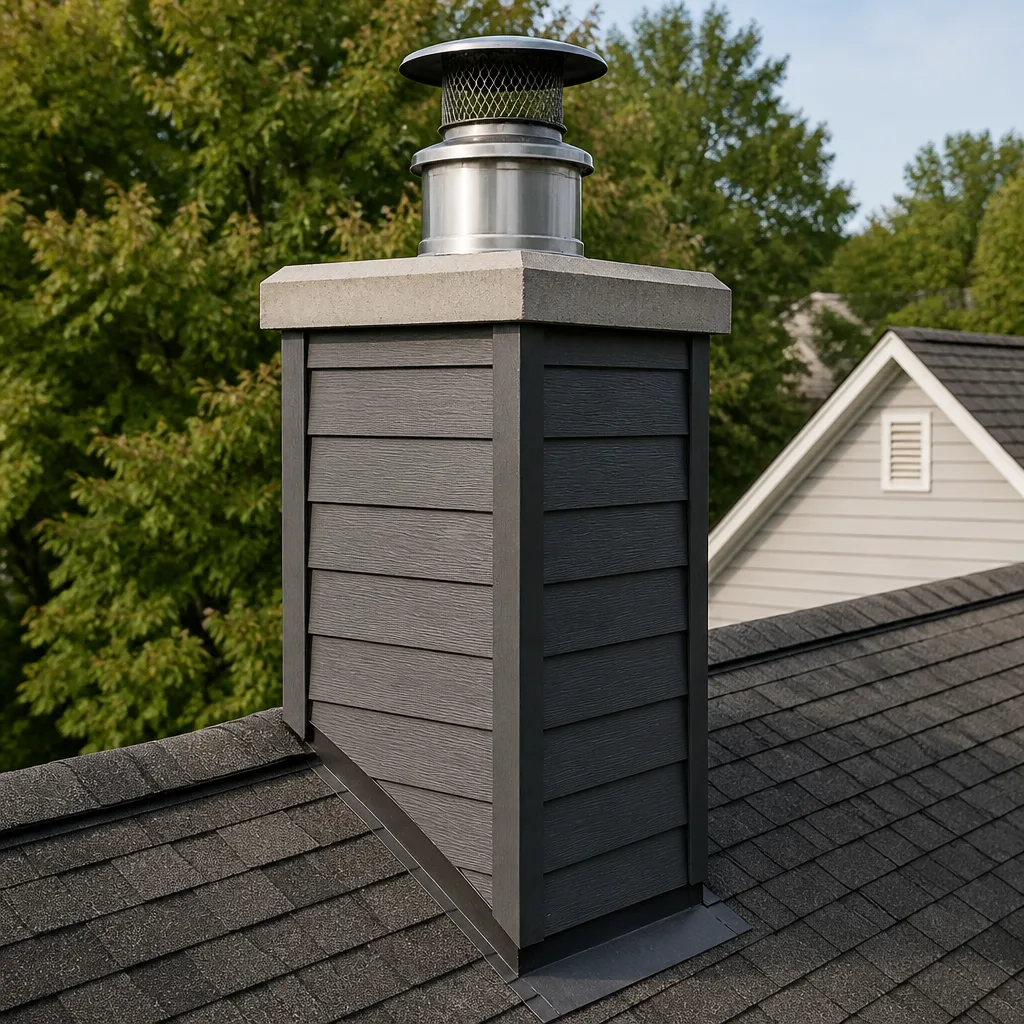 Flue relining
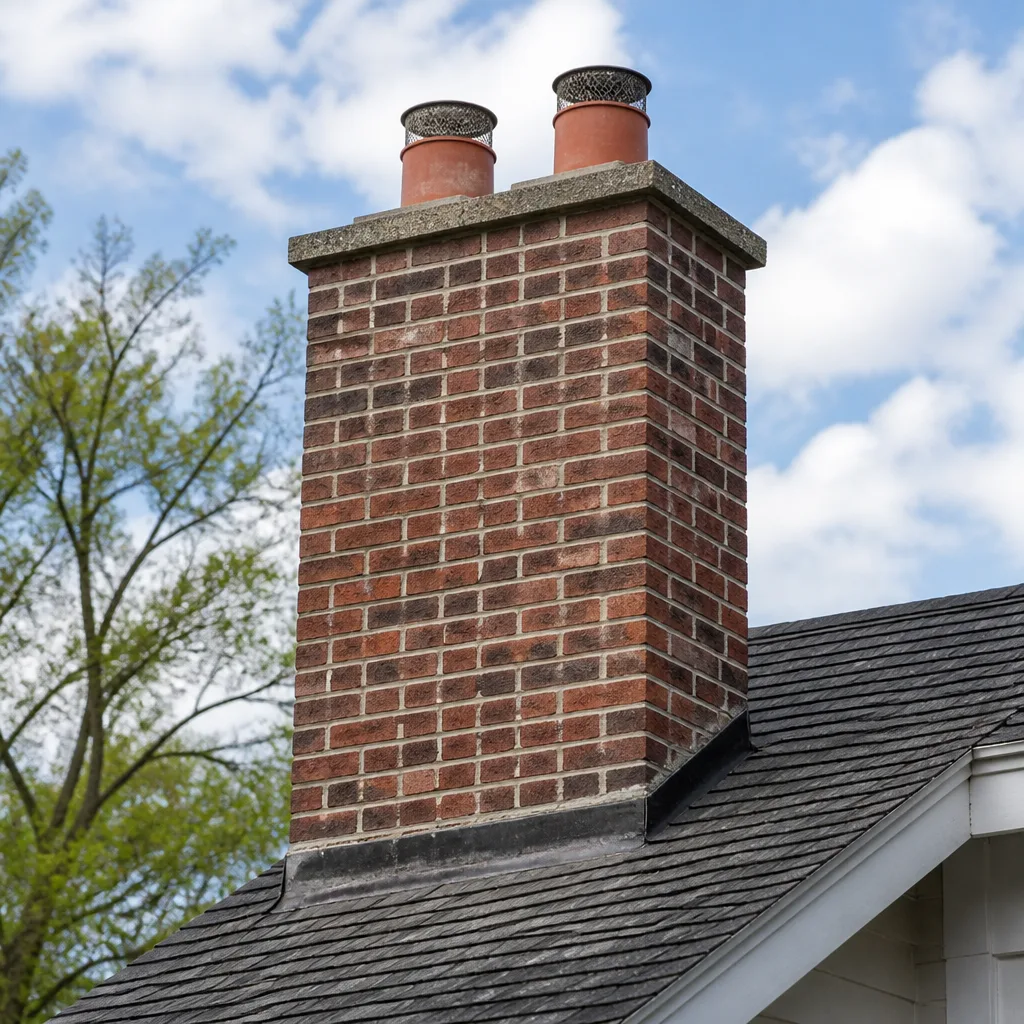 Masonry repair
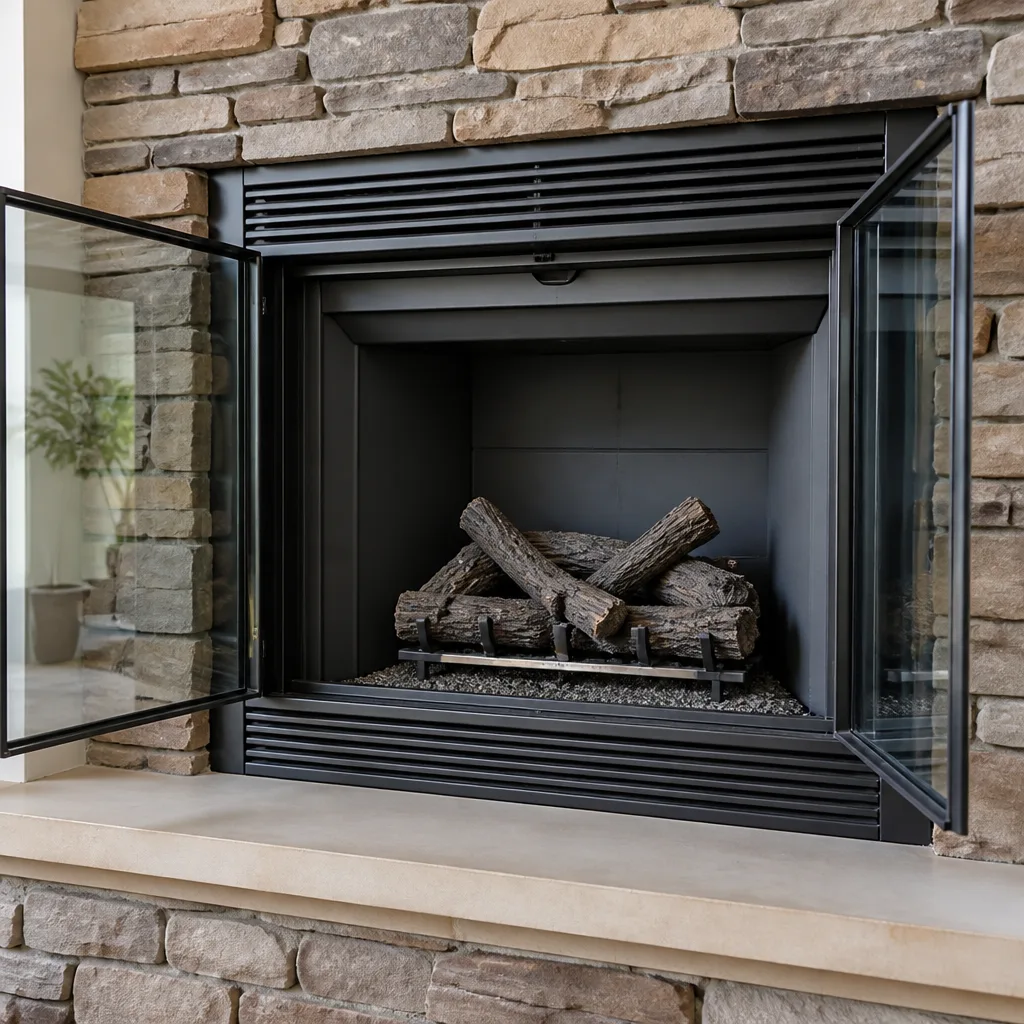 Gas fireplace service
Level 1 sweep and inspection to the NFPA 211 annual standard - flue, crown, cap, and flashing checked and photographed
Chimney sweep logs do not sweep chimneys. They loosen some creosote - which then falls where a brush and vacuum still have to collect it.
Chimney Cleaning Cost Breakdown: The Fort Worth Homeowner’s Reference for 2026
When three Fort Worth chimney companies quote $99, $199, and $349 for a “standard chimney sweep,” none of them are wrong. They’re describing three entirely different scopes of work using the same four words. One company sends a guy with a shop vac and a brush for 45 minutes. Another spends two hours laying drop cloths, running a rotary whip, vacuuming the firebox, and photographing the flue. A third includes all of that plus a camera scan and a written condition report. This guide exists because no regulatory body defines what a chimney cleaning in Fort Worth actually includes, so the sticker price means almost nothing until you know what’s behind it. For more context, see our Chimney Cleaning Permits, Codes & Inspections in TX: What You Need to Know. By the end, you’ll know exactly what each price tier buys, what Fort Worth homes actually pay, and how to read a quote so you’re comparing the same job, not the same words.
Styles & brands we work with
Quick Answer
A professional chimney cleaning in Fort Worth costs between $129 and $350 for a standard single-flue wood-burning fireplace in 2026, with the typical home paying $178 to $229 for a proper sweep with full clean-up included. Gas log fireplaces run $99 to $175, inserts run $200 to $450 depending on liner access, and double-story exterior chimneys add $75 to $150 for roof access and extra equipment. The spread in pricing comes down to what “cleaning” includes: firebox vacuuming, cap inspection, creosote removal method, and whether the technician documents the flue condition with photos before and after.
Table of Contents
- What “Chimney Cleaning” Actually Means in Fort Worth
- The Line-Item Breakdown: What Every Price Tier Includes
- 2026 Fort Worth Price Ranges by Chimney Type
- How to Read a Chimney Quote: Spotting the $79 Bait
- What a Written Price Guarantee Looks Like in Practice
- The Real Cost of Skipping a Cleaning: Three Fort Worth Failures
- How Often Should a Fort Worth Chimney Be Cleaned?
- Common Mistakes to Avoid
- When to Call a Professional
- Frequently Asked Questions
- The Bottom Line
What “Chimney Cleaning” Actually Means in Fort Worth
When we say chimney sweep in Fort Worth, we mean the full removal of creosote and soot from the flue interior, the smoke chamber, the damper assembly, and the firebox. That’s four distinct areas, and some companies only do two of them. The flue is the vertical passage that carries smoke up and out. The smoke chamber sits above the damper and funnels smoke into the flue. The damper is the metal plate that opens and closes air flow. The firebox is the firebrick-lined box where the wood actually burns. A thorough cleaning addresses all four because creosote accumulates in each one differently, and a clean flue with a sooty smoke chamber still restricts draft and leaves fuel behind.
Creosote is the reason cleaning matters. Every wood fire produces it as unburned wood particles condense on the cooler flue walls. It builds in three stages: stage one is flaky and brushable, stage two is tar-like and crusty, stage three is hard and glazed. Fort Worth homes that burn oak and pecan, the two most common local firewoods, produce moderate creosote loads, but our wild temperature swings across winter months create more condensation cycles than you’d see in a steadier climate. That means chimneys here can accumulate stage two creosote faster than a homeowner might expect.
Here’s what a scoped cleaning means in terms any homeowner can verify. A technician should:
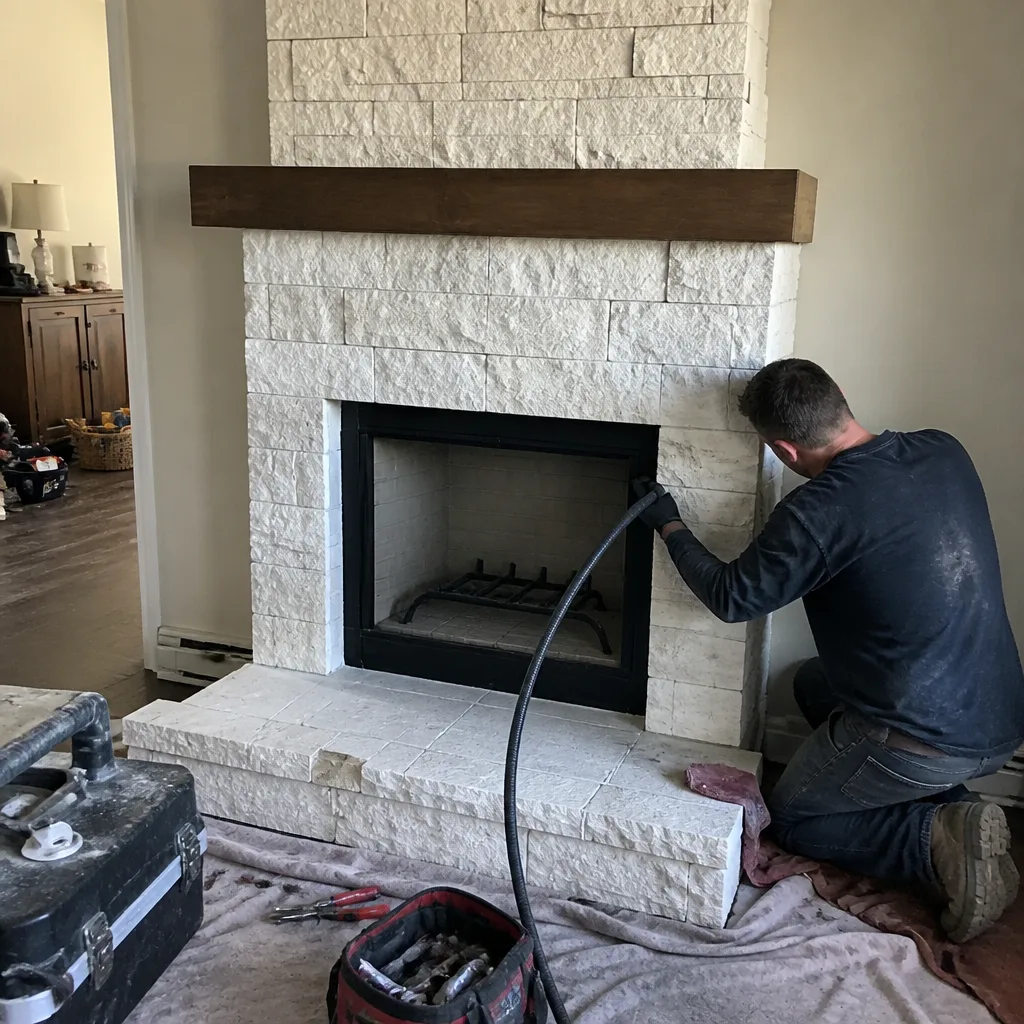
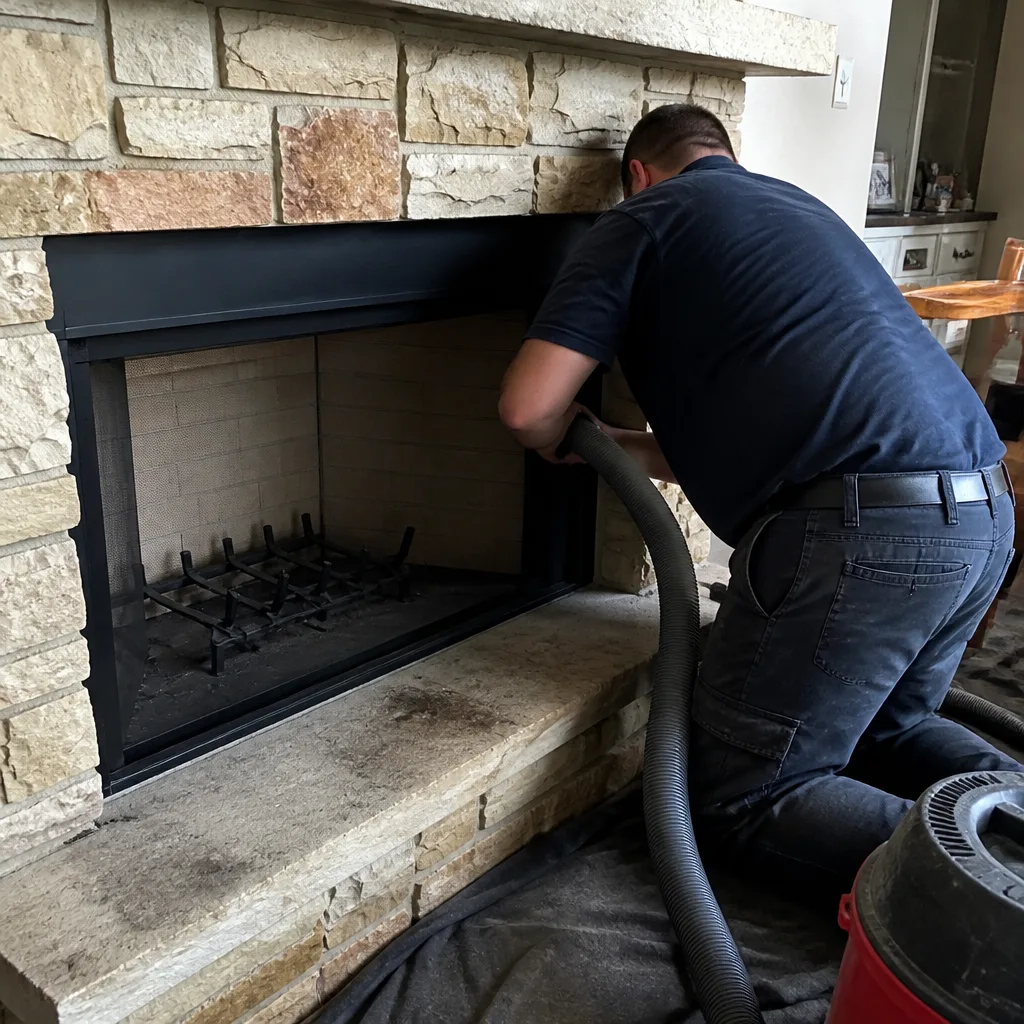
- Lay drop cloths and shoe covers before any tool enters the house. You should see floor protection in place before the ladder comes off the truck.
- Brush or whip the full flue length from the roof or from below through the firebox, using a correctly sized brush for your flue dimensions.
- Vacuum the firebox, smoke shelf, and damper area with a HEPA-filtered vacuum, not a household shop vac that can blow fine soot into the room.
- Visually inspect the flue, cap, crown, and flashing for cracks, gaps, or missing mortar.
- Document the clean-up. You should be able to see a photo of your clean firebox and protected floors before the crew packs up.
If your quote doesn’t explicitly include all five, the price is lower because the scope is smaller. That’s not dishonest; it’s just not comparable. The problem arises when companies with smaller scopes use the same language as companies with fuller scopes, and Fort Worth homeowners have no way to tell the difference without a Chimney Sweep Maintenance Checklist for Fort Worth Homeowners like the one above.
The Line-Item Breakdown: What Every Price Tier Includes
North Texas chimney companies don’t publish itemized pricing the way an auto shop lists parts and labor, but every quote maps to an underlying scope. Here’s what the tiers actually represent in Fort Worth’s 2026 market, based on our own pricing and what we see from competitors when homeowners bring us quotes to compare.
The $89 – $129 Tier: Brush and Go
This is a single technician, a wire brush, and a shop vac. Usually 45 minutes to an hour. The flue gets brushed, the worst of the firebox debris gets vacuumed, and that’s the end. No drop cloths, no smoke chamber cleaning, no damper area, no roof inspection beyond what the tech sees while setting up. The technician may not even bring camera equipment. For a gas log fireplace that sees almost no soot, this can be adequate. For a wood-burning fireplace in a 1960s Arlington Heights bungalow that burns three cords a season, it leaves stage two creosote in the smoke chamber and usually misses the damper entirely. The $89 price is real; it’s just a different job.
The $149 – $229 Tier: Full-Scope Sweep
This is what most Fort Worth families actually need. It includes everything in the checklist above: floor protection, full flue brush or rotary whip, firebox and smoke chamber vacuuming, damper cleaning, visual inspection of the cap and crown, and a documented clean-up. Two technicians or one very experienced tech doing a two-hour job. This is the tier where you start seeing shoe covers, drop cloths, and a company that can answer “did you clean the smoke chamber?” with a straight yes. At Kindling, this tier is anchored by the Cedarwell Care Promise: shoe covers and drop cloths down on arrival, written price before work begins, and a photo of the clean-up before the crew leaves, every time, no exceptions.
The $250 – $450 Tier: Sweep Plus Inspection
At this tier, the cleaning is comprehensive and the company adds a video camera scan of the flue interior. You receive digital photos showing the flue walls from top to bottom, the condition of the flue tiles or liner, and any cracks, gaps, or blockages. This matters because a brush removes creosote but doesn’t reveal a cracked clay tile until you put a camera in the flue. For homes with older masonry chimneys, which describes a large portion of Fort Worth housing stock built before 1980, this tier is the difference between catching a $600 crack repair early or discovering a $3,200 liner failure later. The price includes the technician’s time, the camera equipment, and the written report. Some Fort Worth companies call this a Level 2 inspection; others call it a “chimney scan.” It’s the same service: a documented look at what’s actually inside the flue.
Add-Ons That Change the Price
- Firebox vacuuming: $25 – $50 if itemized separately. Sometimes built into the base price, sometimes not. Ask.
- Cap inspection and minor cap replacement: $40 – $85 for the inspection report line, $125 – $300 for a new cap if yours is rusted through or missing.
- Camera scan: $75 – $150 as a standalone add-on if not bundled into a higher tier.
- Dryer vent combo: $50 – $90 extra. Companies bundle this because the truck is already at the house and the tools overlap. It’s genuinely useful if your dryer vent hasn’t been cleaned in two years or more.
- Double-story exterior access: $75 – $150. Roof access on a two-story Fort Worth home takes longer, requires different ladder setups, and often means working around the steep pitches common in neighborhoods like Wedgwood and Ridglea Hills.
2026 Fort Worth Price Ranges by Chimney Type
Fort Worth pricing varies more by chimney type than most homeowners realize. A gas log fireplace in a Keller new-build is a different job than a wood-burning open hearth in a Fairmount Craftsman, and the price should reflect that difference. Here’s what 2026 pricing looks like across the Fort Worth market, including Tarrant County generally.
| Chimney Type | Typical Range | What’s Usually Included |
|---|---|---|
| Single-flue wood burning (one story) | $129 – $249 | Full brush/whip, firebox and smoke chamber vacuum, damper clean, visual cap check, floor protection, clean-up documentation |
| Single-flue wood burning (double story, exterior) | $219 – $349 | Everything above plus roof access, taller ladder setup, extended flue run |
| Gas log fireplace (vented) | $99 – $175 | Soot removal from logs and firebox, damper check, basic flue brush if vented, no creosote removal needed for most gas setups |
| Gas log fireplace (vent-free) | $89 – $150 | Firebox clean, log dusting, burner check; no flue to brush |
| Wood-burning insert | $200 – $400 | Liner access through the insert, full liner brush, firebox clean, blower check where present |
| Pellet stove vent | $150 – $250 | Vent pipe brush, ash removal, auger and burn pot check |
One thing we tell every Fort Worth homeowner: if your house sits on a crawl space or pier-and-beam foundation, which is common in the older central neighborhoods like Ryan Place and Mistletoe Heights, the chimney may have settled slightly, which affects the flue liner alignment. That doesn’t change the sweep price, but it may show up on a camera scan as a minor offset that’s worth tracking year over year. A good technician will note it without trying to sell you a liner tomorrow.
How to Read a Chimney Quote: Spotting the $79 Bait
The most common pricing strategy in Fort Worth chimney cleaning is the low entry price with add-ons once the crew is on-site. You’ve probably seen the mailers: “$79 chimney sweep, any home, any size.” Here’s how that actually works, step by step.
- The booking price covers labor only. The $79 or $99 gets a technician to your roof. It covers brushing the flue with a standard wire brush. It does not cover floor protection, smoke chamber cleaning, firebox vacuuming, damper maintenance, or a cap check. Each of those is a separate line item discovered during the appointment.
- The on-site “inspection” finds items the homeowner can’t verify. A technician may say the cap is rusted, the damper needs adjustment, or the flue has “excessive creosote” requiring a chemical treatment. Some of these findings are legitimate. Some are universal: every chimney at $79 has “excessive creosote.”
- The upsell is the real business. The $79 visit becomes a $300 to $600 invoice once the add-ons come out, and the homeowner is standing in the living room facing a crew that’s already set up. It’s not high-pressure in the used-car sense; it’s just that the advertised price was never the real price.
Here’s how to spot it before booking. First, ask: “Does this price include floor protection, firebox vacuuming, and smoke chamber cleaning?” If the answer is anything but a clear yes, you’re looking at a tier-one price. Second, ask: “What does the visual inspection include, and do I get photos?” If the inspection is free but the report costs extra, that’s the business model. Third, ask: “Is the price you’re quoting me now the full written price I’ll see when you arrive?” A company that hesitates, hedges, or says “it depends on what we find” without explaining exactly what variables change and by how much is running the entry-price model.
At Kindling, we quote a written price before any work starts. That’s the Cedarwell Care Promise, and it means the number you approve is the number you pay unless you add a service yourself during the visit. No on-site discovery process, no surprise line items.
What a Written Price Guarantee Looks Like in Practice
A written price guarantee isn’t a sentence on a website. It’s a sequence of things that happen before, during, and after the visit. Here’s what to look for, and what to ask for if the company doesn’t offer it.
- A defined scope on the quote. The written price should say exactly what’s included: full flue brush, firebox vacuuming, smoke chamber clean, damper check, cap inspection, floor protection, clean-up documentation. If those items aren’t listed, they’re not included.
- A price that matches the scope. If the scope includes all of the above and the price is $89, that’s a red flag, not a deal. A two-hour job with two technicians and equipment costs what it costs. Fort Worth labor rates for skilled trades run $75 to $150 per hour per tech. You can do that math yourself.
- Clear language about variables. Legitimate variables exist: roof pitch, double-story access, liner access through an insert, the degree of creosote buildup if the chimney hasn’t been cleaned in five-plus years. A written price guarantee names those variables and gives a range for each one upfront, before the technician arrives.
- A no-pressure add-on policy. If the technician finds something during the visit, you should get a photo, an explanation, and time to decide. You should never feel like the crew is waiting for an answer before they’ll finish the original job.
- A promise that survives the visit. The 365-Day Done Right Promise is our version: if it’s not done right, we make it right. No fine print. That promise matters because some problems, like a smoky fireplace after the first cold front, don’t show up until weeks later.
When you’re comparing quotes from multiple Fort Worth companies, put them side by side line by line, not price to price. A $149 quote with five listed inclusions beats a $99 quote with two listed inclusions every time, because the $99 job will find its way back to $149 and then some. The question isn’t what the flyer says; it’s what the written scope covers.
The Real Cost of Skipping a Cleaning: Three Fort Worth Failures
Skipping a $180 chimney cleaning doesn’t save $180. It defers maintenance into more expensive problems, and Fort Worth’s climate makes the deferral more expensive here than in drier regions. Let’s look at the three most common deferred-maintenance failures we see across Tarrant County.
1. Cracked Flue Tile: $600 – $1,200 Repair
Stage two and stage three creosote expand with heat and contract with cold. Fort Worth’s winter temperature swings, where a 70-degree afternoon becomes a 31-degree night, create precisely the thermal cycling that stresses flue tiles. A chimney that goes five years without cleaning builds enough creosote to hold heat differently than the surrounding tile, and that differential stress cracks clay flue liners. The crack itself is repairable with HeatShield or a similar ceramic sealant for $600 to $1,200. Left alone, that crack becomes a liner replacement at $2,800 to $6,000 for a standard single-flue masonry chimney. The $180 sweep would have caught the creosote buildup before the stress cracks formed.
2. Rusted-Through Damper Assembly: $250 – $700
The damper sits directly above the firebox and takes the brunt of every fire’s heat and every off-season’s humidity. When creosote and soot accumulate around the damper pivot points, the metal corrodes faster. A damper that won’t fully close means heated air escapes up the chimney all winter, which quietly raises your gas or electric bill by $15 to $40 per month depending on the home’s size. The replacement is straightforward, but catching the corrosion early, during a cleaning that includes damper inspection, is cheaper than replacing a seized assembly. We’ve replaced Famco and Copperfield damper assemblies across Fort Worth, and the pattern is always the same: the damper was never inspected during previous cleanings because the previous company’s scope didn’t include the damper area.
3. Water Damage at the Crown: $400 – $1,500
The crown is the concrete cap at the top of the chimney that sheds water away from the flue. A cleaning that doesn’t include a roof-side inspection misses cracking crowns until water has already penetrated the masonry. In Fort Worth, where spring brings heavy rain and hail, a cracked crown lets water into the chimney structure. That water freezes during winter cold snaps, expands by about 9%, and widens the cracks. The first symptom is usually a musty smell near the fireplace or water staining on the ceiling adjacent to the chimney chase. Crown repair runs $400 to $1,500 depending on severity. If caught during a routine sweep with a cap and crown check, it’s a $300 reseal job. Every single one of these failures is cheaper to prevent than to fix, by a factor of roughly three to ten.
How Often Should a Fort Worth Chimney Be Cleaned?
The National Fire Protection Association standard is that chimneys should be inspected at least once a year and cleaned when creosote buildup reaches 1/8 inch. That’s a threshold, not a calendar. In practice, most Fort Worth families who burn wood two to three times per week through the winter season need one cleaning per year, ideally in early fall before burning season kicks in. Families who burn occasionally, less than once a week, can often go two years between cleanings.
Several local factors shift that answer. Burning unseasoned wood, which is common here because oak takes a full year to dry and many people buy “seasoned” wood that’s only been split for six months, produces measurably more creosote. Building smaller, hotter fires helps burn off some creosote as it forms. Burning pine from East Texas, which is resin-heavy, accelerates buildup. And homes in Fort Worth’s older neighborhoods with original masonry chimneys often have flues that draw more slowly than modern builds, which means more creosote accumulation per burn.
The simplest rule is this: if you can scratch 1/8 inch of black, crusty, or shiny buildup off the inside of your flue, it’s time. If you can’t reach the flue or don’t want to, book a chimney inspection in Fort Worth in late summer or early fall, when the schedule is open and the burning season hasn’t started competing for technician time.
Common Mistakes to Avoid
- Booking the lowest advertised price without reading the scope. A $79 sweep that doesn’t include firebox vacuuming isn’t cheaper; it’s a smaller job that still leaves your home dirty. Compare the line items, not the headline number.
- Assuming gas logs never need service. Vent-free gas logs still accumulate dust, pet hair, and residue on the burner and logs. Vented gas logs can develop soot on the damper and in the firebox. A $99 annual cleaning is still worth doing.
- Skipping the camera scan on an older home. If your Fort Worth house was built before 1980 and has the original masonry chimney, the flue tiles are old enough to vote. A camera scan during one cleaning catches liner damage that a brush can’t see. It costs less than a dinner out and usually saves thousands.
- Burning construction lumber or treated wood. Plywood, 2x4s, and pressure-treated lumber produce creosote at dramatically higher rates and can release chemicals you don’t want in the house. Just because it burns doesn’t mean it belongs in your fireplace.
- Waiting until November to book. Fort Worth chimney companies hit peak demand in October and November. Booking in August or September gets you the same service with more scheduling flexibility and often a better price. Fall is when everyone remembers the fireplace exists.
- Not asking about floor protection before booking. This sounds small, but a chimney cleaning generates fine soot that settles into carpet and grout. If the company doesn’t include drop cloths and shoe covers in writing, plan to vacuum and mop afterward. Or book a company that includes it.
- Ignoring the dryer vent. If your laundry room is adjacent to the fireplace or shares an exterior wall, the dryer vent often gets the same neglect as the chimney. Combining the two saves a service call and keeps lint buildup from becoming a fire hazard in its own right.
When to Call a Professional
Chimney cleaning is not a DIY job, and not because it’s complicated. It’s because the access is dangerous. Working on a Fort Worth roof without proper fall protection, especially on a two-story exterior chimney with a steep pitch, is genuinely risky. The tools also matter: a standard shop vac isn’t HEPA-filtered and will blow fine soot into your living room, which defeats the purpose. And without a camera, you can’t see what the brush missed. Call a professional when you can see creosote buildup in the firebox, when smoke from past seasons has left black deposits on the damper, when you notice a weak draft or smoke smells in the house, or when it’s been more than two years since the last chimney sweep in Fort Worth. Kindling Chimney Fort Worth offers free estimates in Fort Worth: call (682) 382-9934 and a live person answers, any hour, every day.
Frequently Asked Questions
A chimney sweep in Fort Worth costs $129 to $350 for a standard single-flue wood-burning fireplace, with most homes paying $178 to $229 for a full-scope cleaning that includes flue brushing, firebox vacuuming, smoke chamber cleaning, and floor protection. Gas log fireplaces run lower, typically $99 to $175. For an exact number on your specific chimney, call (682) 382-9934 for a free estimate.
A professional chimney cleaning should include five things: full flue brushing or rotary whip, firebox vacuuming with HEPA filtration, smoke chamber and damper cleaning, a visual inspection of the cap and crown, and floor protection with documented clean-up. If your quote doesn’t list those items, the lower price reflects a smaller job, not a better deal.
You need a new liner only when the existing one has cracks, gaps, or deterioration that a camera scan can document, or when you’re converting to a new appliance that requires a different liner size or material. A reputable company will show you the photos before recommending liner work, and will tell you plainly when the existing liner can serve for years more. Never accept a liner replacement recommendation without seeing camera evidence.
Most chimney cleanings take 45 minutes to two hours. A tier-one brush-and-go job is under an hour. A full-scope sweep with smoke chamber cleaning and documented clean-up runs 90 minutes to two hours. A sweep with a camera scan and written condition report can run two to three hours total. Longer is not better, but if a company quotes 20 minutes, no floor protection or smoke chamber work is happening.
Skipping one year is usually not catastrophic, provided the chimney was clean before and you haven’t burned heavily through two seasons in a row. What you’re risking is the compounding effect: creosote from season one creates a rough surface that catches more from season two, and Fort Worth’s humidity and temperature swings accelerate the transition from brushable flake to hard glaze. Two skipped years with regular burning often means a more expensive cleaning and a real chance of damage that a camera scan would have caught.
The coupon is legitimate; the scope is the question. A $79 Fort Worth chimney sweep is usually a one-person, one-brush, one-hour job with no floor protection, no firebox vacuuming, and no smoke chamber work. If you want the full job, the final price will be higher. The coupon works as advertised, which is exactly the problem: “as advertised” is a smaller job than what most people reasonably expect “chimney sweep” to mean.
A chimney sweep shouldn’t damage anything, but sloppy work can leave soot in the carpet, scuffs on the floor, or debris in the firebox. That’s why floor protection matters and why Kindling makes the Cedarwell Care Promise part of every visit: shoe covers and drop cloths on arrival, nothing moved without asking, and a photo of the clean-up before the crew leaves, every time.
Kindling Chimney Fort Worth serves the entire Fort Worth area, including Arlington Heights, Fairmount, Ryan Place, Mistletoe Heights, Wedgwood, Ridglea Hills, TCU/Westcliff, Keller, Saginaw, Benbrook, and surrounding Tarrant County communities. Explore our more guides & resources for additional homeowner tips. If you’re inside the Fort Worth metro, chances are we’ve swept a chimney on your street.
The Bottom Line
A chimney cleaning in Fort Worth costs $129 to $350 for the job most homeowners actually need, and the difference between a $99 quote and a $229 quote is the scope, not the quality. The $99 job brushes the flue. The $229 job brushes the flue, cleans the smoke chamber and damper, vacuums the firebox, puts drop cloths down, checks the cap and crown, and documents the clean-up. Comparing those two numbers without comparing the work behind them is how Fort Worth families end up disappointed. Get a written price with a defined scope, ask for camera evidence if anything needs repair, and book in late summer before the fall rush. For a straight quote on your chimney, call (682) 382-9934 and talk to a live person, any time.
Written by Danny Cortes, Owner at Kindling Chimney Fort Worth, serving Fort Worth since 2003.
See the difference
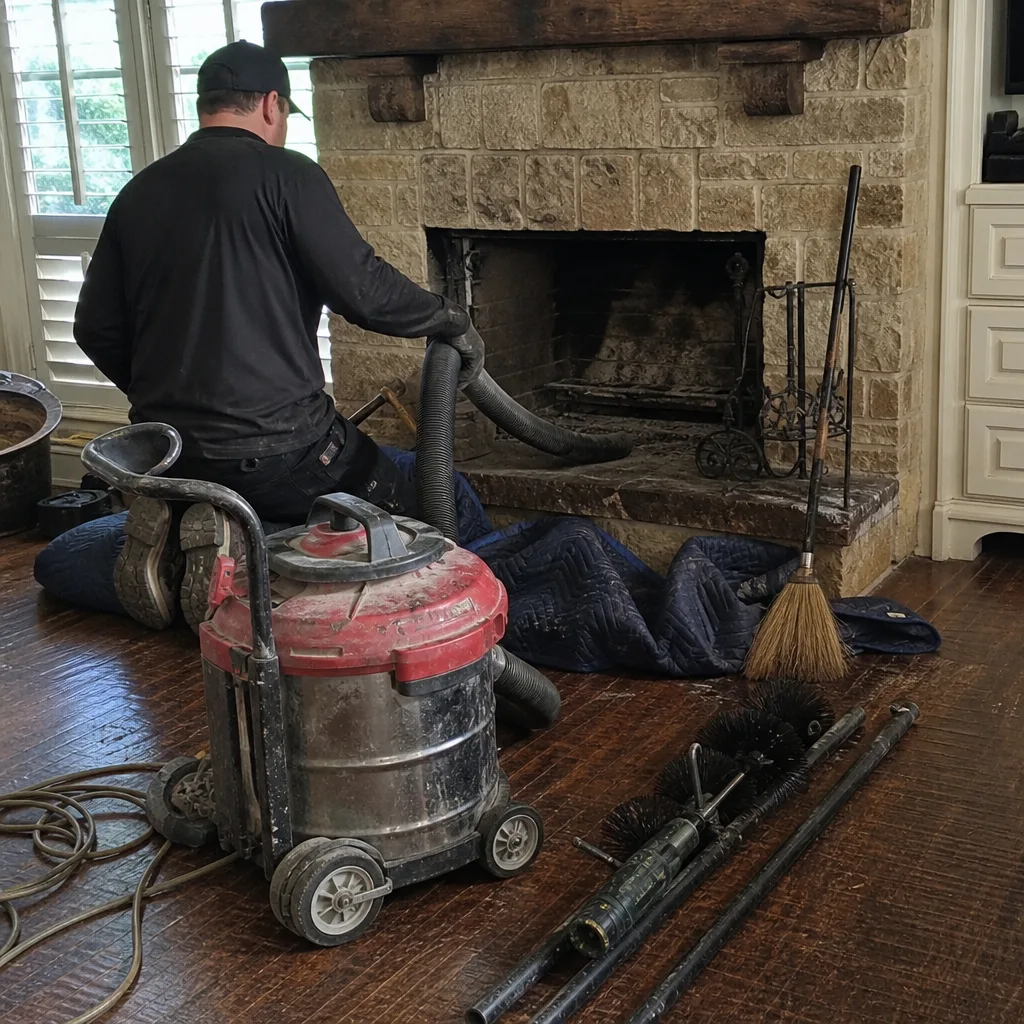 Before
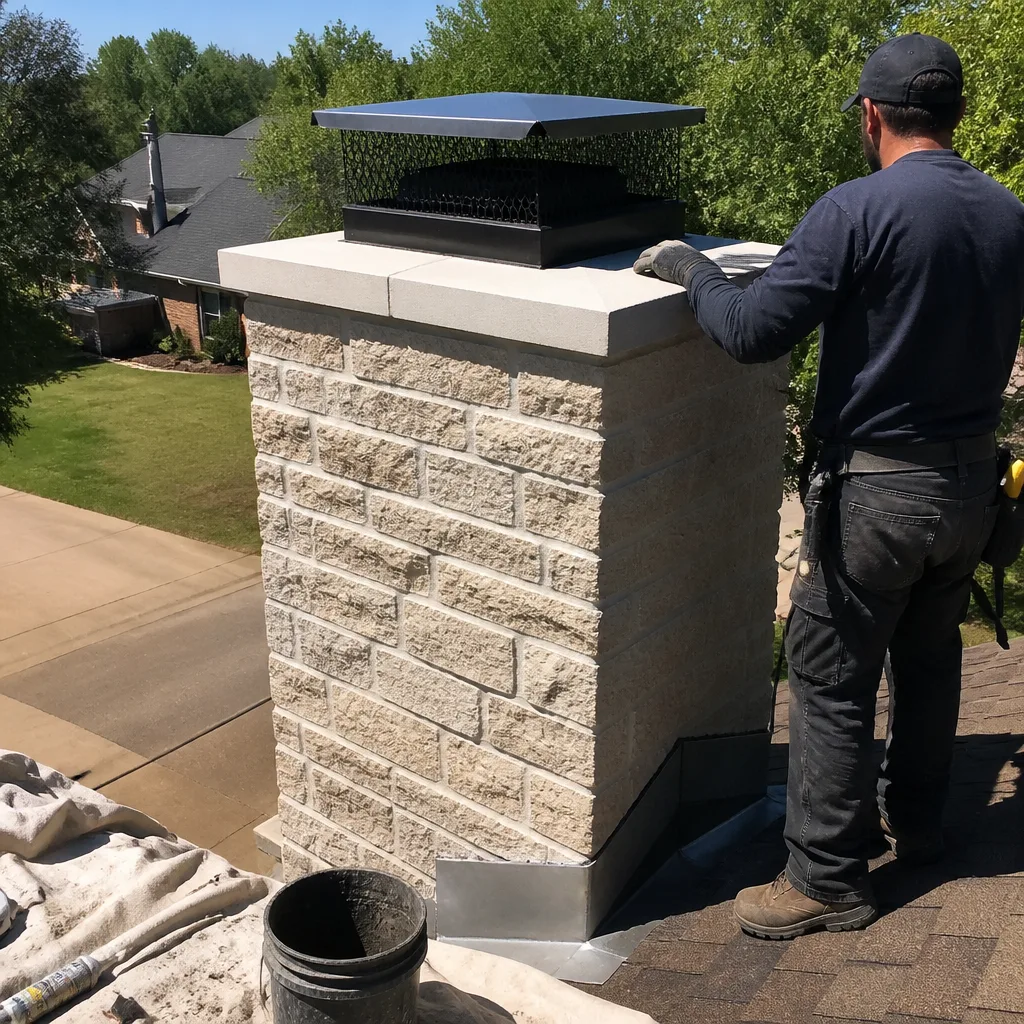 After
After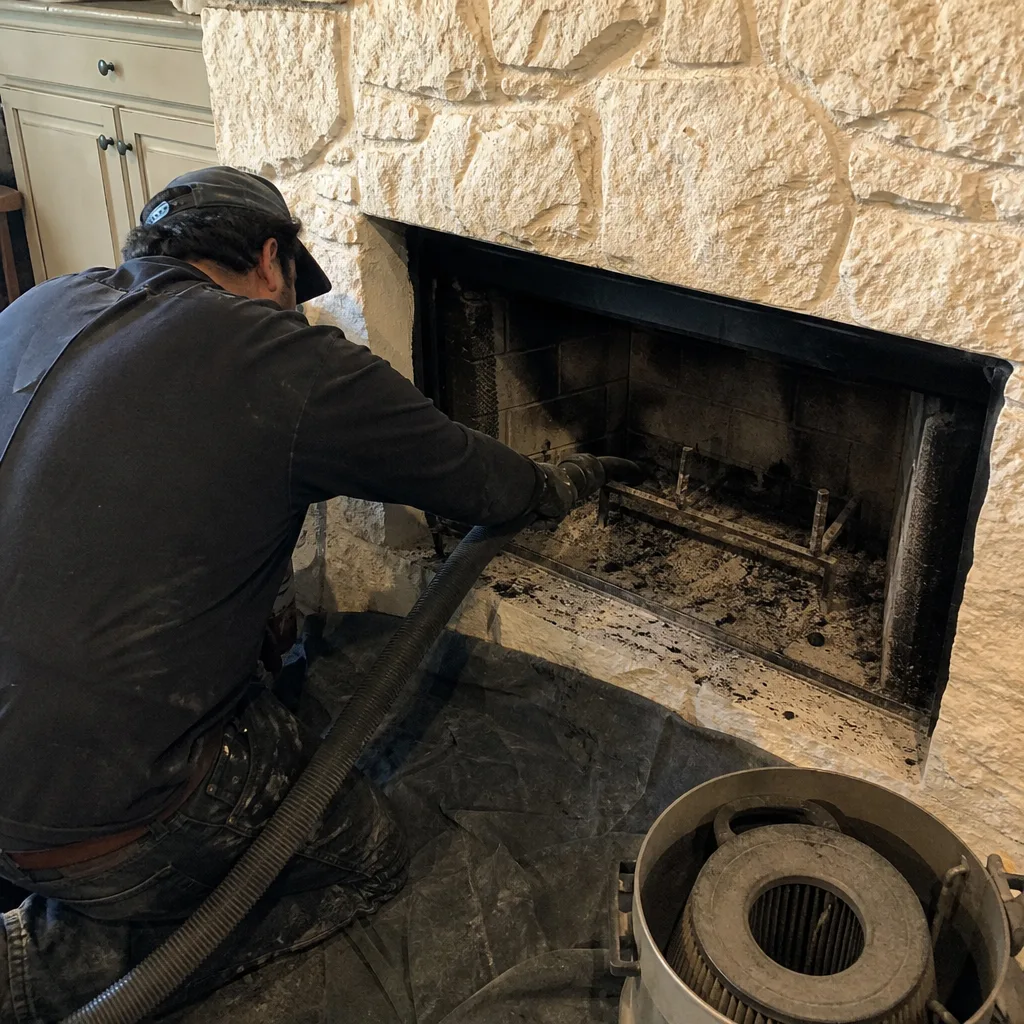 Before
 After
After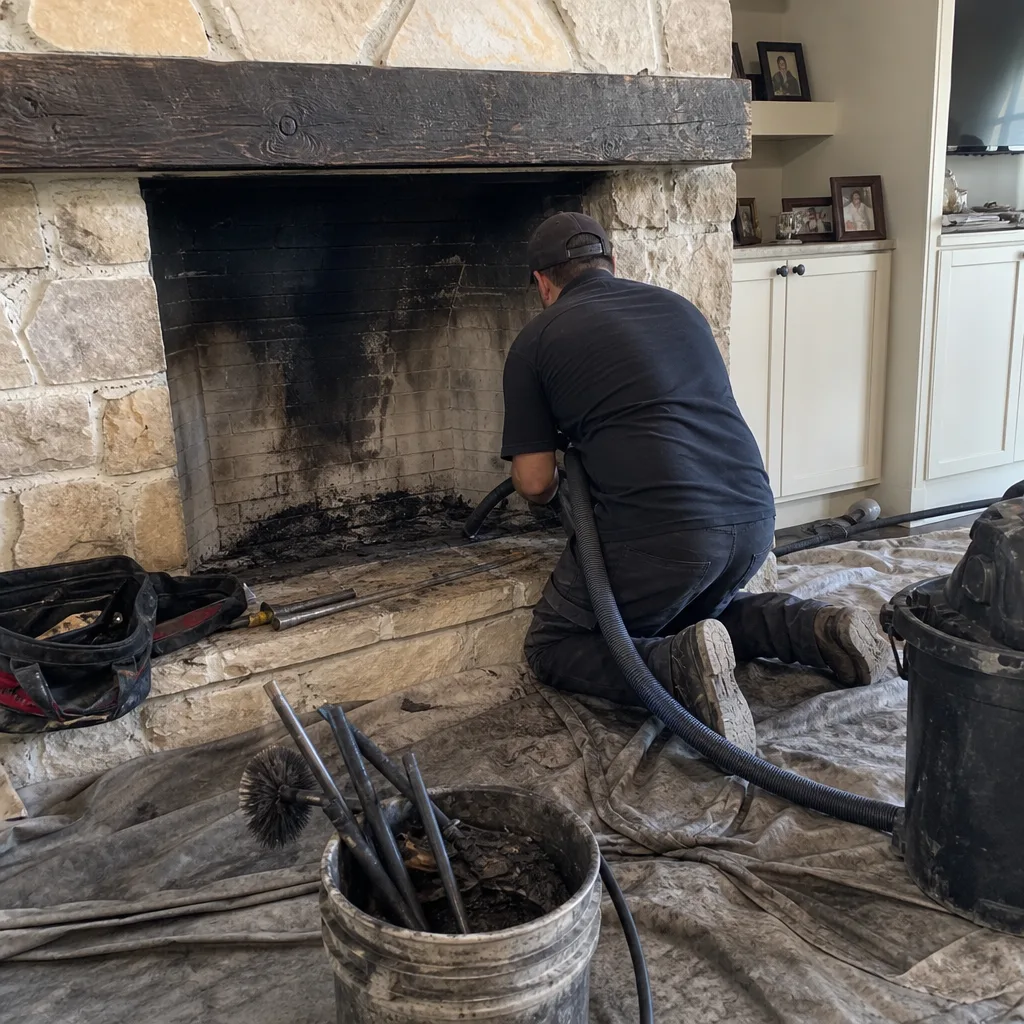 Before
 After
After