
Last updated October 15, 2026
 Sweep & inspection
 Caps & crowns
 Flue relining
 Masonry repair
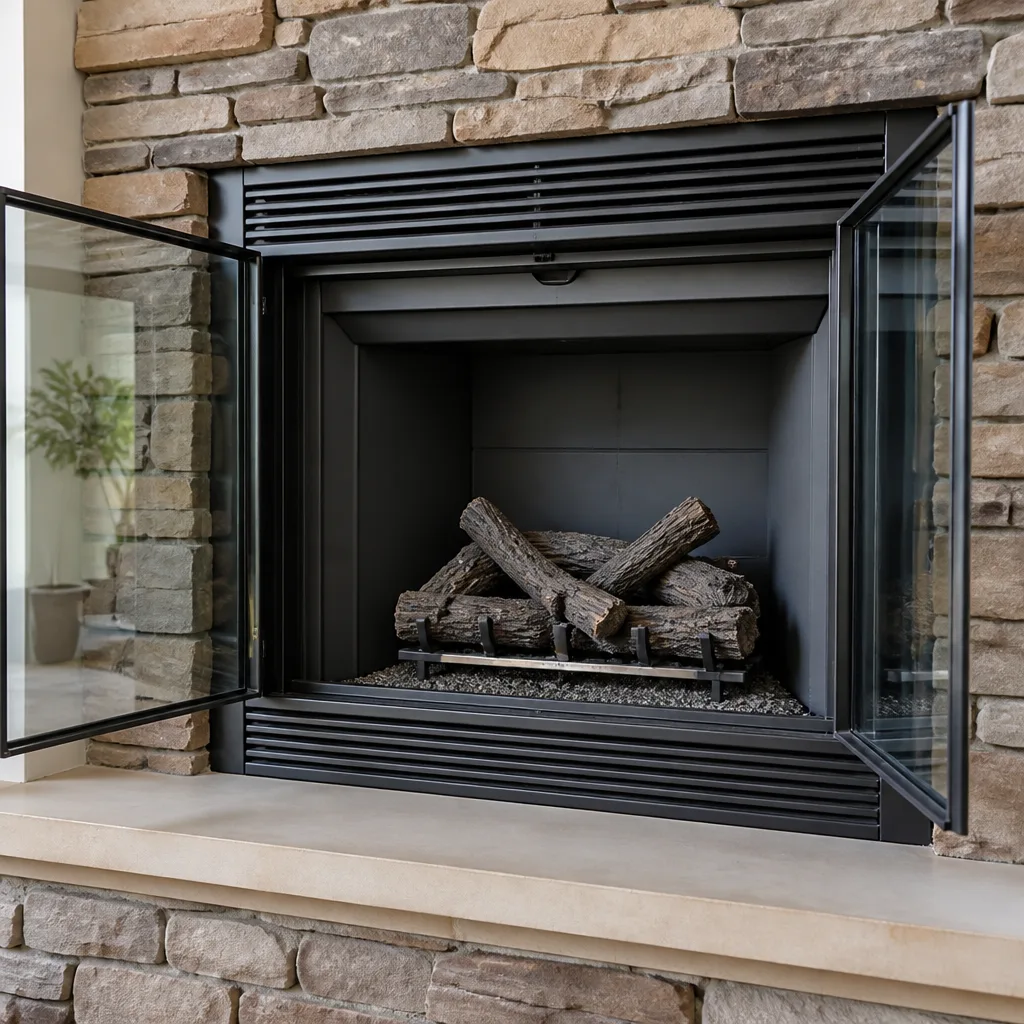 Gas fireplace service
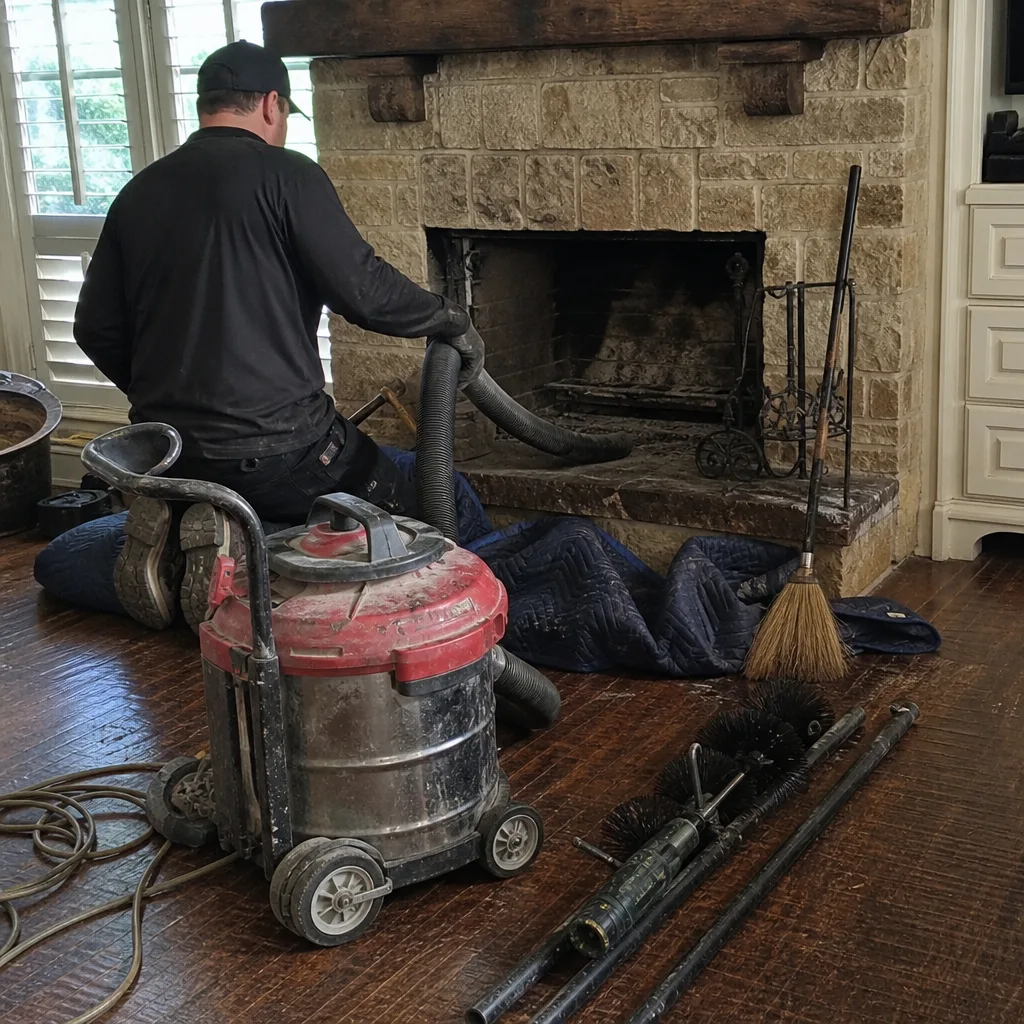
Level 1 sweep and inspection to the NFPA 211 annual standard - flue, crown, cap, and flashing checked and photographed
Chimney sweep logs do not sweep chimneys. They loosen some creosote - which then falls where a brush and vacuum still have to collect it.
Chimney Cleaning Warning Signs: A Fort Worth Homeowner’s Reference Guide
Most homeowners expect a chimney problem to announce itself with drama: smoke rolling into the living room, a chimney fire, visible masonry tumbling onto the lawn. The reality in Fort Worth is quieter and easier to miss. The overwhelming majority of chimney issues we find on inspections were signaling their presence for months through small, repeatable clues: a whiff of last winter’s fires on a humid August evening, a faint scratching sound from the flue, a white chalky stain spreading across the brick above the mantel. This guide walks through every warning sign a Fort Worth homeowner should know, what each one means, and how to separate a genuine chimney problem from an HVAC issue or simple attic airflow quirk.
You’ll learn to name what you’re seeing, smelling, and hearing, so when you do call a sweep, the conversation starts with accurate information instead of a vague feeling that something is off. For a deeper dive, see our Complete Guide to Chimney Cleaning in Fort Worth.
Quick Answer
The most common chimney warning signs in Fort Worth are a campfire smell in the house when no fire is lit, white staining or flaking on exterior brick, black soot or oily marks on the fireplace surround, animal sounds from the flue, and a whistling or popping noise around the chimney during temperature changes. Any of these means the chimney should be inspected before the next burn; a few, like a strong sulfur smell or visible smoke inside the home, mean stop using the fireplace immediately and call a professional.
Styles & brands we work with
Table of Contents
- What You Smell: Campfire Odor, Sulfur, Must, and What Each One Means
- What You See: Staining, Efflorescence, Flaking Brick, and Dark Deposits
- What You Hear: Popping, Whistling, Bird Sounds, and Falling Debris
- Fort Worth Weather Damage: Hail, Heat, and the Specific Marks They Leave
- Stop-Use Warning Signs vs. Schedule-When-Convenient Signs
- Is It the Chimney or the HVAC? A Simple Diagnostic Sequence
- How to Photograph and Describe a Warning Sign for a Phone Estimate
- Common Mistakes to Avoid
- When to Call a Professional
- Frequently Asked Questions
What You Smell: Campfire Odor, Sulfur, Must, and What Each One Means
Smell is the sense that catches chimney problems most often in Fort Worth, and for a simple reason: hot air rises, and in a house with a chimney, the flue is the tallest natural exit path. When the air pressure inside the home drops, the chimney can reverse direction. That reversal pulls air from the flue back into the living space, and that air carries whatever is coating the flue walls.
A campfire smell in the living room on a warm day with no fire lit is the most common version of this. It means creosote, the tar-like residue left by burning wood, is present in meaningful amounts, and the chimney is drafting backward. In Fort Worth, this shows up most often in August and September when the house is sealed tight for air conditioning and outdoor humidity is high. The heat-soaked attic warms the upper chimney, but the lower chimney and firebox stay cool, creating a pressure difference that overcomes the natural draft. Homes in older Fort Worth neighborhoods like Mistletoe Heights or Ryan Place, with their original fireplaces and larger flues, tend to show this more than newer construction with tighter envelopes.
A sulfur or rotten-egg smell is different and deserves faster attention. It generally indicates either a bird, squirrel, or raccoon that has died in the flue, or a gas leak from the line that serves a gas log set. Do not light anything until the source is confirmed. A persistent musty odor, especially after rain, points to water entry behind the brick or at the crown, which creates a damp environment where creosote degrades more aggressively and masonry begins to spall.
The smell that most often gets blamed on the chimney but is not one: a dusty, burning-hot smell when the heat first kicks on in November. That is typically dust on the furnace elements, and it clears within a day. We tell Fort Worth homeowners to note whether the smell is constant or only appears when the HVAC starts. Constant means chimney; startup-only means HVAC.
What You See: Staining, Efflorescence, Flaking Brick, and Dark Deposits
Visual warning signs break into two families: what appears inside the house around the fireplace, and what appears outside on the chimney structure. Both matter, but they communicate different problems.
Inside, look for dark, oily streaks or a powdery black film on the fireplace surround, mantel, or nearby walls. This is creosote vapor condensing during backdraft events. In many Fort Worth homes it appears as a light gray or brown haze on white paint above the mantel, and because it builds slowly, homeowners dismiss it as normal soot dust. The pattern is informative: stains that concentrate at the top of the firebox opening indicate draft reversal. Stains that spread evenly around the entire opening suggest the damper is being closed too soon after a fire, trapping combustion particles in the firebox where they settle.
Outside, three signs deserve attention. First, white chalky deposits on brick, called efflorescence. Fort Worth’s freeze-thaw cycle is shorter than in northern climates, but it exists, and water that saturates brick expands on cold January nights. Efflorescence is the mineral salt that water leaves behind as it evaporates from the brick. It means moisture is inside the masonry, and moisture inside brick means the brick is working itself apart.
Second, flaking or spalling brick. When the brick face pops off in sheets or the mortar joints turn to sand when touched, water damage has reached a point where the structural jacket of the chimney is degrading. This is more common on chimneys that face west and southwest in Fort Worth, where afternoon heat accelerates expansion and contraction after rain events.
Third, black soot around the chimney crown or staining running down from the flue tile at the top. This indicates the flue gases are cooling and condensing before they exit, usually because the flue is undersized, obstructed, or the fire is being burned too cool. The creosote that should be exiting as vapor is instead liquifying on the upper flue and running back down.
What You Hear: Popping, Whistling, Bird Sounds, and Falling Debris
Chimneys are not silent, and the sounds they make are diagnostic. In our experience across Fort Worth, four sounds account for nearly every auditory complaint homeowners report.
A sharp popping or ticking sound during or shortly after a fire, coming from the flue, is creosote igniting in small amounts. This is not a chimney fire, but it is the precursor condition in which a chimney fire becomes possible. The popping is irregular, like small firecrackers, and often gets missed because it blends with the sound of the fire itself. If you hear popping in the chimney after the fire is out, that is creosote cooling and fracturing, which is equally informative: the deposits are thick enough to crack under thermal stress.
A whistling or moaning sound when no fire is lit, especially on windy days in spring, is air moving across the top of the chimney and through an improperly sized or damaged flue opening. Fort Worth’s spring winds from March through May make this a common complaint. The pitch changes with wind speed and direction. It doesn’t mean immediate danger, but it does mean the chimney’s internal geometry has changed, often due to a missing flue cap or a section of deteriorated flue tile.
Scratching, fluttering, or animal vocalizations are specific. Chimney swifts, a protected bird species that nests in vertical cavities, use Fort Worth chimneys from April through August. Their young make a repeated clicking call that many homeowners mistake for electrical noise. Squirrels and raccoons produce heavier scrabbling. Any animal sound means the flue does not have a properly fitted cap, because a functioning cap with the right mesh excludes these animals entirely.
The sound of fine debris falling when no one is near the chimney usually indicates spalling flue tile. Small bits of fired clay or mortar break loose from the flue wall and rattle down to the smoke shelf. When the furnace or a strong wind shifts the house slightly, more falls. This is a physical failure inside the flue and should be inspected, because the broken tile is no longer containing the flue gases.
Fort Worth Weather Damage: Hail, Heat, and the Specific Marks They Leave
Fort Worth’s weather profile creates distinct damage patterns that a generic chimney guide won’t describe. The city sees severe thunderstorms with hail in spring, prolonged heat and drought through summer, occasional freezing nights in winter, and significant wind loading year-round. Each leaves its own mark.
Hail damage on a chimney crown is different from normal wear-and-tear, and an insurance adjuster will look for the difference. Hail impact on a concrete or masonry crown leaves small, circular spall marks: little divots where the hailstone fractured the surface. The divots are roughly the diameter of the hailstone that caused them, typically a quarter-inch to a half-inch across. They cluster on the horizontal crown surface and are often accompanied by matching marks on the chimney cap and flashing. Normal crown wear, by contrast, shows as a network of fine cracks radiating across the crown, linear and joined, not circular. If you’ve had a roof replaced after a Fort Worth hailstorm and the chimney was not inspected, the crown likely carries the same damage that the shingles did.
Heat damage manifests differently. Fort Worth routinely posts strings of 100-degree days from July through September. That heat bakes the mortar joints and accelerates the expansion cycle between the brick and the flue tile. What we see most in these months is called differential expansion: the clay flue liner expands at a different rate than the surrounding brick, and the gap between them grows. That creates a pathway for heat transfer to the wood framing around the chimney. It rarely causes a visible exterior change; it’s a problem found on inspection, not from the ground.
Wind is the most underestimated force. Sustained north winds in winter drive rain sideways against the chimney face, and if the cap is missing or the crown is cracked, that water is forced downward under pressure rather than simply falling. Chimneys that are fine during a vertical spring rain get water into the firebox during a January north-wind event. If you see water in the firebox after a specifically directional storm, the entry point is almost always the crown or cap, not the flashing.
Stop-Use Warning Signs vs. Schedule-When-Convenient Signs
Not every warning sign means shut it down. Here is the distinction we draw for Fort Worth homeowners.
Stop using the fireplace immediately and call a professional if:
- Smoke enters the room and does not clear within seconds. This means the draft has failed or the flue is obstructed. Continuing to use the fireplace in this state fills the home with carbon monoxide and particulate matter.
- You smell gas – sulfur, rotten egg, mercaptan. Do not operate light switches near the fireplace. Leave the room and call your gas utility first, then a chimney professional.
- You hear an active crackling or roaring sound from the flue that sounds different from the fire itself. This can indicate a chimney fire in progress. Close the damper if you can do so safely, evacuate, and call 911 if the sound continues.
- Brick or debris falls into the firebox. Structural failure inside the chimney is in progress, and the flue may no longer be intact.
Schedule an inspection when convenient, but before the next burning season, if:
- A mild campfire smell occurs only on humid or unusually warm days. This points to deposit buildup that should be swept, but it’s not an emergency.
- You see efflorescence or light flaking on exterior brick. Water damage needs to be addressed, but it progresses slowly.
- You hear the chimney swifts in spring. Wait out the nesting season (the birds are federally protected and cannot be removed while nesting), then have a cap installed.
- A whistling draft occurs on windy days. Investigation is needed, but no immediate hazard exists.
The distinction matters because it changes the response. Stop-use signs get same-week attention. Convenience signs get a calm, scheduled appointment and usually a standard chimney sweep in Fort Worth.
Is It the Chimney or the HVAC? A Simple Diagnostic Sequence
Smoke odor in a Fort Worth home is not always a chimney problem. HVAC systems share walls, ceilings, and occasionally flue paths with fireplaces, and a failing HVAC component can produce odors that get blamed on the fireplace. Here is the sequence we use to separate the two before any appointment is booked.
- Note when the smell appears. Run the air conditioner for 30 minutes. Then turn it off and open a window in the room with the fireplace. If the smell strengthens when the AC runs and fades when it is off with a window open, the HVAC is circulating the odor, and that doesn’t rule out either source yet, but it means the HVAC ducting is involved in distribution.
- Sniff the firebox. Take an unscented tissue, wipe it inside the top of the firebox opening, and look at the residue. Soot or brown staining indicates recent backdrafting from the chimney. A perfectly clean tissue points away from the fireplace.
- Check the damper position. A damper left open for an extended period pulls air down the chimney and into the house. Close it fully. If the smell diminishes within 24 hours, the chimney was the source. If it does not change, look next at the return air ducts and the evaporator coil area.
- Near the water heater closet. In many Fort Worth homes, the gas water heater shares a vent chase with the chimney. A cracked heat exchanger or a backdrafting water heater can produce combustion smells that the chimney appears to be carrying. If the smell is strongest near the water heater, the water heater is the probable source.
- Attic sniff test for attic rain. In winter, warm air leaking into the attic condenses on the cold roof deck and drips back down, carrying odor from the insulation. If the smell is present in the attic and absent in the firebox, you’re smelling attic condensation, not the chimney.
This sequence takes a Fort Worth homeowner ten minutes and saves the cost of dispatching the wrong trade. If the tissue test is positive, the next step is a chimney inspection in Fort Worth that includes a camera run through the flue.
How to Photograph and Describe a Warning Sign for a Phone Estimate
The quality of a phone estimate depends on what you can tell us. A homeowner who can send us three specific photographs and answer four questions gives us enough to provide a realistic price range before we ever arrive. Here is the method that works.
The three photographs:
- A broad shot of the whole chimney from ground level, with the roofline visible. This gives us the chimney height, the roof pitch, and the general condition.
- A close shot of the concern area – the stain, the crack, the flaking, the dark deposit – taken square-on so we can see proportions. Hold your phone about two feet away for this one.
- A shot of the firebox interior, damper open, from the hearth level. This shows us the smoke chamber condition and confirms whether the damper assembly is intact.
The four answers that matter:
- How long has the sign been present, and has it changed since you first noticed it?
- Does the sign appear only under specific conditions (rain, wind, cold, after a fire)?
- Has anything been done to the chimney in the past two years – a sweep, a cap replacement, a tuckpointing job?
- What type of fire do you burn most – wood logs, gas logs, or both?
A homeowner who sends three clean photos and answers those four questions will usually get an accurate estimate range on the first call. The range matters: most standard chimney sweeps at Kindling Chimney Fort Worth cost between $189 and $289, and a full inspection with camera runs between $249 and $399 depending on the home’s configuration in Fort Worth. Written pricing is provided before any work begins, and if the technician finds something during the sweep that changes the scope, nothing is added to the bill without a conversation first.
Common Mistakes to Avoid
- Burning a “cleaning log” instead of calling for a sweep. Creosote sweeping logs contain a chemical that dries the top layer of creosote so it flakes off in small amounts. They do not remove the dense, tar-like buildup that causes fires. In our Fort Worth inspections, homeowners who rely on sweeping logs typically still need a mechanical sweep.
- Sealing a musty chimney with a top-mount cap only. A cap stops animals and direct rain, but it does not stop lateral rain driven against the side of a chimney, and it does not stop condensation. The water source has to be found and eliminated, not just covered.
- Repointing the outside brick while ignoring the flue. We see Fort Worth chimneys that look excellent from the street but have broken flue tiles inside. The brick is only a jacket; the flue is the working part. Both must be evaluated.
- Waiting until October to book a sweep. Fort Worth’s burning season starts the week it first drops below 60 degrees, usually mid-October, and every sweep in the county is booked solid from then through New Year’s. Booking in August or September means the burn is clean when the first cold front arrives.
- Dismissing a mild campfire smell because it’s only occasional. An occasional smell means occasional backdrafting, and occasional backdrafting means creosote has already accumulated. The smell is the early warning; ignoring it lets the condition compound through the next season.
- Using the damper to “seal” the chimney against summer air conditioning loss. A standard throat damper leaves an unsealed slot around its edges, and hot Fort Worth attic air finds that slot. A top-sealing damper solves this, but a standard damper is not a seal.
- Ignoring the chimney after a major roof replacement. Roofing crews are not chimney crews. A roof replacement often leaves the flashing disturbed, the cap removed and re-set incorrectly, or debris down the flue. Every Fort Worth roof job should include a post-roof chimney check.
When to Call a Professional
Call a professional when any stop-use sign appears: smoke entering the room, a gas odor, active crackling from the flue, or falling brick. Call on a scheduled basis when a warning sign has been present for more than a few weeks without resolving. And call when you buy a home in Fort Worth that has a chimney and you have no record of its last inspection. The National Fire Protection Association calls for an annual chimney inspection, and a fireplace repair found early is always cheaper than one found late. If you are in Fort Worth and need a free estimate, call Kindling Chimney Fort Worth at (682) 382-9934. Danny Cortes and the team will walk you through the warning signs you are seeing, give you a written price before any work begins, and schedule at a time that works around your family.
Frequently Asked Questions
Most standard chimney sweeps in Fort Worth run between $189 and $289, depending on the chimney’s height, the amount of creosote built up inside, and whether the firebox was built to an older or newer standard. If the chimney hasn’t been cleaned in several years or shows glaze-level creosote, the price can be higher, and any camera inspection work is priced separately before it is booked. Kindling Chimney Fort Worth provides a written price before any work begins. Call (682) 382-9934 for an exact number based on your home.
Yes, in almost all cases a summer campfire smell means creosote has built up and the chimney is backdrafting that odor into the house. The cleaning removes the creosote that carries the smell. If a cleaning has been done recently and the smell returns, there may also be a draft problem that will need a chimney inspection. We fix both conditions, and the first step is always a look inside the flue.
A small puff of smoke when a fire is first lit may simply be cold air in the flue resisting the draft. If it clears within a minute and does not return, it’s not usually a hazard. But if the room smells smoky throughout the burn or the smoke rolls out in waves, stop using the fireplace and book an inspection. Persistent smoke means either a blockage, an undersized flue, or a failing draft, and all three get worse with continued use.
A chimney fire looks like flames or a thick black plume coming from the top of the chimney, often accompanied by a rumbling or roaring sound that gets compared to a freight train. It is not the small, contained flicker of a normal fire. If you see this, close the damper, leave the house, and call 911. Even if you think it burned itself out, the chimney must be inspected before it’s used again, because chimney fires crack flue tiles and damage mortar joints in ways that are not visible from the ground.
Yes, chimney swifts nest in Fort Worth from April through August, and because they are federally protected under the Migratory Bird Treaty Act, a nest with eggs or young cannot be removed. If you hear the birds in early spring, the right sequence is to let the nesting cycle finish, then have a cap with proper mesh installed, which prevents them from returning the following year. A Kindling Chimney Fort Worth home inspection can confirm whether birds have entered and whether their nesting material is blocking the flue.
Sweep it at least once per burning season, which in Fort Worth runs from about mid-October through February. Follow our Chimney Sweep Maintenance Checklist for Fort Worth Homeowners to stay on track. If you burn more than a cord of wood per year, burn unseasoned wood out of necessity, or use the fireplace two or more times per week, schedule a mid-season check as well. Homes that use gas logs exclusively can go longer intervals for soot, but the annual inspection still matters because gas combustion deposits are acidic and accelerate flue deterioration when moisture is present. Kindling provides flat, written pricing before any sweep, so there is no surprise at the door, and every visit includes shoe covers, drop cloths, and a photo of the clean-up before the crew leaves.
The Bottom Line
A chimney does not fail silently. The same deposits, leaks, and structural shifts that cause a chimney fire or a cracked flue leave traces for months before they become urgent, and those traces are knowable. The smell of last season’s fires on a hot summer day, a white bloom on the brick above the roofline, the sound of something small dropping from the flue when the wind shifts – each one has a cause, and most of those causes have an affordable fix when caught early. The rule is straightforward: any sign you can name is a sign worth investigating. If you’ve noticed anything described in this guide and you’re in Fort Worth, call (682) 382-9934. You can also browse more guides & resources on our blog. A live person answers, the estimate is free, and the written price arrives before any work starts.
Written by Danny Cortes, Owner at Kindling Chimney Fort Worth, serving Fort Worth since 2003.
See the difference
 Before
 After
After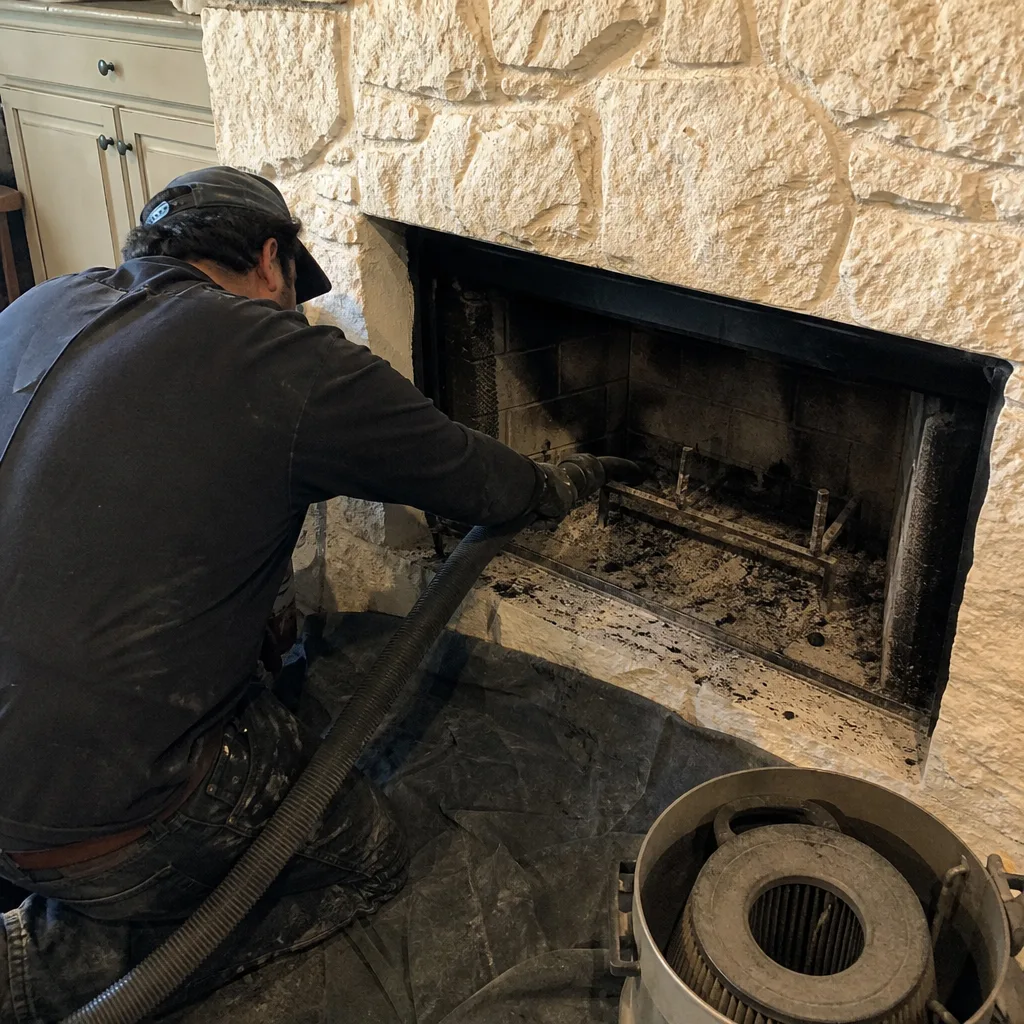 Before
 After
After Before
 After
After