
Last updated October 15, 2026
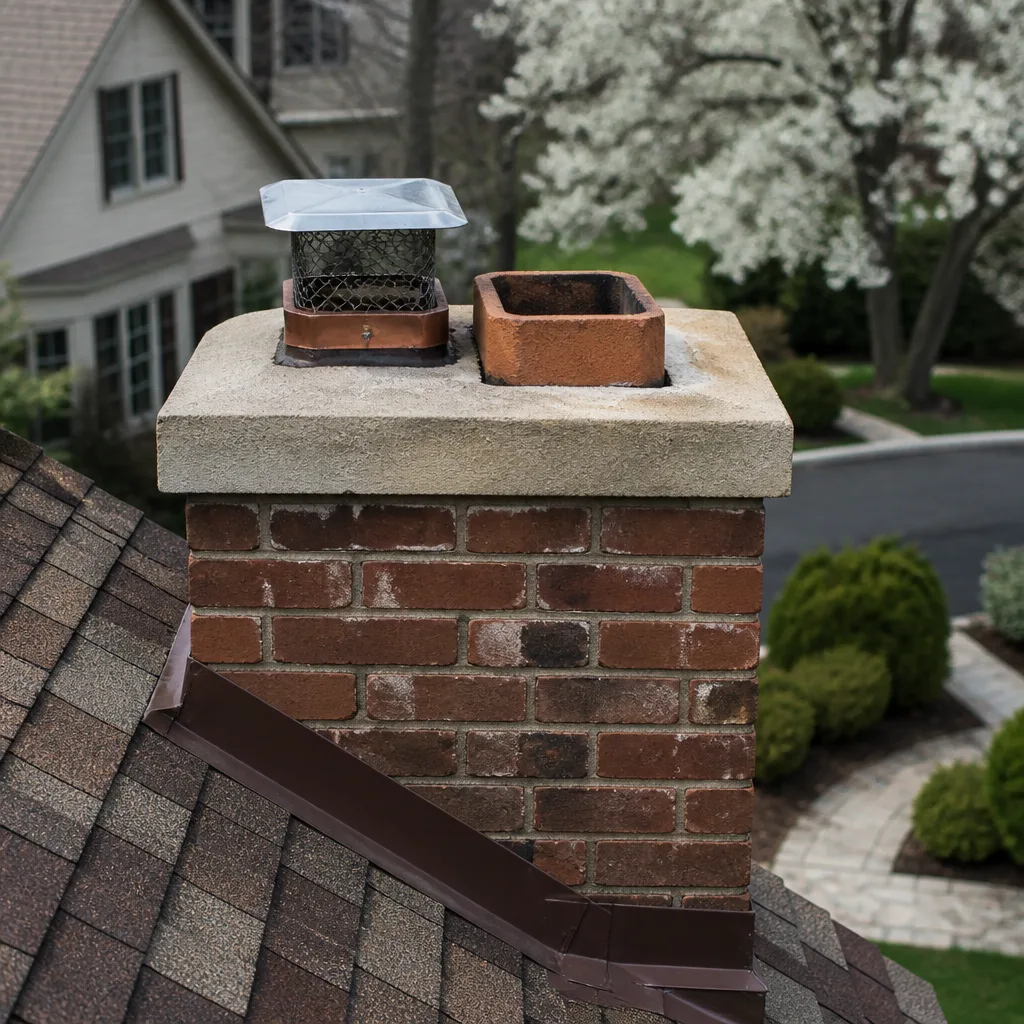 Sweep & inspection
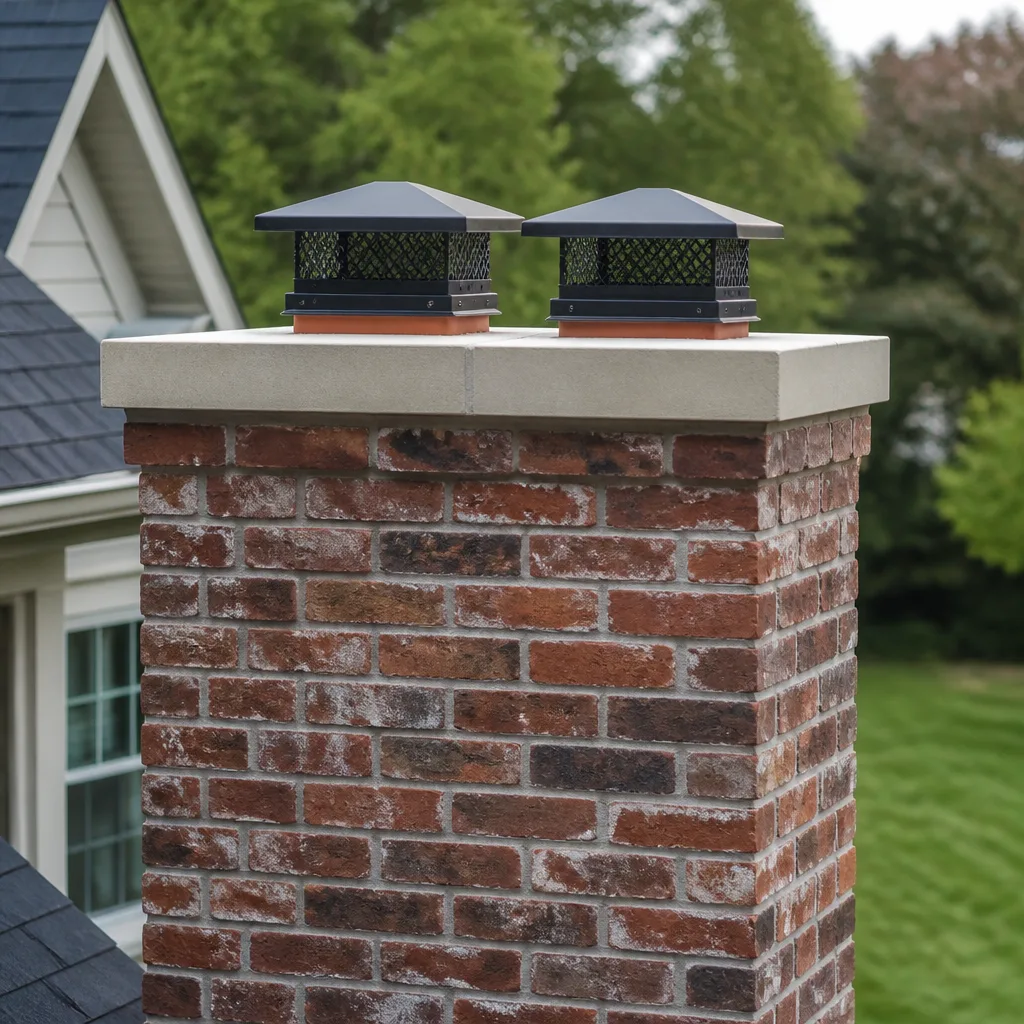 Caps & crowns
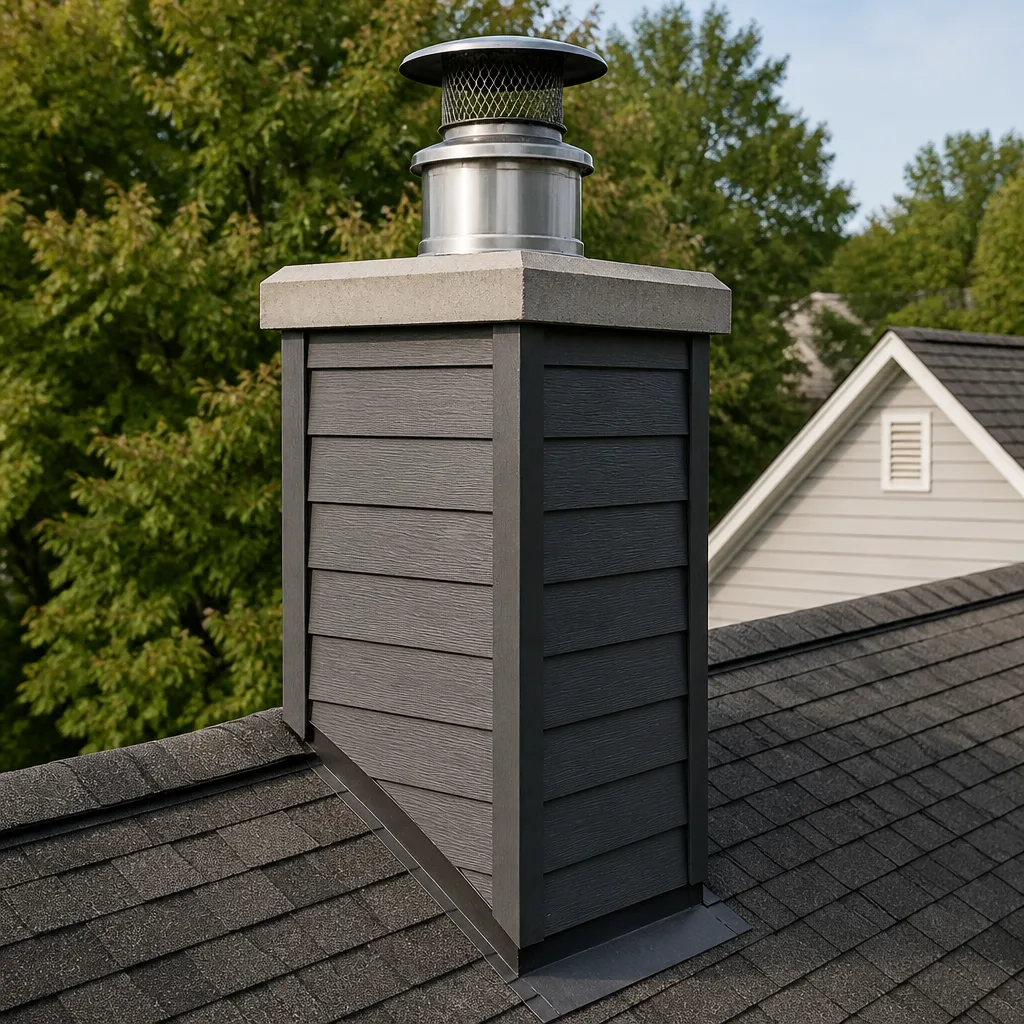 Flue relining
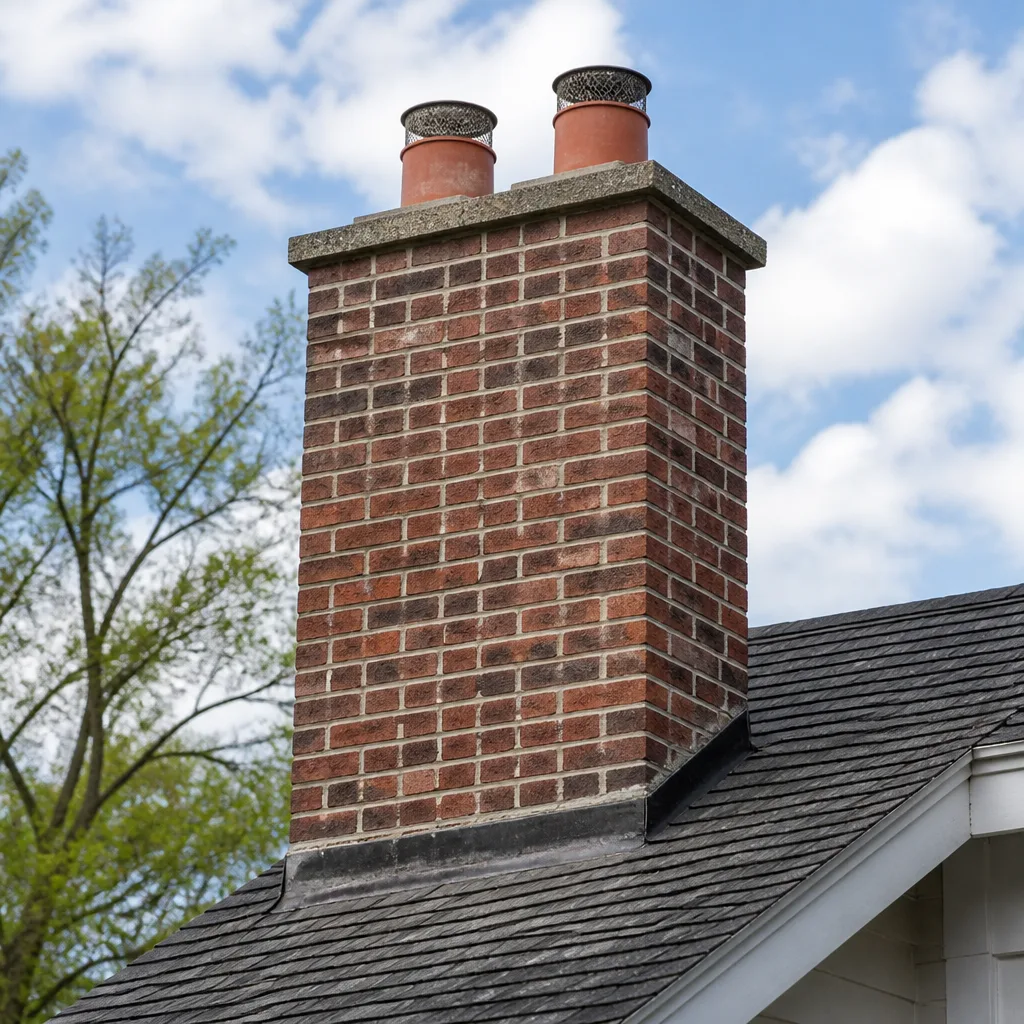 Masonry repair
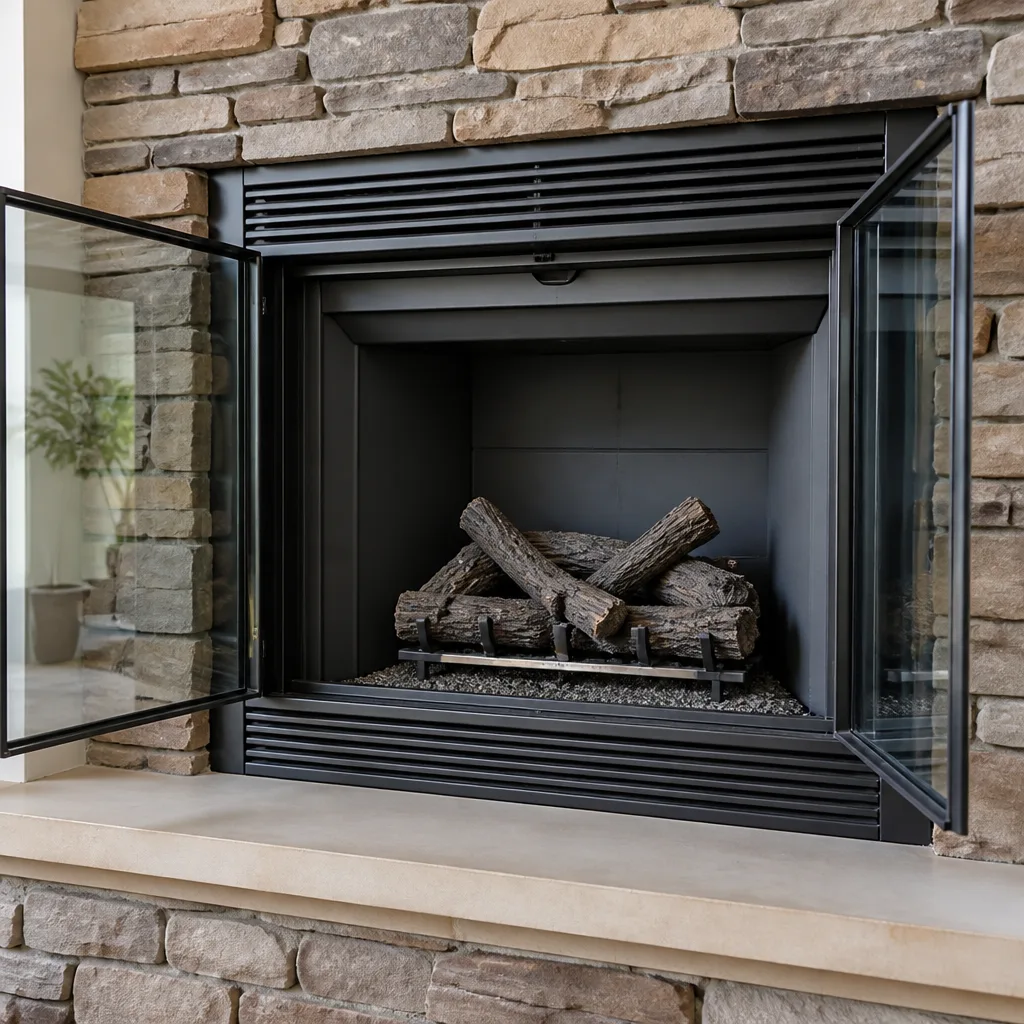 Gas fireplace service
Level 1 sweep and inspection to the NFPA 211 annual standard - flue, crown, cap, and flashing checked and photographed
Chimney sweep logs do not sweep chimneys. They loosen some creosote - which then falls where a brush and vacuum still have to collect it.
The Complete Guide to Chimney Cleaning in Fort Worth
Most Fort Worth homeowners burn fewer than 15 fires a year, yet their chimneys still fail inspection. The reason surprises people: glazed creosote and bird-nest debris build up even in low-use fireplaces sitting idle through nine months of Texas heat. Humidity does something to creosote that dry cold never does. This guide explains exactly what accumulates inside a North Texas chimney season by season, what a proper cleaning actually removes, and what it should cost in Fort Worth. You’ll learn how to read a cleaning report, when a Level 2 inspection makes sense, and how to spot the difference between a real sweep and a guy with a shop vac.
Quick Answer
Chimney cleaning in Fort Worth typically costs $189 to $349 for a standard open-flue sweep, depending on chimney height, accessibility, and how much creosote or debris has built up. Most homes with regular fireplace use need one cleaning per year, ideally in late summer or early fall before burning season starts. If you’re weighing DIY vs professional chimney cleaning, know that proper equipment and training matter for safety. A professional sweep removes creosote, soot, animal nesting material, and Fort Worth-specific debris like cedar elm seeds and red clay dust, then provides a written report of what was found and what was done.
Styles & brands we work with
Table of Contents
- Why Fort Worth Chimneys Get Dirty Even With Light Use
- What Actually Accumulates Inside a North Texas Chimney
- Level 1 vs Level 2 Inspections: What Fort Worth Homes Actually Need
- What a Professional Chimney Cleaning Includes, Start to Finish
- How to Read a Written Chimney Cleaning Report
- Chimney Cleaning Costs in Fort Worth: Honest Numbers
- How Often Should You Clean a Chimney in Fort Worth?
- Common Mistakes to Avoid
Why Fort Worth Chimneys Get Dirty Even With Light Use
Here’s the counterintuitive part of chimney science: creosote formation has less to do with how many fires you burn and more to do with the temperature of those fires. Fort Worth’s mild winters mean homeowners build small, short fires. A quick fire on a 50-degree evening never gets hot enough to fully combust the wood gases traveling up the flue. Those gases cool fast in the upper chimney, condense on the flue walls, and harden into creosote.
Now add humidity. Fort Worth averages around 65% relative humidity year-round, and summers push that higher. Creosote is hygroscopic, which means it absorbs moisture from the air. When the temperature swings and the humidity sits high, thin creosote films become sticky, catch more particles, and build into thicker deposits faster than they would in a dry climate like Denver or Phoenix. A fireplace that burns 10 fires a year in Fort Worth can develop Stage 2 creosote, the flaky, tar-like kind, faster than a high-use fireplace in a cold, dry city.
What does this mean for you? Even if you think “we barely use it,” the chimney is still working against you. The idle months are not neutral months. They’re months where existing deposits absorb moisture and set up for harder, glazier buildup next season.
We see this pattern all over Fort Worth, from Ryan Place to Arlington Heights to Benbrook. Homes in older neighborhoods with taller, unlined chimneys are the most vulnerable, but even newer builds with prefab fireplaces develop this cycle. Our Chimney Sweep in Fort Worth page goes deeper into what a standard sweep covers, but the short version is this: North Texas chimneys need attention at least annually, not because you use the fireplace heavily, but because the climate and debris load demand it.
What Actually Accumulates Inside a North Texas Chimney
National chimney guides talk about creosote stages like that’s the whole story. In Fort Worth, creosote is only part of what a sweep removes. Our technicians find a predictable mix of debris that’s specific to this part of Texas. If you know what’s up there, you’ll understand why a professional cleaning does more than vacuum out ash.
Creosote: Stage 1, 2, and 3
- Stage 1: Light soot and flaky residue. Brushes remove it easily. Most homes with one season of light use have Stage 1.
- Stage 2: Thicker, tar-like flakes with a sheen. Requires more aggressive brushing and sometimes chemical treatment to break down. Very common in Fort Worth because of humidity and low-temperature fires.
- Stage 3: Glazed, hardened creosote that looks like black glass. This is the dangerous stuff. It requires rotary cleaning tools or chemical removal, and it’s the leading cause of chimney fires. Not every sweep can handle Stage 3; our team has the rotary equipment for it.
Cedar Elm Seeds and Red Clay Dust
Fort Worth’s tree canopy is dominated by cedar elms. Their seeds are small, flat, and carried by wind in every direction. In the fall, they load into chimney caps, settle on the smoke shelf, and mix with creosote to form a gluey paste. North Texas wind also drives red clay dust straight into uncapped or poorly capped flues. That dust mixes with humidity, hardens, and reduces flue diameter. National guides never mention this because it’s a Fort Worth and North Texas problem, not a Vermont problem.
Chimney Swifts and Other Nesters
Chimney swifts are migratory birds protected under federal law, and Fort Worth sits right on their migration path. Every spring and fall, swifts look for open flues. They build small, durable nests from twigs and saliva that harden like cement against the flue walls. If you hear chirping in your chimney, you have swifts, and you need a professional assessment. Squirrels, raccoons, and even opossums find their way into uncapped Fort Worth chimneys too, leaving behind nesting material, droppings, and sometimes carcasses. A proper sweep removes all of it, and a proper cap keeps it out.
Level 1 vs Level 2 Inspections: What Fort Worth Homes Actually Need
Before any cleaning, a technician should perform an inspection. Chimney inspections come in three levels, and the difference matters. Most Fort Worth homeowners need one of two, and the deciding factor is usually whether anything about the chimney has changed since the last service.
Level 1 Inspection
A Level 1 is the visual inspection that accompanies every standard chimney sweep. The technician checks the readily accessible portions of the chimney: the firebox, damper, smoke chamber, and flue interior, plus the exterior chimney crown and cap from the roof when accessible. No special tools are used beyond a flashlight. If you use your fireplace the same way you always have, with no changes to fuel type, appliance, or chimney structure, a Level 1 is what you need. It’s included with our Chimney Inspection in Fort Worth service.
Level 2 Inspection
A Level 2 inspection adds video scanning. We run a camera through the entire flue and record what it sees, so you can watch the footage and see exactly what the technician sees. A Level 2 is required when any of these apply:
- You’re buying or selling the home.
- The chimney has been damaged by weather, fire, or an earthquake (yes, Texas has those).
- You’re changing fuel type, like converting from wood to gas logs.
- You’re relining the flue or installing a new insert or stove.
- It’s been more than 3 years since the last inspection, even with regular cleanings.
Fort Worth’s freeze-thaw cycles and wind storms do more chimney damage than people realize. We regularly recommend a Level 2 for homes in Ridglea and Westcliff where clay tile crowns have cracked and water has been penetrating for years without anyone noticing. The camera doesn’t lie, and it gives you a visual record you can keep for insurance or resale.
What a Professional Chimney Cleaning Includes, Start to Finish
Here’s exactly what happens when a Kindling Chimney Fort Worth technician arrives at your home, because knowing the process removes the uncertainty. This is the same written care promise we deliver on every visit, from Haltom City to Saginaw.
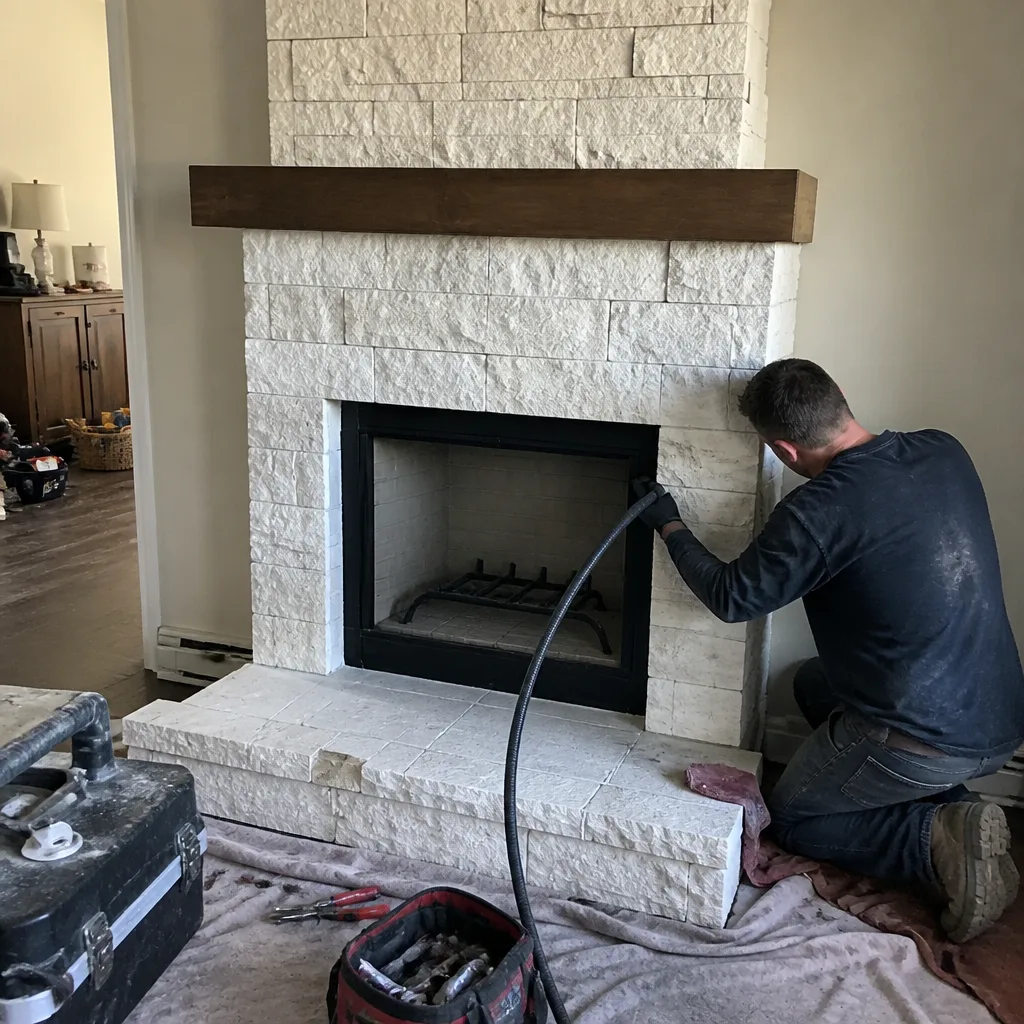
- Arrival and floor protection. Technicians arrive in uniform, introduce themselves, and put on shoe covers at the door. Drop cloths go down from the front door to the fireplace, and the immediate work area is fully covered. Nothing gets moved without asking. If you have kids or pets, we ask where they are and work around them, not through them.
- Pre-cleaning inspection. Before any tool touches the chimney, we inspect the firebox, damper, and accessible flue. We note creosote level, debris type, animal activity, and any structural concerns. If we find something that changes the job, we tell you before we do anything else, and we put the revised price in writing before any extra work begins.
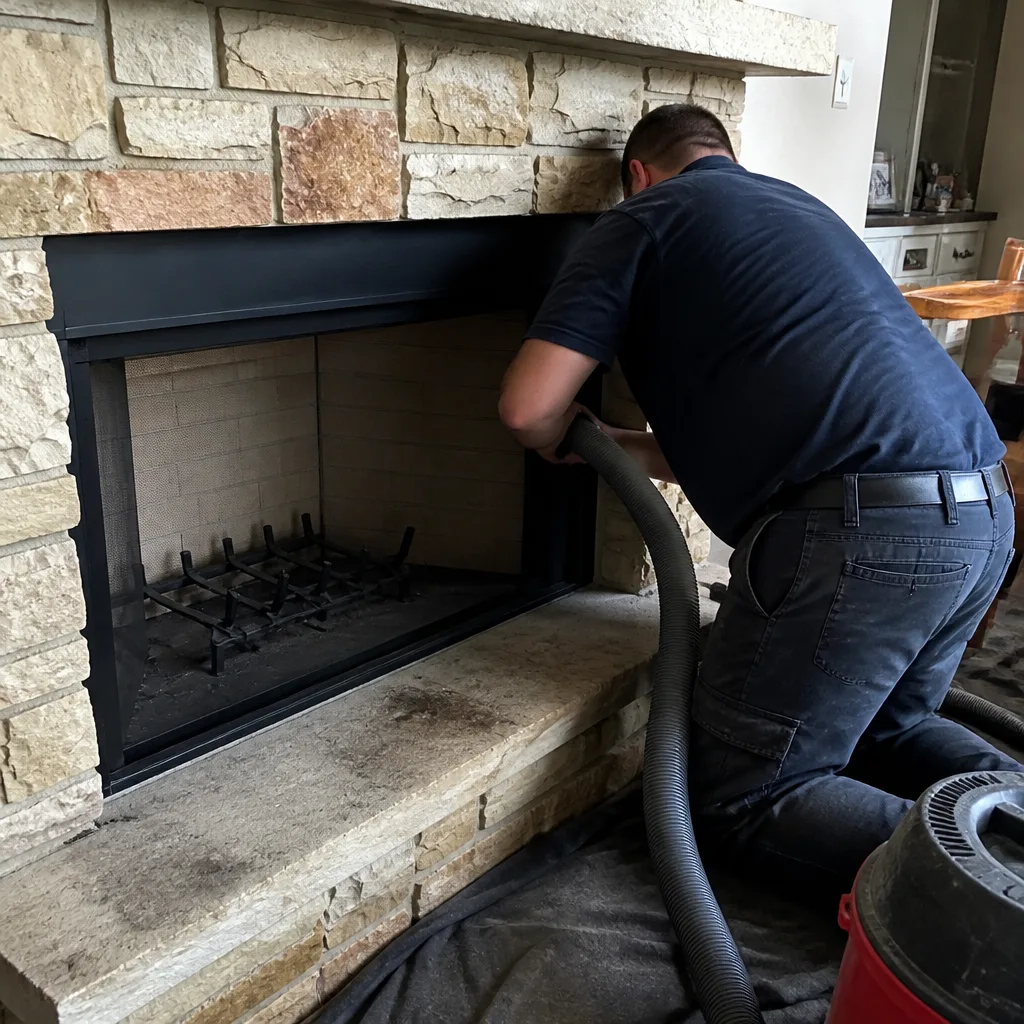
- Setup and air control. We use a high-powered vacuum with a HEPA filter that runs continuously during the sweep. Dust control isn’t optional, it’s the difference between a clean floor and a living room that needs a deep clean afterward.
- The sweep itself. Wire or poly brushes sized to your flue run from the top down or bottom up, depending on chimney height and roof access. The brush scrubs the flue walls, dislodging creosote, soot, and debris. For Stage 3 glazed creosote, we use a rotary loop system that spins at high speed to break up hardened deposits. Liner-safe rods protect any installed flue liner.
- Smoke chamber and damper cleaning. The smoke chamber traps more debris than any other part of the chimney. We clean it by hand where tools allow, because brushes alone won’t reach the angles. The damper assembly gets cleaned and tested for operation.
- Firebox and hearth cleaning. We remove ash and debris from the firebox and wipe down the hearth area. The vacuum runs the entire time. When we finish, the firebox is clean and ready for the next fire.
- Cap and crown check. We check the chimney cap, crown, and flashing from the roof when accessible. If the cap is missing or damaged, we’ll show you and quote a replacement. A good cap is the single best defense against Fort Worth’s bird and debris problems.
- Post-cleaning photo and report. Before we pack up, we take a photo of the cleaned firebox and the drop-cloth area to show you the condition we left it in. Then we walk you through the written report line by line, so you know what was found, what was removed, and what we recommend. You sign off, and we haul away everything.
The whole process takes 45 to 90 minutes for a standard open-flue chimney. The clean-up is part of the job, not an add-on. Our C.A.R.E. values guide everything: Customer-first, Accountability, Respect, and Excellence, and every technician follows them from door knock to final walkthrough.
How to Read a Written Chimney Cleaning Report
A professional chimney company gives you a written report after every service. Here’s how to read one so you know what actually happened, and what might need attention. If a company won’t give you a written report, that’s your sign to find one that will.
What Should Be on the Report
- Date, technician name, and service address. Basic, but if it’s missing, the report isn’t useful for records.
- Inspection level performed. Level 1 or Level 2. If it says Level 2, you should have received video or photographic documentation.
- Creosote stage found. Stage 1, 2, or 3, in plain language, not just a checked box.
- Debris types removed. If you had cedar elm seeds, swift nesting, or clay dust, the report should say so.
- Condition of components. Damper, crown, cap, flashing, flue liner, smoke chamber, and firebox. Each should have a status notation.
- Recommendations. Ordered by urgency: what needs attention now, what can wait a year, and what’s just noted for future watch.
- Pricing and payment breakdown. What was quoted, what was paid, and what any recommended follow-up work would cost.
Questions to Ask When You Read It
If the report lists “liner recommended,” ask to see the camera footage. A reputable company shows you the image or video and points to the exact damage. If the report says “replaced cap,” ask which brand. We use Famco and Copperfield caps because they hold up to Texas sun and wind. If the report notes “Stage 3 creosote, chemical treatment recommended,” ask how the treatment works and what the follow-up looks like. You should never feel rushed through this conversation. A written report is your record that the work happened, and it’s the foundation for future insurance claims or home sales.
Chimney Cleaning Costs in Fort Worth: Honest Numbers
We believe in telling you the price range before you ever book. Here’s what chimney cleaning actually costs in Fort Worth right now, based on what we quote and what we see from other established companies in the area.
| Service | Typical Fort Worth Price Range | What Affects Price |
|---|---|---|
| Standard open-flue sweep (Level 1 included) | $189 – $349 | Flue height, roof pitch, creosote stage, accessibility |
| Prefab fireplace sweep | $149 – $249 | Unit type, liner condition, damper access |
| Level 2 inspection (video scan) | $249 – $499 | Flue length, camera type, reporting detail |
| Chimney cap inspection and replacement | $99 – $399 installed | Cap size, material, roof access |
| Stage 3 creosote removal (rotary or chemical) | $349 – $799 | Flue length, deposit thickness, number of treatments |
| Glaze / sealant application | $199 – $449 | Flue size, product type, number of coats |
These are honest ranges, not bait pricing. A standard chimney sweep in Fort Worth falls at the lower end when the flue is clean, the roof is walkable, and the creosote is Stage 1. It moves toward the upper end when we find Stage 2 buildup, animal debris, or a flue that needs extra brushing. We give you a written price before any work starts, every time, and that price doesn’t change unless you approve something new. No surprises at the door, no “while I was up there” upcharges.
If the chimney has damage that needs repair, we’ll quote that separately with clear recommendations. Our fireplace repair services in Fort Worth use products from HeatShield and DuraFlex when liner work is required, because repairs should be built to last, not patched to hold.
How Often Should You Clean a Chimney in Fort Worth?
The National Fire Protection Association standard says chimneys should be inspected at least once a year and cleaned as needed. For Fort Worth specifically, that translates to a sweep every 12 to 18 months for most homes. Here’s the local nuance: it matters when you schedule it.
If you schedule a cleaning in April or May, you’re removing the residue from winter use before summer humidity sets in. That prevents the moisture absorption cycle that turns Stage 1 into Stage 2. If you wait until September or October, you’re cleaning the chimney right before burning season, which is also fine, but you’ve given creosote nine months to absorb Texas humidity. Both approaches work. The one that doesn’t work is skipping a year because you only burned five fires.
Homes in newer neighborhoods like Walsh or Viridian with prefab fireplaces still need annual attention. The flues are smaller, the clearances tighter, and the consequences of neglect more expensive. Homes in older Fort Worth neighborhoods with glazed clay tile liners, like Mistletoe Heights or Berkeley Place, are at higher risk of liner damage from freeze-thaw cycles, and that’s a repair bill no one wants. The short answer: once a year, same time every year, and let the inspection dictate whether you need a full sweep or just an inspection.
Common Mistakes to Avoid
- Assuming low use means no cleaning needed. Fort Worth’s humidity means even a fireplace that burned five fires last year can develop Stage 2 creosote. The idle months are when deposits harden and absorb moisture. Annual attention is non-negotiable.
- Skipping the chimney cap. An uncapped flue in Fort Worth is an open invitation to chimney swifts, squirrels, and cedar elm debris. A $99 – $399 cap installation prevents hundreds in animal removal and debris cleaning costs.
- Burning green or treated wood. Wood that isn’t fully seasoned produces dense, wet smoke that condenses into creosote fast. In a humid climate, this is worse. Only burn seasoned hardwood with less than 20% moisture content.
- Trusting a fly-by-night sweep with a low-ball price. A $79 “sweep special” usually means no inspection, no written report, no floor protection, and no licensure. You get what the price buys, and what you don’t get is the record that protects you later.
- Waiting until you hear chirping or smell something. Animal activity is a sign the chimney has been neglected for months. By the time you hear swifts, there’s a nest hardened to the flue wall and a legal constraint on removal timing. Annual inspections catch this before it becomes a problem.
- Ignoring the written report. If the report says “liner noted, recommend follow-up,” and you shove it in a drawer, you’re betting against water damage. The report exists so you can make an informed choice. Read it, ask questions, and act on the urgent items.
- Converting to gas without an inspection. Gas logs change the chimney’s ventilation needs. A flue that worked fine for wood can be dangerous with gas if it isn’t checked first. A Level 2 inspection is required before conversion, and skipping it risks carbon monoxide problems.
See the difference
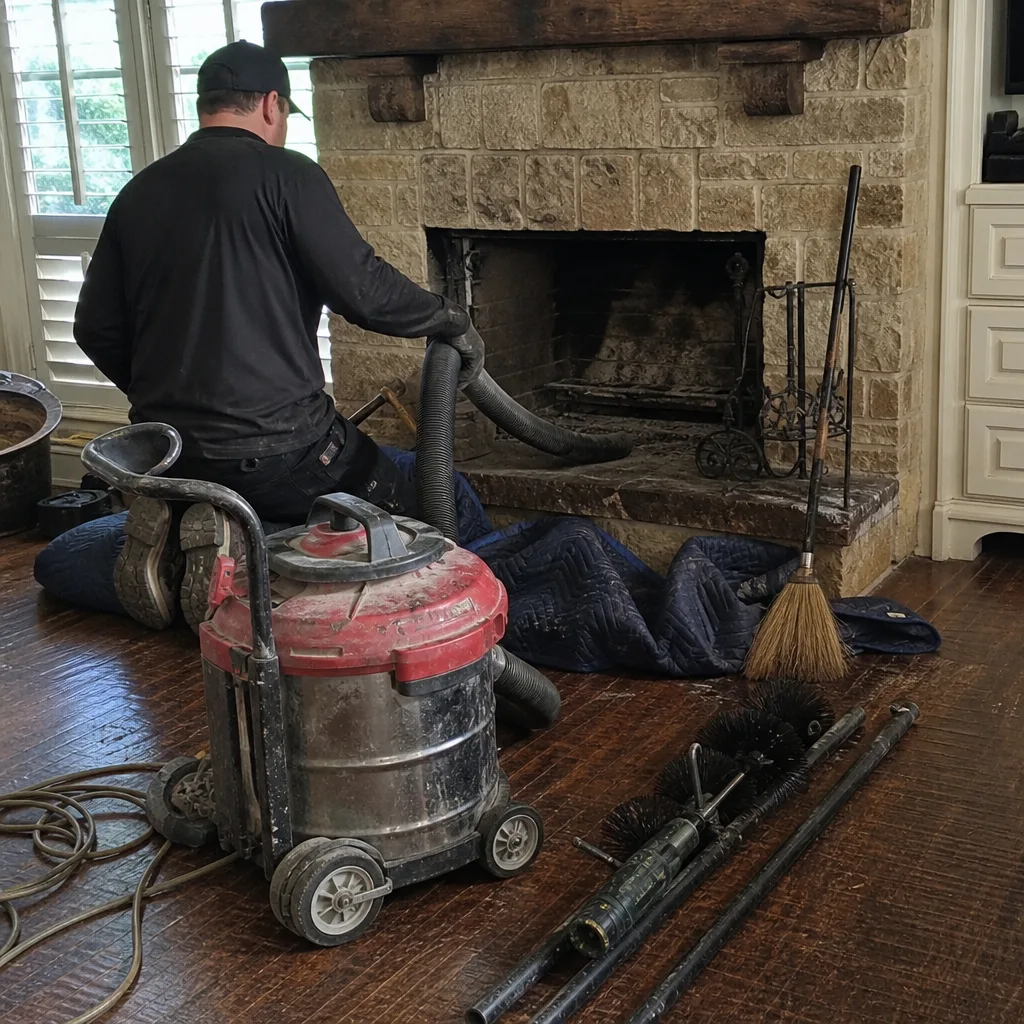 Before
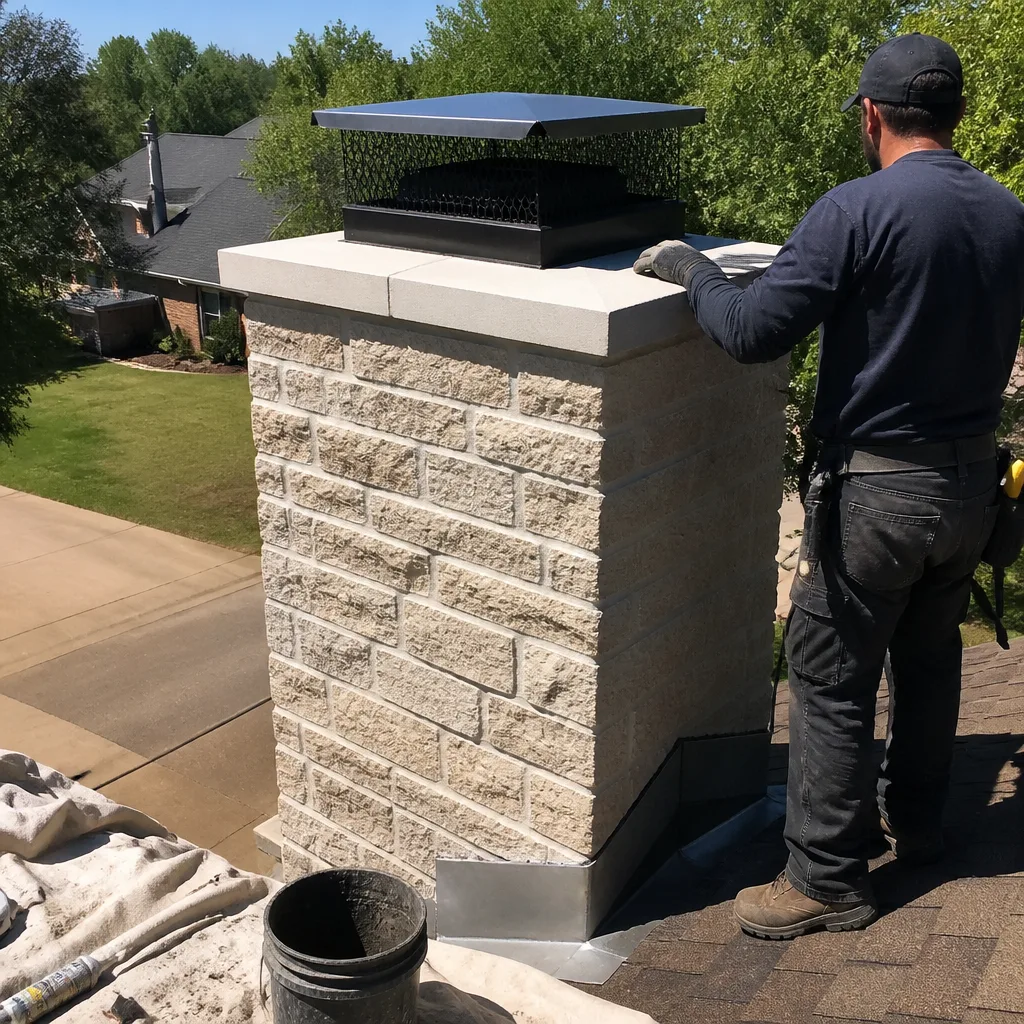 After
After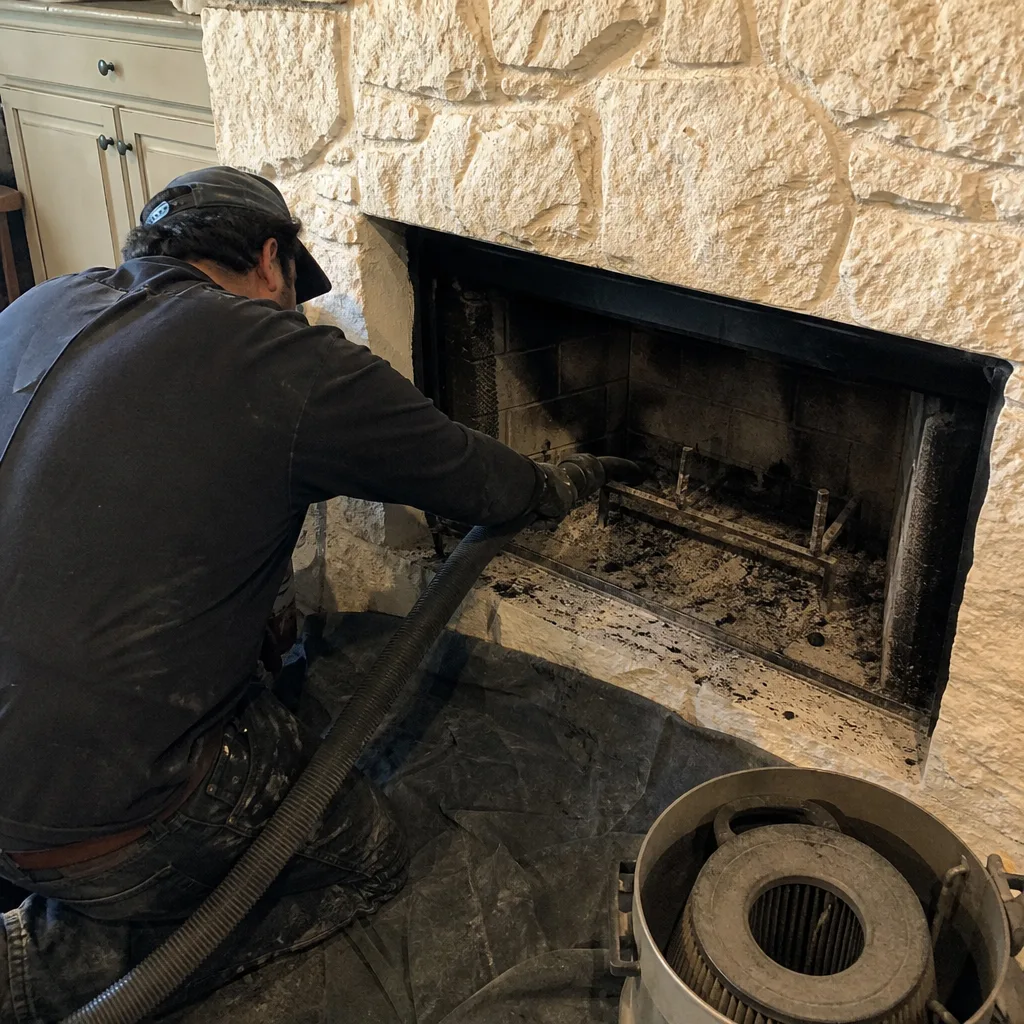 Before
 After
After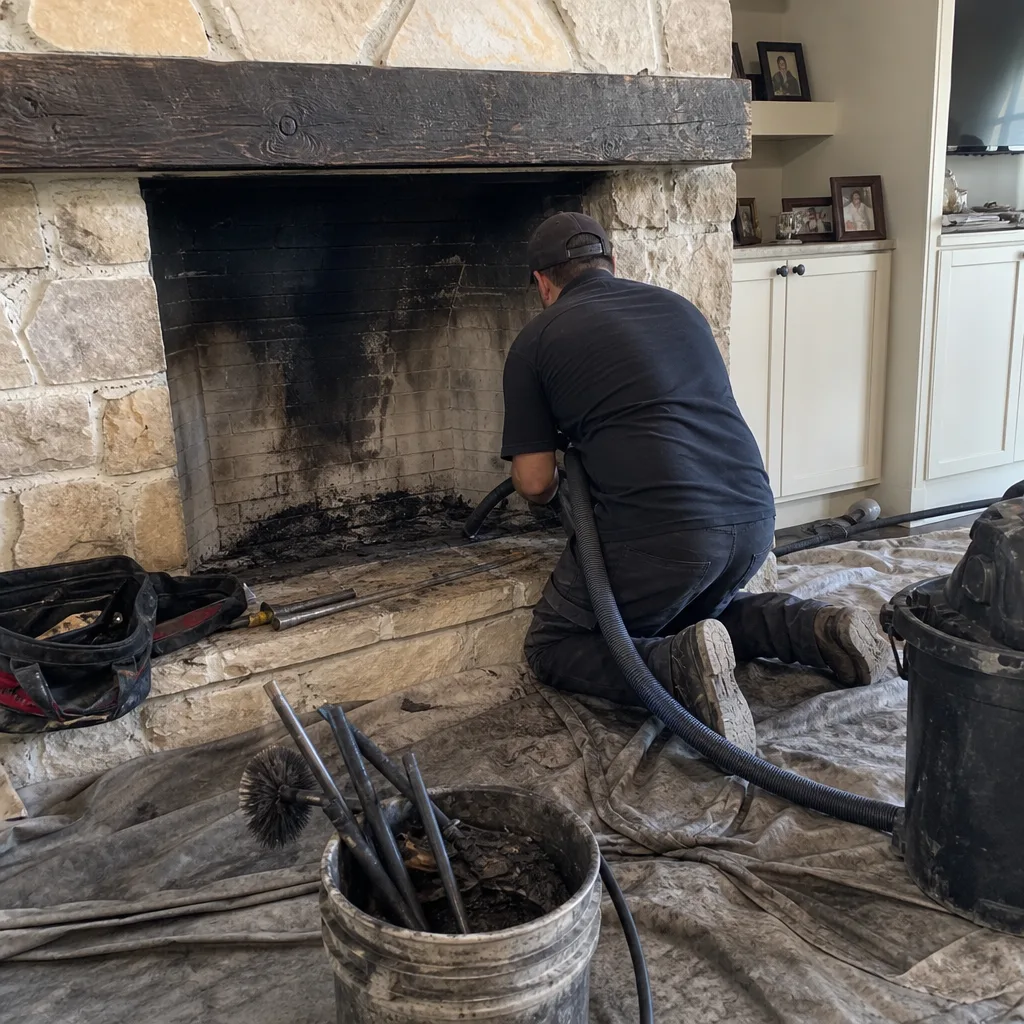 Before
 After
AfterWhen to Call a Professional
Call a chimney professional if you hear animal sounds in the flue, see water staining on the ceiling near the chimney, smell a campfire odor when the fireplace isn’t in use, or notice black, shiny deposits on the damper or visible flue walls. Call if you haven’t had the chimney inspected in over two years, even if you rarely use it. Call if you’re buying or selling a home in Fort Worth, because a Level 2 inspection is the only way to know what the flue actually looks like. And call if you’ve been using the fireplace regularly all season and it’s never been swept. Kindling Chimney Fort Worth offers free estimates throughout Fort Worth, and a live person answers 24/7. Call (682) 382-9934 and we’ll walk you through what your chimney needs, honestly and with a written price before we start.
Frequently Asked Questions
A standard chimney sweep in Fort Worth costs between $189 and $349 for most open-flue fireplaces. The price depends on chimney height, roof accessibility, creosote stage, and whether animal debris needs removal. You’ll get a written quote before any work begins. Call (682) 382-9934 for an exact quote on your chimney, estimates are free.
Yes, because Fort Worth’s humidity and wind-driven debris mean low-use chimneys still accumulate creosote, cedar elm seeds, and red clay dust even in idle months. Creosote absorbs moisture from humid air and hardens between fires. An annual inspection tells you whether a cleaning is actually needed, and it’s always cheaper than repairing what neglect causes.
A standard chimney cleaning takes 45 to 90 minutes from arrival to final walkthrough. That includes floor protection setup, the sweep itself, smoke chamber and damper cleaning, firebox cleanup, and a written report. Prefab fireplaces usually run faster, while Stage 3 creosote removal or animal nest extraction adds time.
A chimney sweep removes creosote, soot, and debris from the flue and firebox. A chimney inspection evaluates the condition of the chimney structure and components. Most sweeps include a Level 1 inspection as part of the service. A Level 2 inspection adds video scanning for a complete view of the flue interior, and it’s required for home sales, fuel changes, and chimney damage.
Thick, shiny, tar-like deposits on the flue walls are the warning sign of Stage 3 creosote, which is the leading cause of chimney fires. If you see this, hear loud cracking during fires, or smell strong smoke lingering after the fire is out, call a professional immediately. A chimney cleaning removes the fuel source before it becomes a problem. Call (682) 382-9934 and we’ll assess your chimney directly.
Chimney sweeps handle the nesting material, debris, and droppings left by chimney swifts, squirrels, and other animals. Live animal removal may require a wildlife specialist, but we can tell you what’s in there, what the law requires for protected species like chimney swifts, and what cleanup is needed. The permanent fix is a properly sized, professionally installed chimney cap.
The Bottom Line
Chimney cleaning in Fort Worth is not a luxury service for heavy fireplace users. It’s the annual maintenance that stops moisture-driven creosote buildup, bird-nest debris, and North Texas dust from turning a usable fireplace into a repair bill. A professional sweep with a written report gives you the record you need to protect your home, whether that means catching liner damage early or simply knowing the flue is clean for burning season. For more guides & resources on keeping your chimney safe, explore our blog. Schedule once a year, read the report, ask questions, and never accept work without a written price. That’s how a Fort Worth chimney stays safe, season after season.
Written by Danny Cortes, Owner at Kindling Chimney Fort Worth, serving Fort Worth since 2003.