
Last updated October 15, 2026
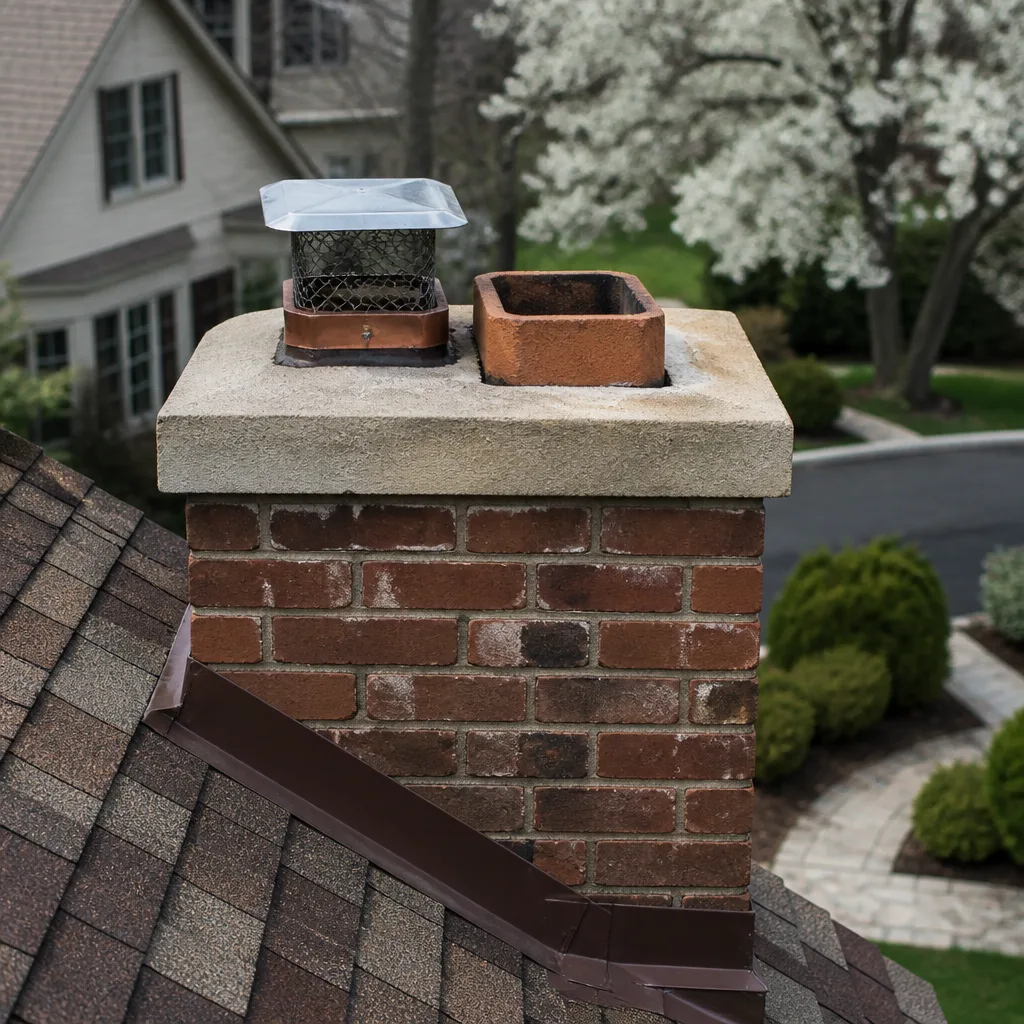 Sweep & inspection
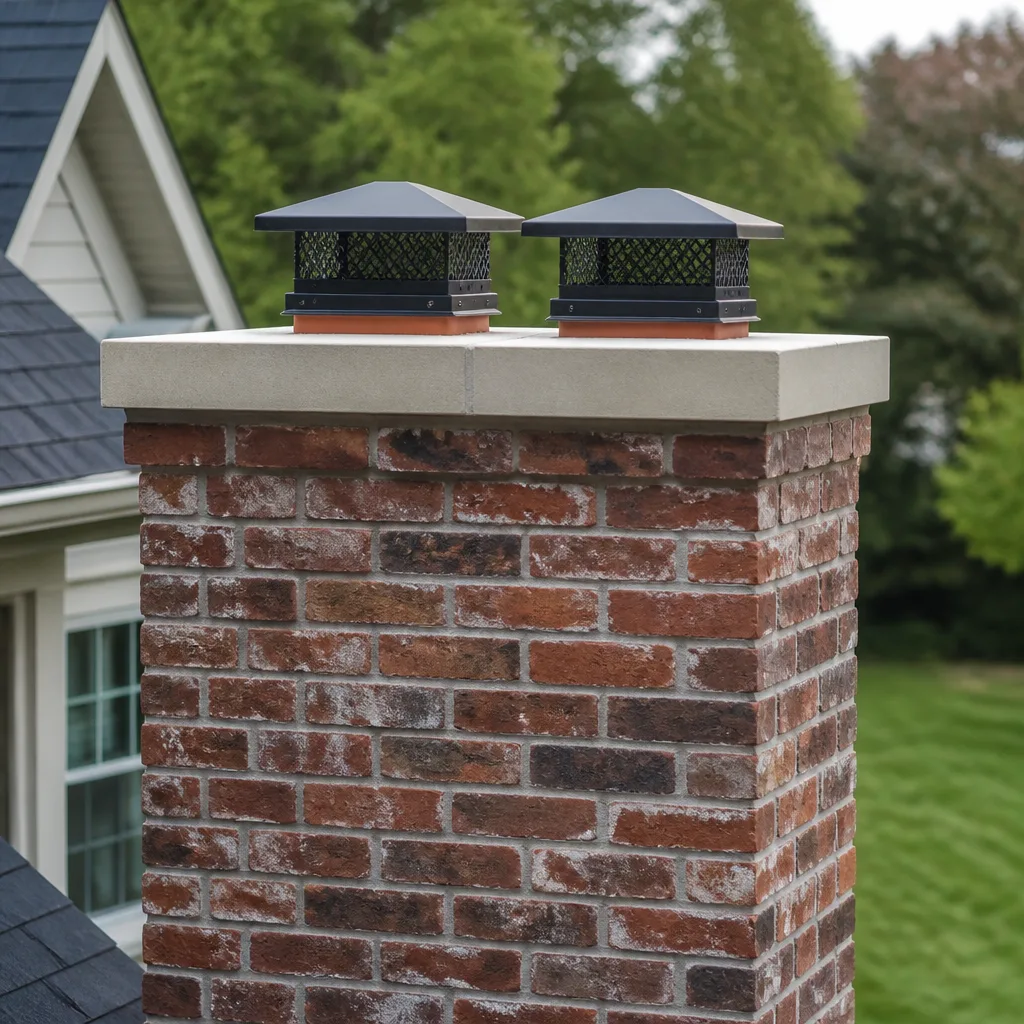 Caps & crowns
 Flue relining
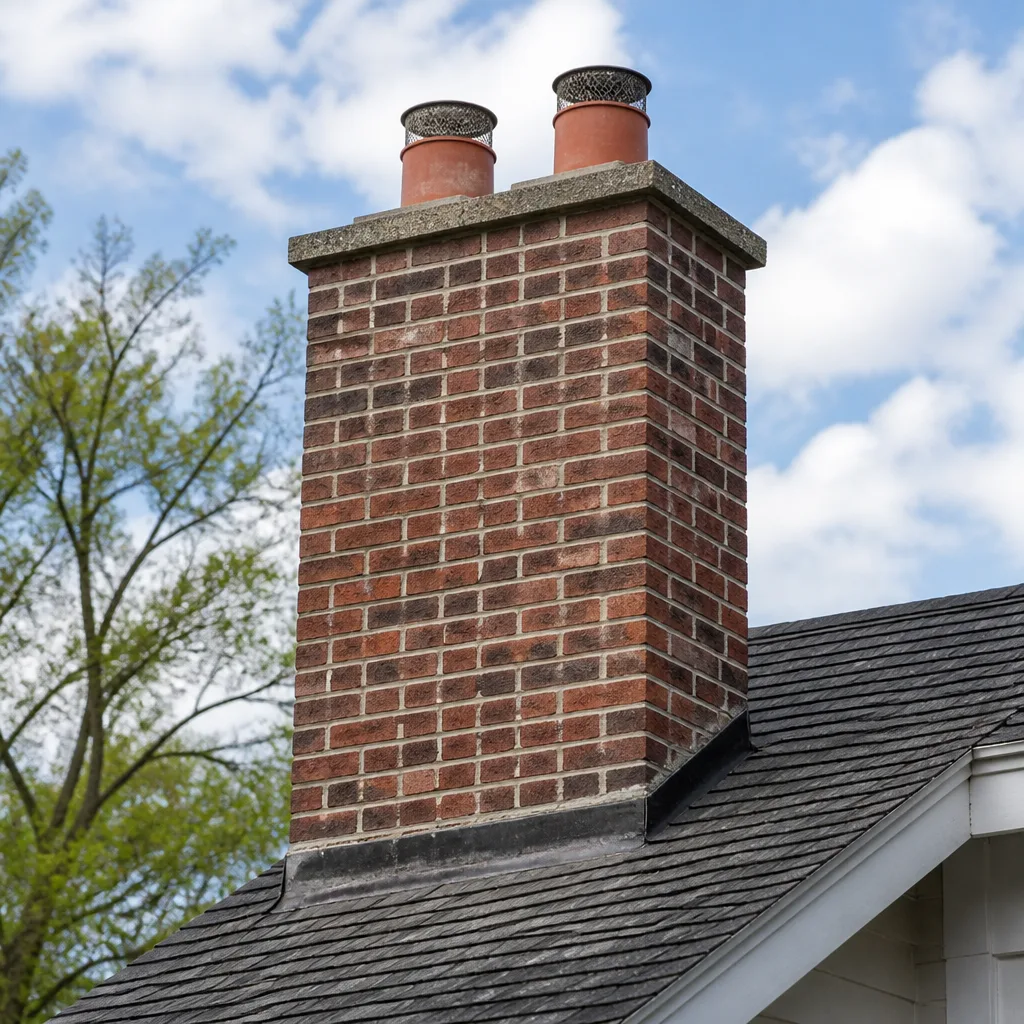 Masonry repair
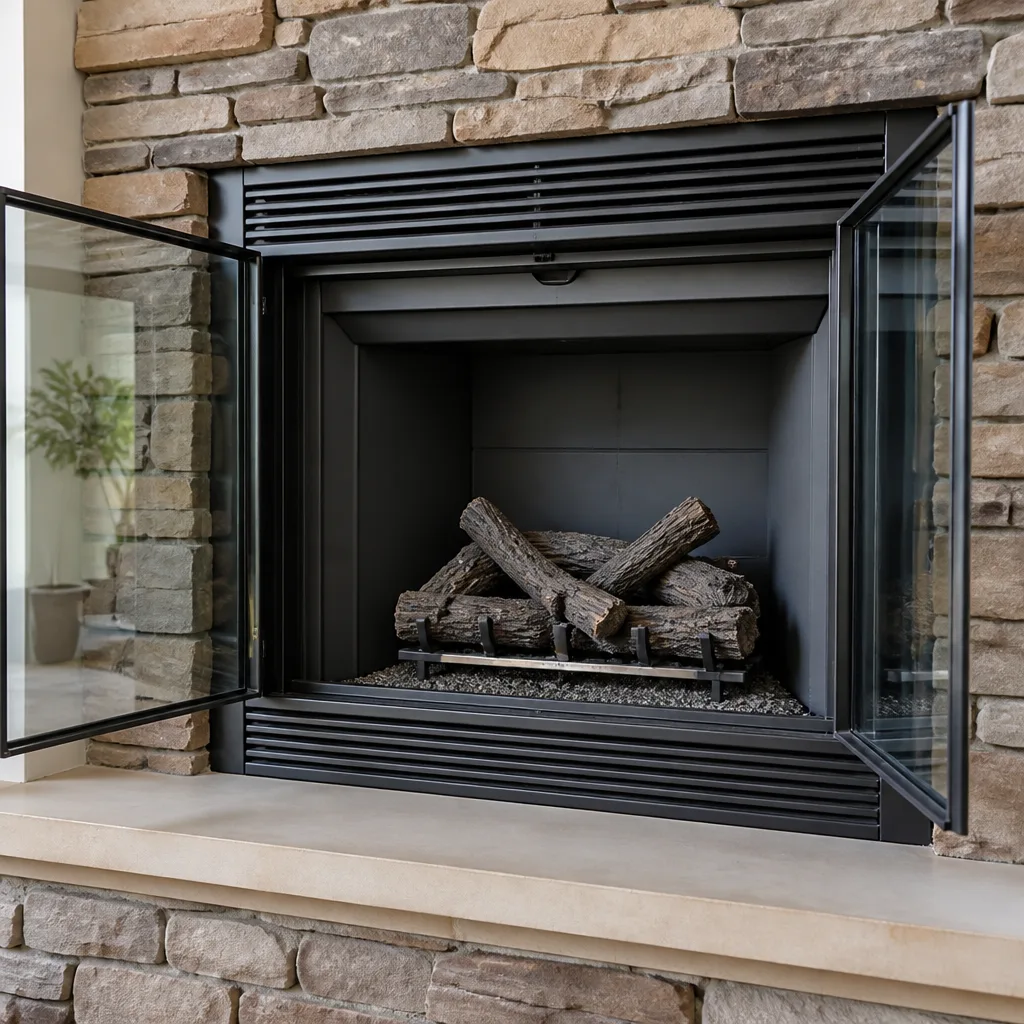 Gas fireplace service
Level 1 sweep and inspection to the NFPA 211 annual standard - flue, crown, cap, and flashing checked and photographed
Chimney sweep logs do not sweep chimneys. They loosen some creosote - which then falls where a brush and vacuum still have to collect it.
Seasonal Chimney Cleaning Care for Fort Worth: Year-Round Homeowner’s Guide
In Fort Worth, the chimney damage that causes most fall inspection failures didn’t happen during last winter’s fires. It happened in July, when 100-degree attic heat baked soft creosote deposits into the glass-hard Stage 3 form that standard brushes can’t remove. This guide maps the right care task to the right Fort Worth month, so nothing compounds quietly between fires. You’ll learn why October prep matters more than January maintenance, what hail season does to your chimney crown, and how a simple photo log can tell you whether your chimney is stable or slowly failing.
Quick Answer
Seasonal chimney care in Fort Worth means matching specific maintenance tasks to specific months: a Level 2 inspection in spring after hail season, a cleaning window from late August through October before first burn, and light maintenance checks through winter. Most Fort Worth homes with regular fireplace use need one professional sweep per year, timed for early fall when summer heat has hardened creosote and a clean flue matters most for safety and efficiency.
Styles & brands we work with
Table of Contents
- Why Fort Worth’s Climate Wears Chimneys Differently
- The Fort Worth Month-by-Month Chimney Calendar
- Spring Hail Season: The Crown and Cap Check
- Summer Heat: What 100-Degree Days Do to Creosote
- Fall Prep: The Cleaning, Inspection, and Damper Sequence
- The Off-Season: Draft Prevention and Critter Control
- How to Track Your Chimney’s Health with a Photo Log
- Common Mistakes to Avoid
- When to Call a Professional
- Frequently Asked Questions
Why Fort Worth’s Climate Wears Chimneys Differently
Fort Worth sits in a climate boundary zone. We get Gulf humidity pushing up from the south, dry plains air rolling in from the west, and temperature swings of 40 degrees or more within a single week during spring and fall. That combination does specific things to masonry and metal that homeowners in Houston or Amarillo don’t face the same way.
The spring pattern is the hardest on mortar. March through May brings rain, sometimes heavy, followed by days of sun and wind that pull moisture back out fast. Brick and mortar absorb water during the wet spells, then dry rapidly at the surface while the interior stays damp. That uneven drying creates micro-stress in the mortar joints. Over several seasons, the joints begin to spall: the surface crumbles away in thin layers, leaving pockets where more water can collect. A chimney crown that looked intact in February can show hairline cracking by June, and those cracks widen with every freeze-thaw cycle the following winter.
Summer in Fort Worth flips the problem. Instead of moisture cycling, we get sustained oven heat. Attic temperatures above a working fireplace can exceed 140 degrees on a 100-degree day. The flue liner and surrounding masonry absorb that heat for hours. If creosote remains from the previous burning season, that heat bakes it. What was once a sticky, tar-like Stage 1 or flaky Stage 2 deposit transforms into a dense, hardened glaze. Standard chimney brushes struggle with glazed creosote. Removal often requires chemical treatments or rotary cleaning heads, which is one reason fall is the most consequential cleaning window in Fort Worth. Waiting until November means contending with creosote that July and August already hardened.
Hail is the third local factor. Fort Worth sits in hail alley, with peak activity from April through June. Chimney caps take direct hits. A pitted or dented cap doesn’t just look bad. It changes the draft pattern at the flue exit, and any perforation becomes an entry point for rain and wildlife. We’ve inspected caps in Arlington Heights and Wedgwood after spring storms that looked fine from the ground but had holes the size of a quarter when viewed up close. Squirrels and chimney swifts find those openings quickly.
Understanding these three forces: moisture cycling, summer heat baking, and hail impact, is the whole basis for a seasonal care plan. The goal isn’t more work. It’s doing the right work at the right time so the chimney doesn’t accumulate damage that costs more to fix later.
The Fort Worth Month-by-Month Chimney Calendar
Here’s the care rhythm we recommend for Fort Worth homeowners. It accounts for hail season, peak heat, first-burn preparation, and the idle months when most people forget the chimney exists.
January through February: Light Use and Observation
This is peak burning season, but it’s also the season of least maintenance. Your job during these two months is observation. Watch for changes in how the fire behaves. Smoke drifting into the room instead of up the flue is a sign of draft obstruction or a cold flue. A burning smell that lingers after the fire is out can indicate creosote buildup or a damper that isn’t sealing properly. Check for visible soot falling back into the firebox. Note any water stains on the ceiling near the chimney or on the hearth itself. Write these observations down, even if they seem minor. They’ll be reference points for your inspection later in the year.
March: Post-Season Assessment
The burning season is winding down. Before you close the damper for the last time, do a visual sweep of the firebox. Look for excessive ash accumulation against the firebrick walls, which can hold moisture against the brick. Check the damper plate for rust or stiffness. If the damper was hard to operate all winter, note that now. March is also when you should schedule a Level 1 or Level 2 inspection if you noticed any of the January-February warning signs. A Chimney Inspection in Fort Worth in late winter or early spring catches issues before hail season adds new variables.
April through June: Hail Season Vigilance
After any significant hail event, walk the perimeter of your home and look up at the chimney. You’re checking for obvious cap damage, dislodged flashing, or cracked crown material visible from the ground. Don’t climb onto the roof; a ground-level visual check plus photos you can zoom into is enough for a preliminary assessment. If you see anything questionable, call for a professional inspection. Waiting until fall to discover hail damage means the chimney spends four more months exposed to additional rain and wildlife entry.
July through August: The Dormant Heat Period
Most Fort Worth homeowners don’t think about their chimney in July, and that’s partially correct. No active maintenance happens during these months. But this is when the damage from past burns is compounding. The heat is drying and hardening creosote, as we described earlier. The main task in this window is passive: keep the damper closed to prevent air-conditioned air from escaping, and check periodically that no animals have taken up residence. If you hear scratching sounds from the chimney during these months, address it before fall. Squirrels raise their young in summer, and eviction is more complicated once a nest is established.
September: Book Your Fall Service
Late August through September is when you schedule the professional sweep and inspection. Booking in September gives you a wide choice of appointment windows before the October rush. Every chimney company in Fort Worth gets slammed in the last two weeks of October and first two weeks of November. Booking in September also means if the inspection finds something that needs repair, such as a cracked flue tile or damper issue, you have time to address it before first burn instead of staring at a fireplace you can’t use during the first cold snap.
October: Sweep, Inspect, Prepare for First Burn
October is the pivotal month. The sequence matters as much as the timing. Cleaning comes first, then inspection, then damper service. If you inspect first, the creosote hides what’s underneath it. If you lube the damper before cleaning, the cleaning debris gums up fresh lubricant. The right order: sweep the flue, run the camera inspection, clean the firebox and smoke chamber, then lubricate and test the damper. We’ll go deeper on this sequence later in the guide.
November through December: Peak Season Mindfulness
During peak burning months, keep a lighter hand on observation but stay consistent. Check the damper opens fully before each fire. Use seasoned hardwoods only; green wood creates more creosote in a single season than a full cord of properly dried oak or pecan. Keep an eye on smoke behavior and any new odors. If you notice a change from October’s clean baseline, investigate early. Small issues in November are still repairable quickly; the same issues in January are a larger problem with fewer appointment windows available.
Spring Hail Season: The Crown and Cap Check
Hail is the single most common cause of sudden, unexpected chimney damage in Fort Worth. The city averages multiple hail events per year, and the period from April through June is the most active. Your chimney cap and crown are the two components that take the brunt of it.
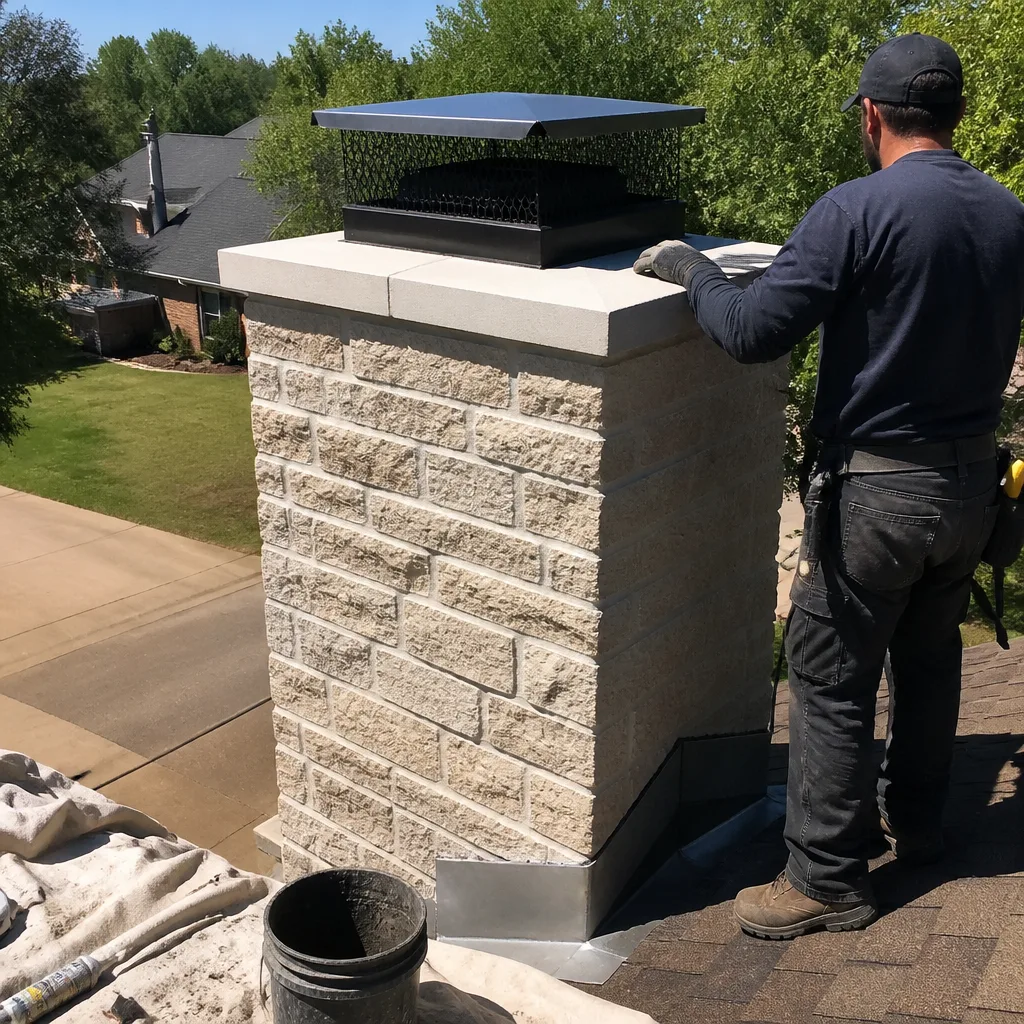
The chimney crown is the concrete or mortar slab that caps the masonry at the top of the chimney, sealing the area around the flue liner. A good crown has a slight slope away from the flue so water runs off. Hail impacts cause micro-fractures in the crown surface. One hailstorm won’t typically destroy a crown, but the cumulative effect of several seasons of impacts is a crown that’s crisscrossed with fine cracks. Those cracks expand during freeze-thaw cycles. Eventually, water penetrates the crown, migrates down into the masonry, and begins freezing and thawing inside the brick itself. That’s when spalling starts, and the repair cost moves from a few hundred dollars for crown sealing to thousands for masonry reconstruction.
The chimney cap is simpler but no less important. Standard caps are made of galvanized steel, stainless steel, or copper. Galvanized caps withstand hail the least, denting and eventually rusting at the impact points. Stainless caps hold up better but can still dent. Copper caps dent too, but the dents don’t typically compromise the cap’s function as long as the mesh screening remains intact. What does compromise function is any opening created or enlarged by hail. Squirrels need a hole smaller than a quarter. Raccoons can squeeze through surprisingly small gaps. Chimney swifts, which are protected under the Migratory Bird Treaty Act, will enter any flue opening that lacks a proper cap and mesh.
Here’s the practical sequence after a Fort Worth hailstorm:
- Wait for the storm to pass completely and for conditions to be safe outside.
- From ground level, take photos of the chimney from at least two angles. Zoom in on the cap and crown.
- Compare the photos to your baseline photos if you keep a photo log, which we cover later in this guide.
- Look for obvious changes: a tilted cap, visible dents, debris hanging from the chimney, loose flashing.
- If anything looks different from baseline, call for a professional inspection. This is not a do-it-yourself roof situation. Chimney crowns sit on steep roofs, and working at that height without proper equipment and training is genuinely dangerous.
The payoff for this vigilance is straightforward. A cracked crown caught in May is a crown seal job. The same crown left until November is a water-damage repair that may involve relining the flue. In our experience across Tarrant County, spring crown checks prevent more expensive fall repairs than any other single habit.
Summer Heat: What 100-Degree Days Do to Creosote
Creosote is the byproduct of incomplete combustion. When wood burns, it releases gases and particles that condense on the cooler surfaces of the flue as a tar-like substance. Fresh creosote is sticky and relatively soft. That’s Stage 1. With additional exposure to heat and air, it dries into a flaky, granular form. That’s Stage 2, and it’s the form most standard chimney brushes remove effectively.
Stage 3 is glazed creosote. It forms when existing creosote is subjected to sustained high heat, which drives off the remaining volatile compounds and leaves behind a dense, shiny, carbon-hard residue. In Fort Worth, the summer months create the conditions for Stage 3 formation even when the chimney isn’t in use. Attic temperatures above a firebox can reach 140-150 degrees on 100-degree days. The flue liner, especially a clay tile liner, absorbs and retains that heat. Any creosote from the previous burning season bakes for weeks at a time.
The practical consequence: a chimney that would have been a straightforward brush-and-vacuum cleaning in March may require rotary cleaning or chemical treatment by October. This is why the fall cleaning window matters so much, and why we recommend booking that service in September. The creosote has finished its summer transformation, and a properly equipped technician can address whatever stage it has reached.
There’s a safety element here that deserves plain language. Stage 3 creosote is the form most associated with chimney fires because it’s both a fuel source and a restriction on airflow. The accumulation narrows the flue passage, which increases the temperature of the exhaust gases, which increases the likelihood of ignition. We’re not saying every chimney with summer-baked creosote will have a chimney fire. The vast majority won’t. But the risk profile changes as the creosote stage advances, and removing it before the burning season is simply the responsible thing to do for a home where children sleep.
What can a homeowner do between March and October to limit summer creosote hardening? The single most effective step is removing the creosote before the heat bakes it. That means a spring cleaning if you burned heavily through the winter, or committing to a fall cleaning before first burn if you burned lightly. The second step is burning only seasoned hardwood during the winter months. Green wood produces more creosote, which means more material available to harden over the summer. Seasoned oak, pecan, and mesquite, properly split and stacked for at least six months, produce less creosote per fire and burn hotter, which also helps keep the flue cleaner during the burning season itself.
Fall Prep: The Cleaning, Inspection, and Damper Sequence
Fall preparation in Fort Worth has a right order, and the order matters more than most homeowners realize. Here’s the sequence we use on every pre-season visit, and the reasoning behind each step:
Step 1: Sweep the Flue First
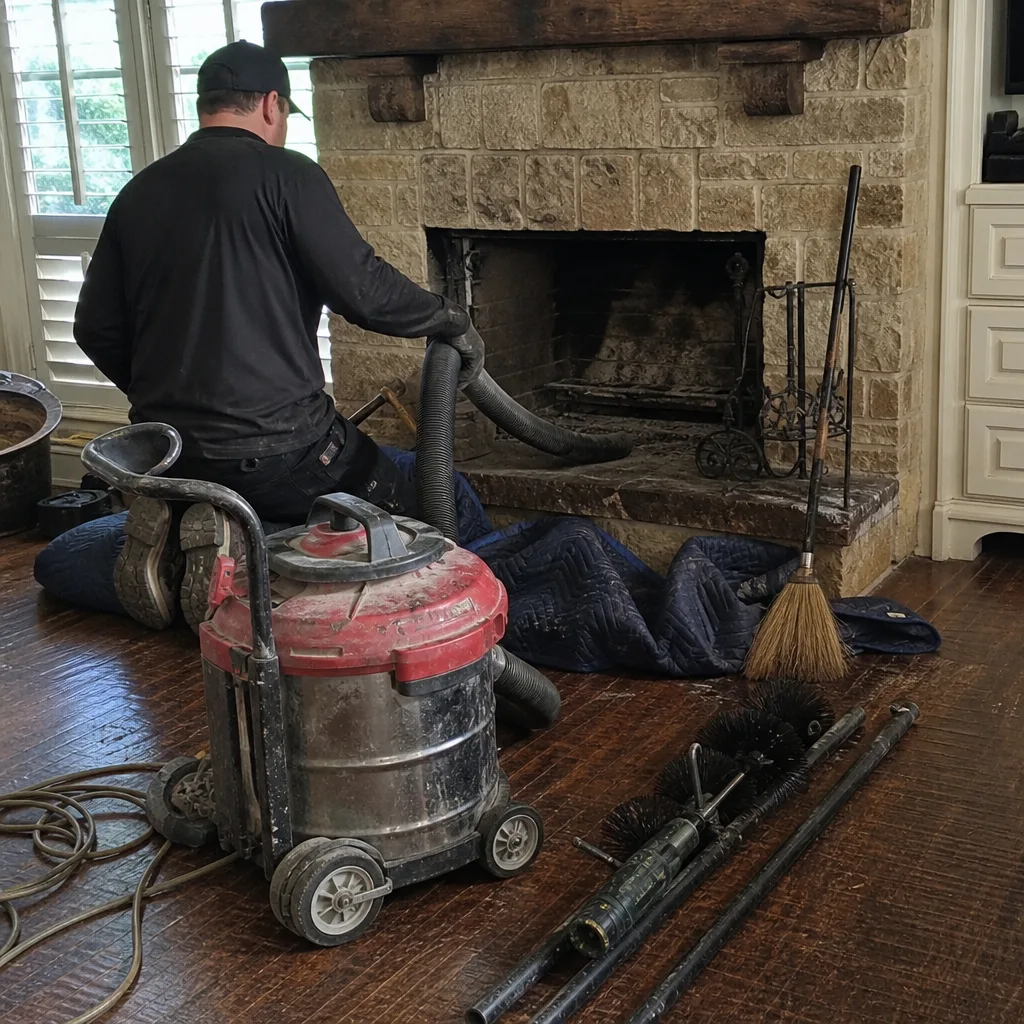
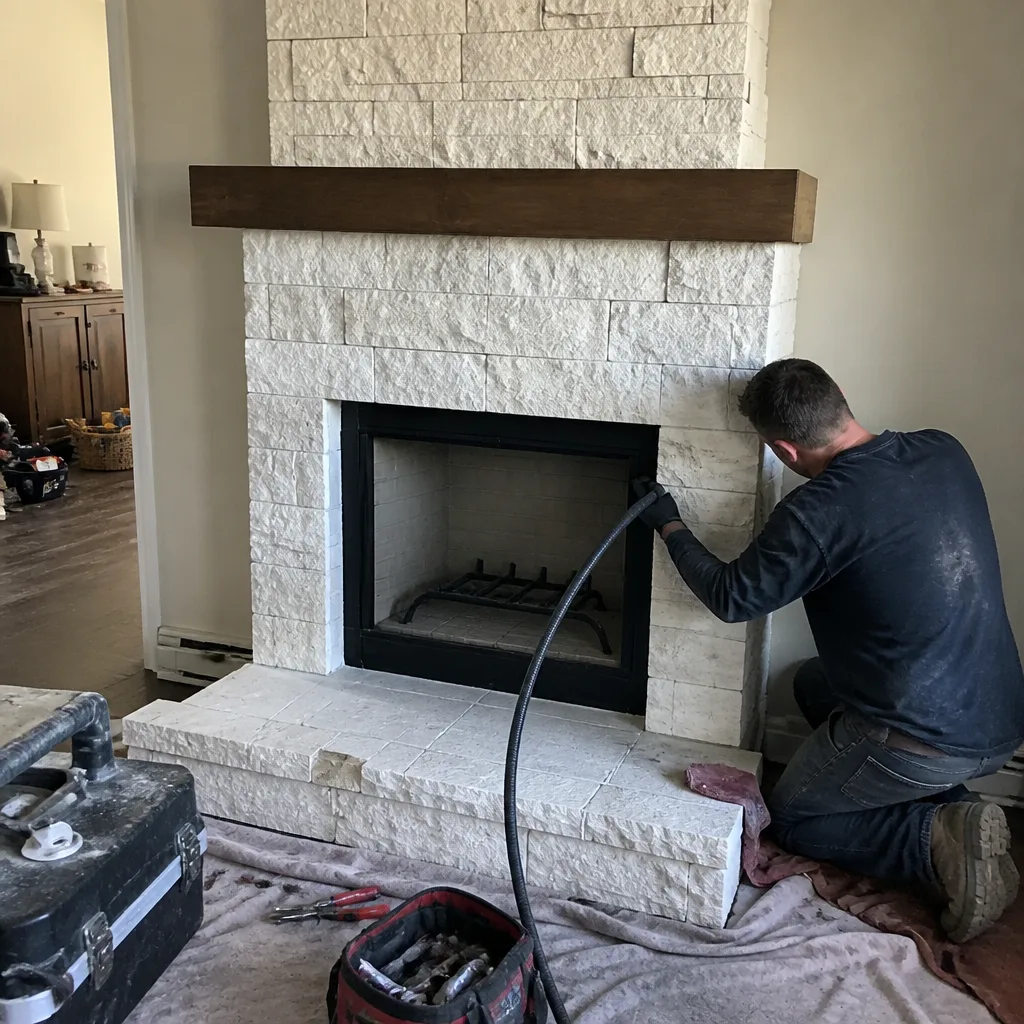
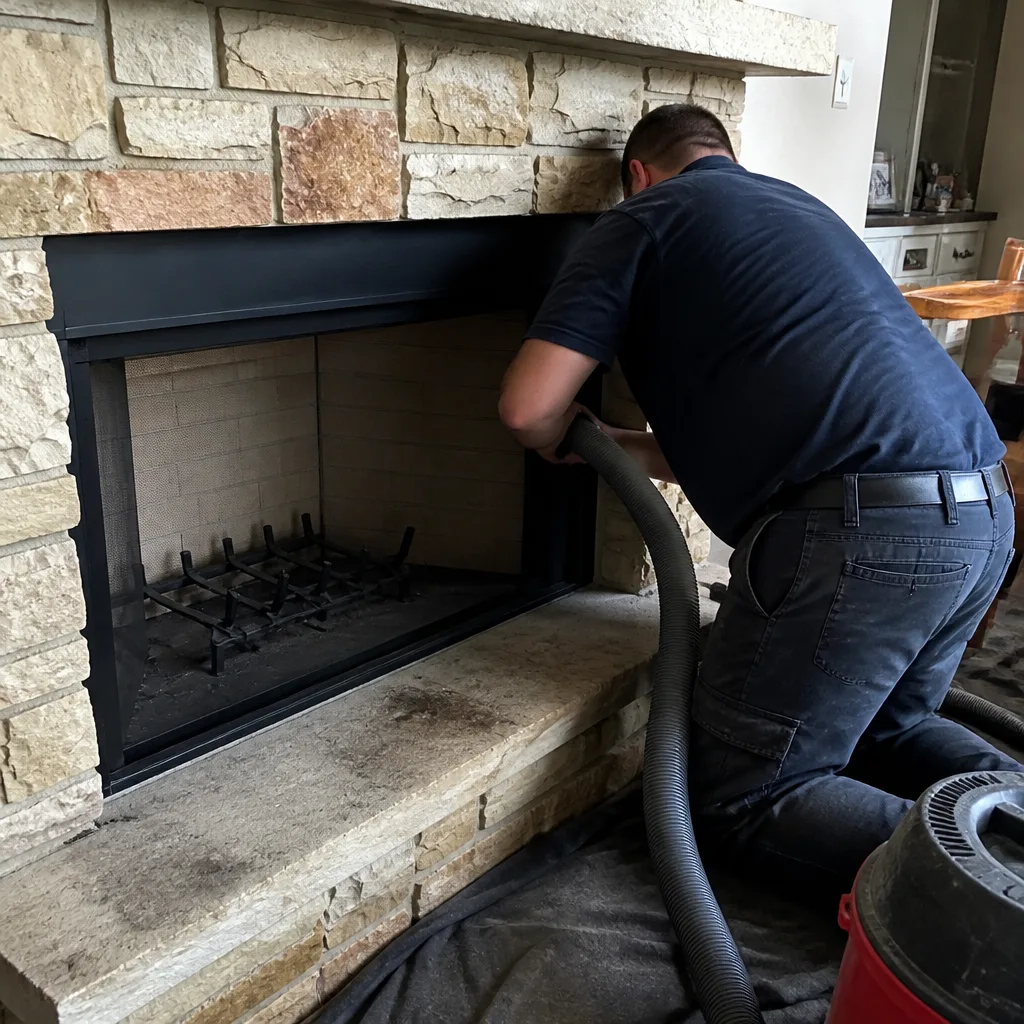
Cleaning comes before inspection because creosote hides things. A flue lined with even a moderate Stage 2 accumulation conceals cracks, gaps, and missing mortar joints underneath. A thorough sweep removes the deposits and exposes the actual surface of the liner. Only after the flue is clean can you see what condition the liner is actually in. We use professional-grade equipment appropriate to the creosote stage, including rotary heads for hardened deposits, and pairs this with a HEPA-filtered vacuum system that keeps dust out of the living space. Drop cloths go down around the hearth, and the ash vac creates negative pressure at the firebox opening so particles don’t drift into the room.
Step 2: Run the Camera Inspection
Once the flue is clean, a camera inspection documents the condition of the liner, the smoke chamber, and the damper assembly. This is the step where issues like cracked flue tiles, separated mortar joints, and hidden smoke chamber gaps become visible. The camera footage gives you something to see for yourself. Nothing gets recommended without visual evidence you can review right there on the screen. Our Chimney Inspection in Fort Worth page goes into detail on what Level 1 and Level 2 inspections cover.
Step 3: Clean the Smoke Chamber and Firebox
The smoke chamber sits above the damper and below the flue. It’s the transition zone where smoke compresses and accelerates upward. Creosote accumulates here, particularly in the corners and on the smoke shelf. Many chimney sweeps skip full smoke chamber cleaning because it’s harder to access than the main flue, but leaving it untouched means leaving a fuel source directly above the damper. The firebox itself gets a full ash removal, firebrick inspection, and grate check. This is also when we look at the mortar joints in the firebox for spalling or gaps.
Step 4: Lubricate and Test the Damper
Damper service comes last for a practical reason: cleaning debris will gum up fresh lubricant. Once the flue and smoke chamber are clean, the damper gets its annual service. That means cleaning the damper plate and frame, applying a high-temperature lubricant to the hinge points and handle mechanism, and testing the full range of motion. A damper that doesn’t fully open creates smoke spillage into the living space. A damper that doesn’t fully close lets heated air escape up the chimney all winter. Both conditions are easy to fix at this stage and much more annoying to live with if skipped.
Step 5: Written Report and Recommendation
The final step is a written report of what was found, what was done, and what, if anything, needs attention. If the camera shows a cracked flue tile or a deteriorating mortar joint, you’ll see it and get a straight recommendation: what it costs to fix, what happens if you wait, and whether it’s safe to burn in the meantime. The goal is that you never leave an inspection uncertain about what the chimney actually needs.
For most Fort Worth homes, this full sequence takes one to two hours depending on chimney height and creosote condition. It’s the single most important thing you’ll do for your fireplace all year.
The Off-Season: Draft Prevention and Critter Control
Fort Worth’s warm season, roughly April through October, is when the chimney sits idle and when most homeowners stop thinking about it. But the off-season is exactly when three problems develop: air leakage, wildlife entry, and moisture intrusion. Each has a simple countermeasure.
Draft Prevention
An open damper in an unused chimney acts as a direct exhaust vent for your air conditioning. The stack effect pulls cooled air from the living space up the flue. A damper that leaks even when closed has the same effect on a smaller scale. The test is simple: stand near the fireplace on a hot day with the AC running. If you feel cool air moving toward the firebox, your damper is leaking. Fixes range from damper adjustment or replacement to installing a top-sealing damper that mounts at the flue opening and provides a better seal than the traditional cast-iron plate. Sealing an air leak isn’t just about comfort; it’s a measurable energy cost. The fix typically pays for itself in a season or two of reduced cooling load.
Critter Deterrence
Tarrant County wildlife does not respect chimney openings. Squirrels are the most common intruders, followed by raccoons and chimney swifts. Squirrels chew through standard mesh caps, especially aluminum ones. They enter through gaps as small as an inch and a half. Raccoons prefer larger openings and will damage caps to widen them. Chimney swifts don’t chew anything, but once they nest, you’re legally obligated to leave them alone until the young fledge, meaning weeks of birds in the chimney during the middle of service season.
The deterrence strategy has three parts: a properly sized cap, intact mesh, and an annual check. The cap should be stainless steel or copper for longevity, with mesh sized to exclude both squirrels and chimney swifts without restricting draft. The cap should cover the entire flue opening plus the crown area that surrounds it. The annual check happens in spring after hail season, which is when cap damage is most likely. If the cap took hail strikes, the mesh may have warped at the edges, creating gaps that didn’t exist before.
Moisture Management
The off-season is also when water damage establishes itself. Rain enters through crown cracks, flashing gaps, or cap openings, and sits in the masonry through the summer. The moisture supports mold growth in the chimney throat, accelerates mortar deterioration, and can rust metal components like the damper or liner. The spring crown check gets you ahead of this. If you find cracks, seal them before the summer rain pattern tapers off and the heat bakes moisture deeper into the brick.
How to Track Your Chimney’s Health with a Photo Log
A photo log is the simplest tool a Fort Worth homeowner has for monitoring chimney condition over multiple seasons. It doesn’t require climbing onto the roof or purchasing any equipment beyond a smartphone. The principle is simple: you can’t reliably remember what the chimney crown looked like 12 months ago, but a photograph can show you exactly.
Here’s how to set one up:
- Pick a reference date. Choose a specific week each year, such as the first full week of April after hail season, or the first week of October when you’re booking fall service. Use the same timeframe every year so conditions are roughly comparable.
- Take photos from fixed positions. Stand at the same two or three spots each time: one from the front yard facing the chimney, one from the side yard, and one from whatever angle gives you the clearest view of the cap. Zoom in on the cap, crown, flashing, and upper masonry. If you can shoot from a second-floor window, that angle is often better than ground level.
- Label the photos. Save them with the date and a brief note, such as “April 2025, north side, after spring hail season.” Store them in a dedicated album so you can scroll through year by year.
- Compare each new set to the previous set. Look for changes: new cracks in the crown, displaced cap, rust spots on flashing, missing mortar, shifted bricks. The comparison is the point. A crack that’s unchanged year over year is a different situation than a crack that’s grown.
- Bring the log to professional inspections. If you schedule a Chimney Inspection in Fort Worth, pull up your photo log and show the technician what the chimney looked like last year. It gives them a baseline that helps them judge whether current conditions represent an acute change or slow background wear.
The payoff: when a technician recommends a repair, you have documentary evidence of the progression that led to that recommendation. You’re not taking anyone’s word for it. You can see the change yourself.
Common Mistakes to Avoid
- Waiting until November to book fall service. Every chimney company in Fort Worth books out weeks in advance during the October-to-November rush. If you need a repair after the inspection, you may miss the first month of burning season entirely. Book in September.
- Skipping the spring crown check after hail. Hail damage to crowns and caps is progressive. A crack that’s sealable in April is a masonry repair by November. The spring check takes ten minutes and saves real money.
- Running the AC with a leaking damper all summer. The stack effect quietly works against your cooling system for months at a time. The felt cost shows up in July and August electric bills, not in the fireplace itself, so the connection gets missed.
- Ignoring animal noises because “they’ll leave on their own.” Squirrels and raccoons do not voluntarily vacate a safe nesting site. The longer they’re in place, the more damage they do to caps, mesh, and the flue interior. Address it immediately.
- Burning green wood to save money on firewood. Green wood produces more creosote, which means a thicker layer to harden over the summer and more expensive cleaning in the fall. Seasoned wood costs slightly more per cord but reduces the creosote load and burns more efficiently.
- Closing the damper on a fire that isn’t fully out. This sends carbon monoxide into the home rather than up the flue. The fire should be completely out, no visible embers, before the damper closes for the night.
- Treating the chimney as a set-and-forget component. The chimney is the only part of the house that contains fire by design. It deserves the same seasonal attention as the HVAC system or the roof. The photo log habit costs nothing and turns a reactive relationship into a monitored one.
When to Call a Professional
Some chimney conditions can be tracked, and some must be addressed. Call a professional when you see any of the following: smoke spilling into the room during a fire, a burning odor that persists after the fire is out, water staining on the ceiling near the chimney, loose or missing cap components, visible cracks in the crown, animals in the chimney, or a damper that won’t fully open or close. Each of these represents either a safety issue or an entry point for damage that compounds quickly. Attempting to address chimney components yourself, especially on a roof, involves height risk, proper equipment needs, and the potential to make the underlying problem worse. High-tension damper assemblies and flue liners are not DIY territory. Kindling Chimney Fort Worth offers free estimates in Fort Worth, and a live person answers calls 24 hours a day, seven days a week. Call (682) 382-9934 and we’ll walk you through what you’re seeing.
Frequently Asked Questions
Once per year for homes with regular fireplace use, typically more than 20 fires per season. The National Fire Protection Association’s standard for chimney and vent inspections uses a 3-2-1 rule for masonry fireplaces: annual inspection with cleaning as needed, but the practical reality in Fort Worth is that the inspection and the cleaning usually happen together because the camera can’t see through creosote. Call (682) 382-9934 and we’ll give you a straight answer based on how much you burn.
Most standard chimney sweeps in Fort Worth run between $180 and $300, depending on chimney height, creosote stage, and whether the smoke chamber is included. Hardened Stage 3 creosote that requires rotary cleaning costs more, typically $350 to $500. Our written price comes before any work begins, so you’ll know the exact number before the crew starts. Call (682) 382-9934 for a free estimate based on your specific chimney.
Not always. Some hairline cracking in clay tile liners is common in Fort Worth homes and doesn’t require immediate replacement. But cracks that create gaps wider than a dime, allow flue gases to reach the masonry, or show deterioration across multiple tiles do need attention. The deciding factor is what the camera shows. We won’t recommend liner work without camera evidence you can see for yourself, and we’ll tell you plainly when the liner can safely wait. If liner work is needed, we use materials from brands like DuraFlex and HeatShield that are built to last, not patched to hold.
The creosote layer thickens, and in Fort Worth specifically, the summer heat bakes that thicker layer into a harder form that’s more expensive to remove the following year. The flue passage narrows, which reduces draft efficiency and increases the temperature of exhaust gases against the liner. In the majority of cases, skipping one year means a heavier cleaning the next, not a catastrophic event. But the risk does increase, and the cost increases too. For homes with children, we recommend not rolling that particular set of dice. Call (682) 382-9934 if you’ve lost track of when the last cleaning happened.
Keep the damper closed and verify it’s actually sealing by feeling for air movement near the firebox on hot days. After spring hail storms, photograph the cap and crown from ground level and compare to your previous photos. Listen for animal activity. And if creosote remains from the winter burning season, consider a summer cleaning to remove it before the heat hardens it. A summer clean is not wasted effort; it’s the difference between a standard brush cleaning and a rotary job in the fall.
You can if the previous year’s cleaning was done and you burned lightly through the season, but we recommend against it if you’re uncertain about the flue’s condition. The risk is burning with an obstructed flue, which can direct smoke and carbon monoxide into the home. Fort Worth’s freeze events are intense but short. It’s safer to bundle up for the two or three cold days and schedule your cleaning than to risk a fire in a flue you can’t see into. If you’re unsure, call (682) 382-9934 and ask us to assess your situation over the phone.
The Bottom Line
Fort Worth’s climate treats chimneys in a specific way: hail damages caps and crowns in spring, humidity cycles stress mortar joints, and summer heat bakes creosote into hardened deposits that resist standard cleaning. The seasonal care plan that accounts for these forces looks like this: a spring post-hail check, a September booking for fall service, a full cleaning and inspection sequence in October, and light observation through the burning season. Add a simple annual photo log and you’ll have a documented record of your chimney’s condition that helps you make informed decisions about repairs. The alternative is a reactive pattern where fall surprises become expensive fixes. Kindling Chimney Fort Worth home services include Chimney Sweep in Fort Worth, Chimney Inspection in Fort Worth, and Fireplace Repair in Fort Worth, each backed by the 365-Day Done Right Promise and the Cedarwell Care Promise: written pricing before work begins, shoe covers and drop cloths on arrival, pet-safe products where there’s a choice, and a photo of the clean-up before we leave. Call (682) 382-9934 for a free estimate, and a live person will answer.
Written by Danny Cortes, Owner at Kindling Chimney Fort Worth, serving Fort Worth since 2003.
See the difference
 Before
 After
After Before
 After
After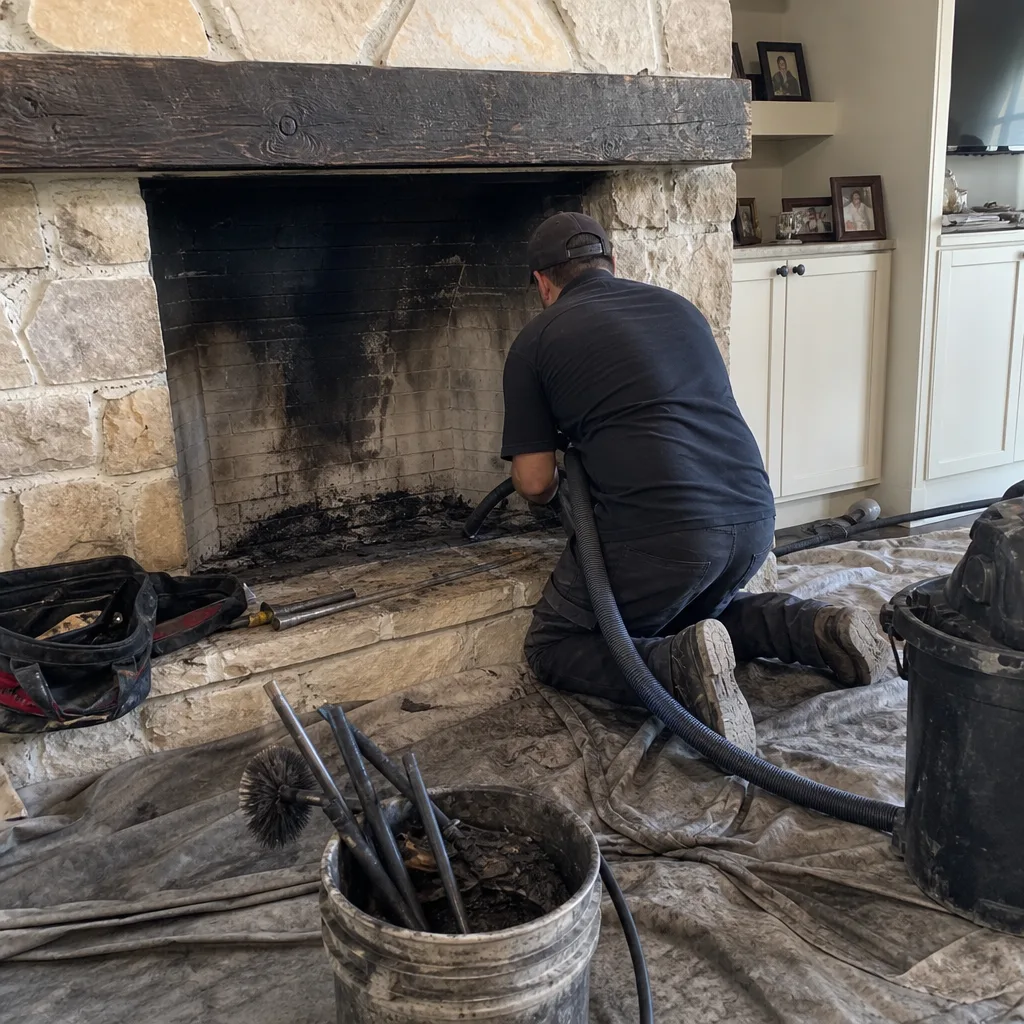 Before
 After
After