
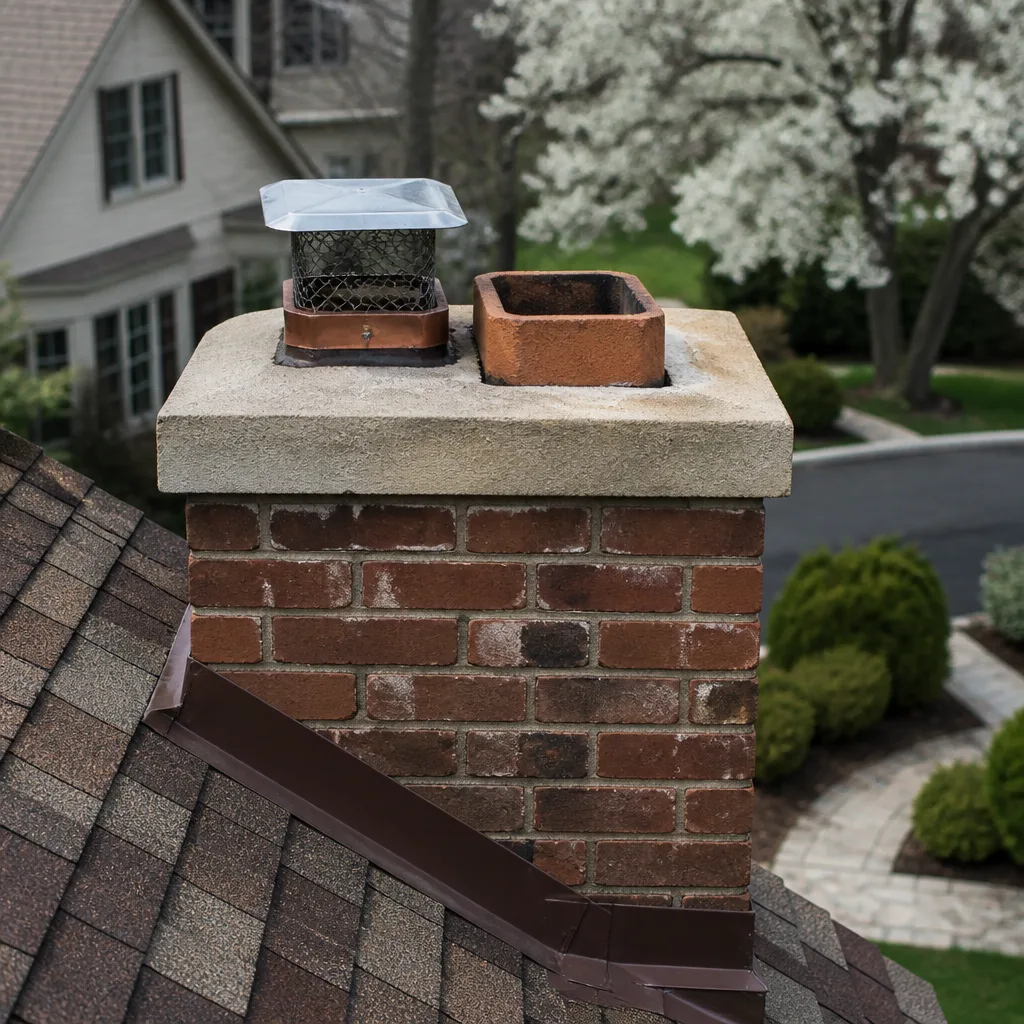
 Sweep & inspection
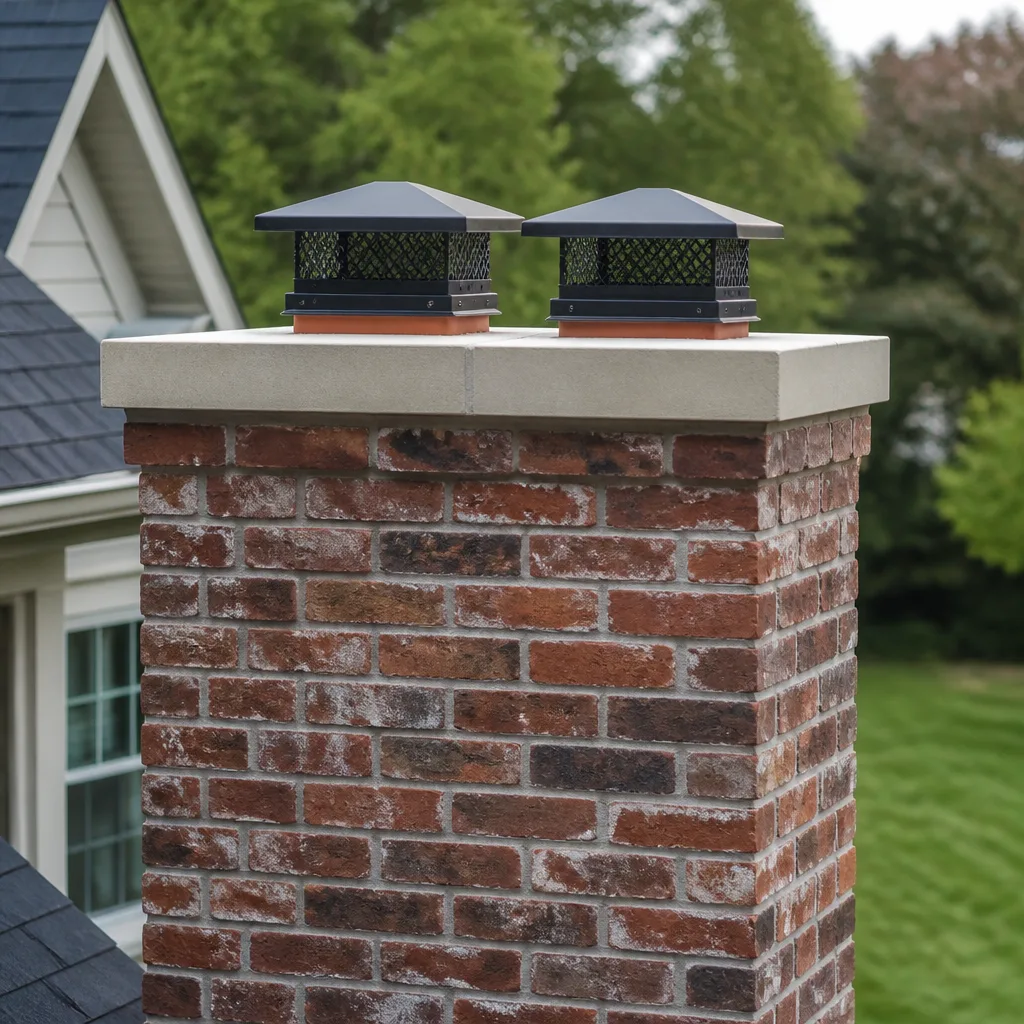 Caps & crowns
 Flue relining
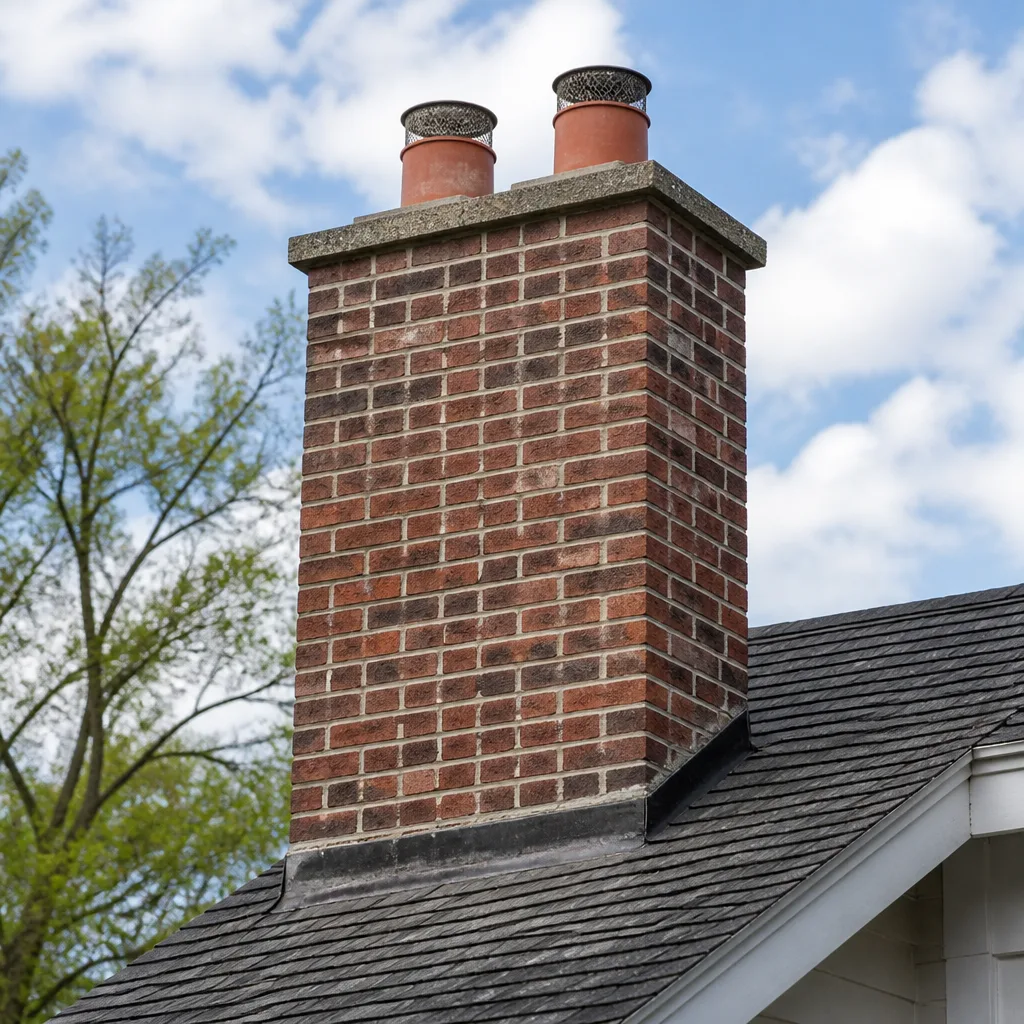 Masonry repair
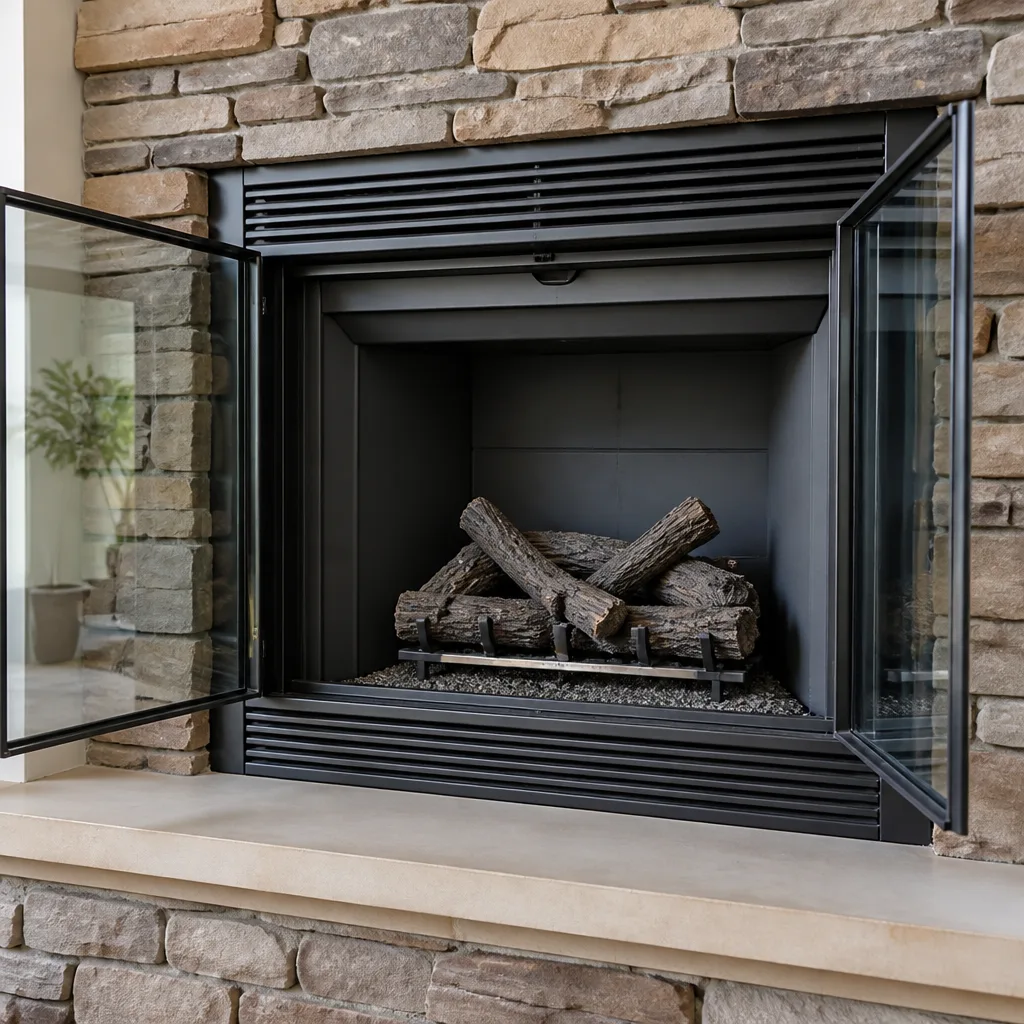 Gas fireplace service
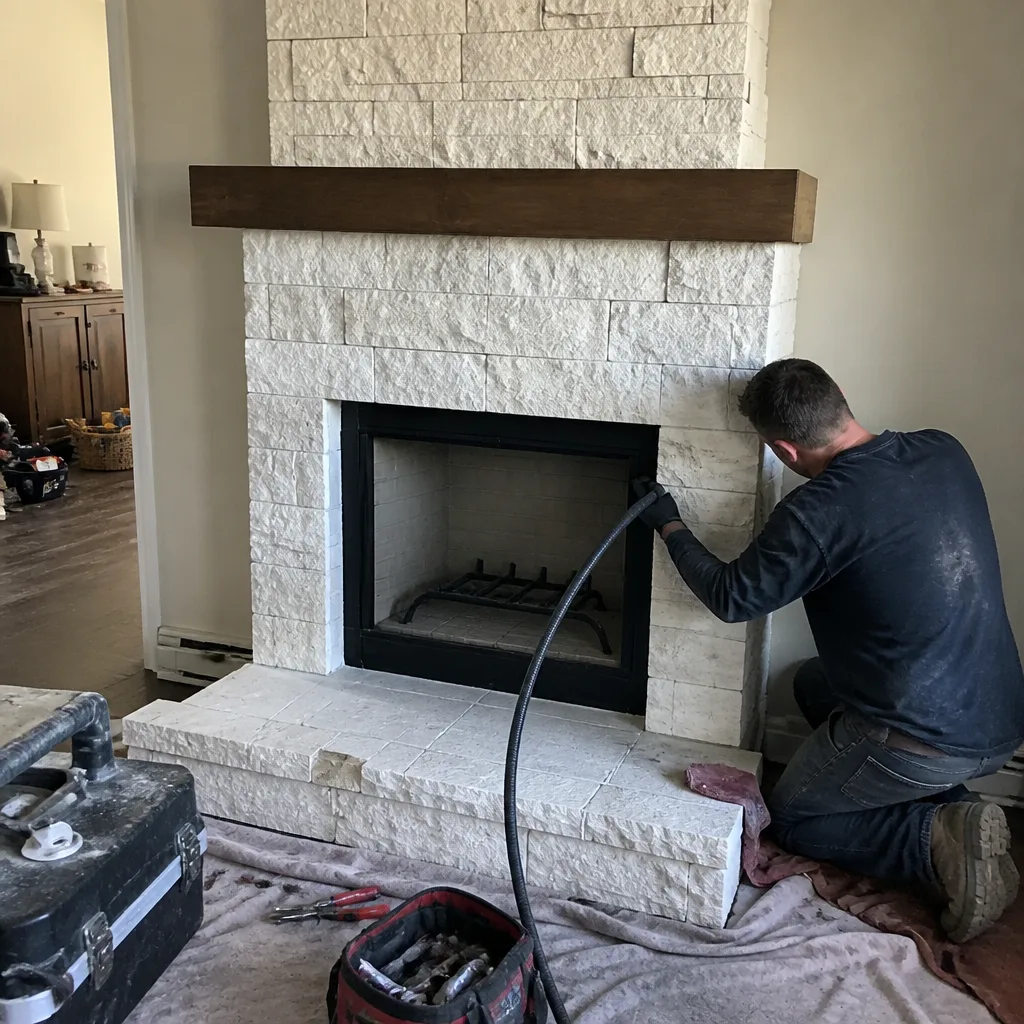
Level 1 sweep and inspection to the NFPA 211 annual standard - flue, crown, cap, and flashing checked and photographed
Chimney sweep logs do not sweep chimneys. They loosen some creosote - which then falls where a brush and vacuum still have to collect it.
Styles & brands we work with
See the difference
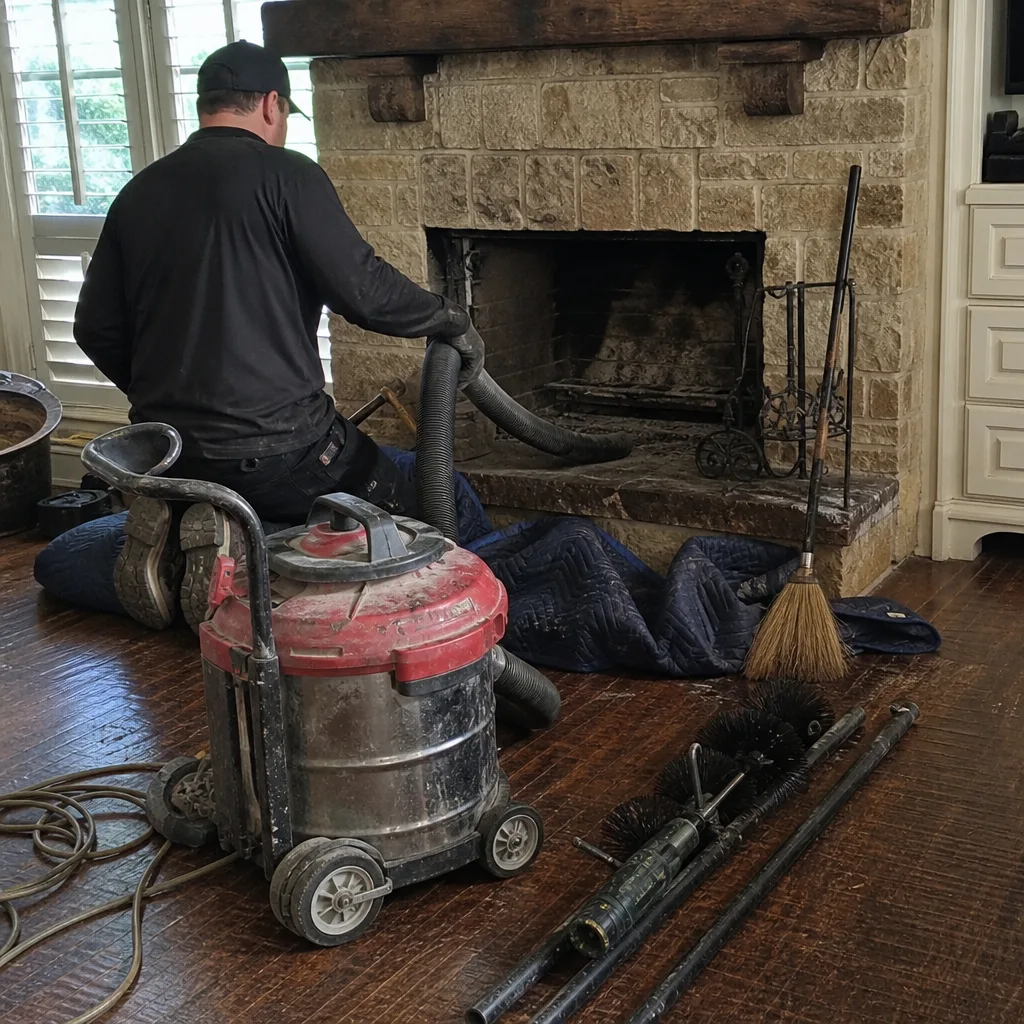 Before
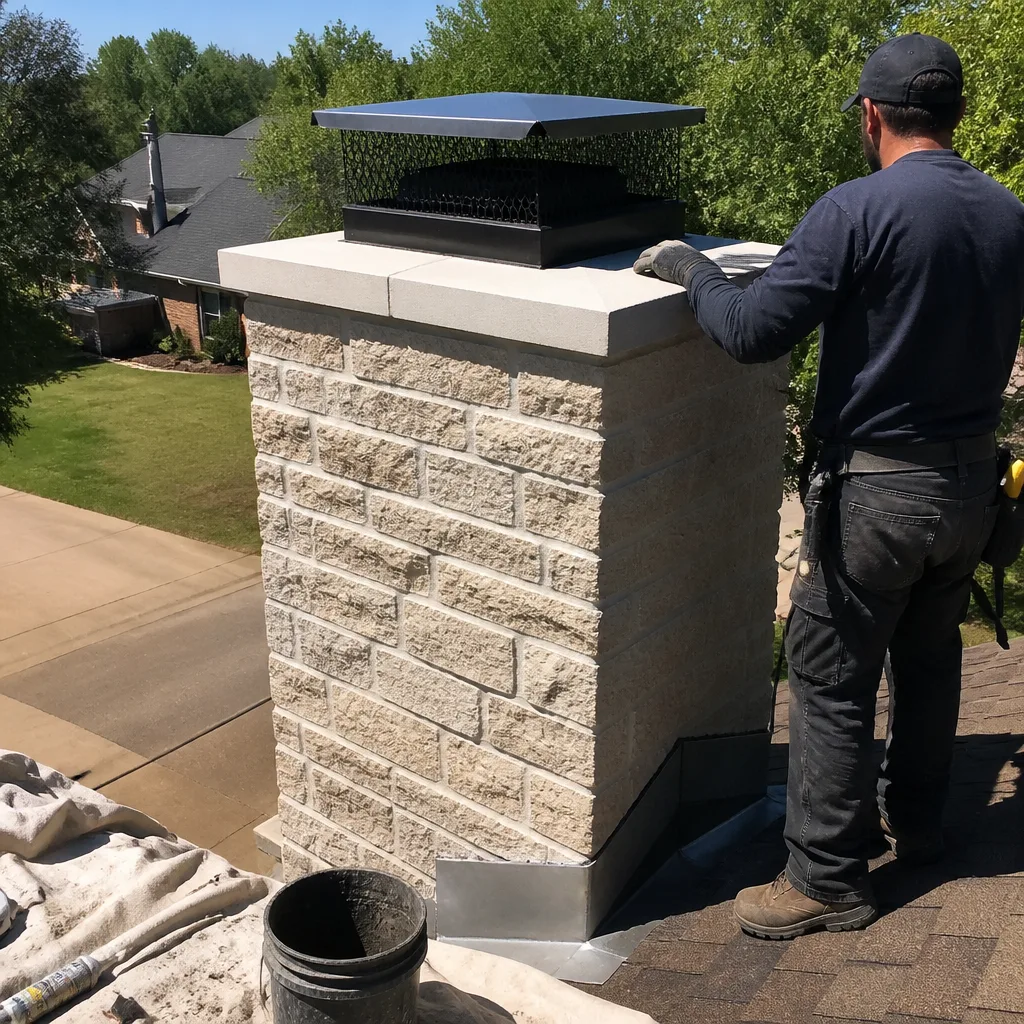 After
After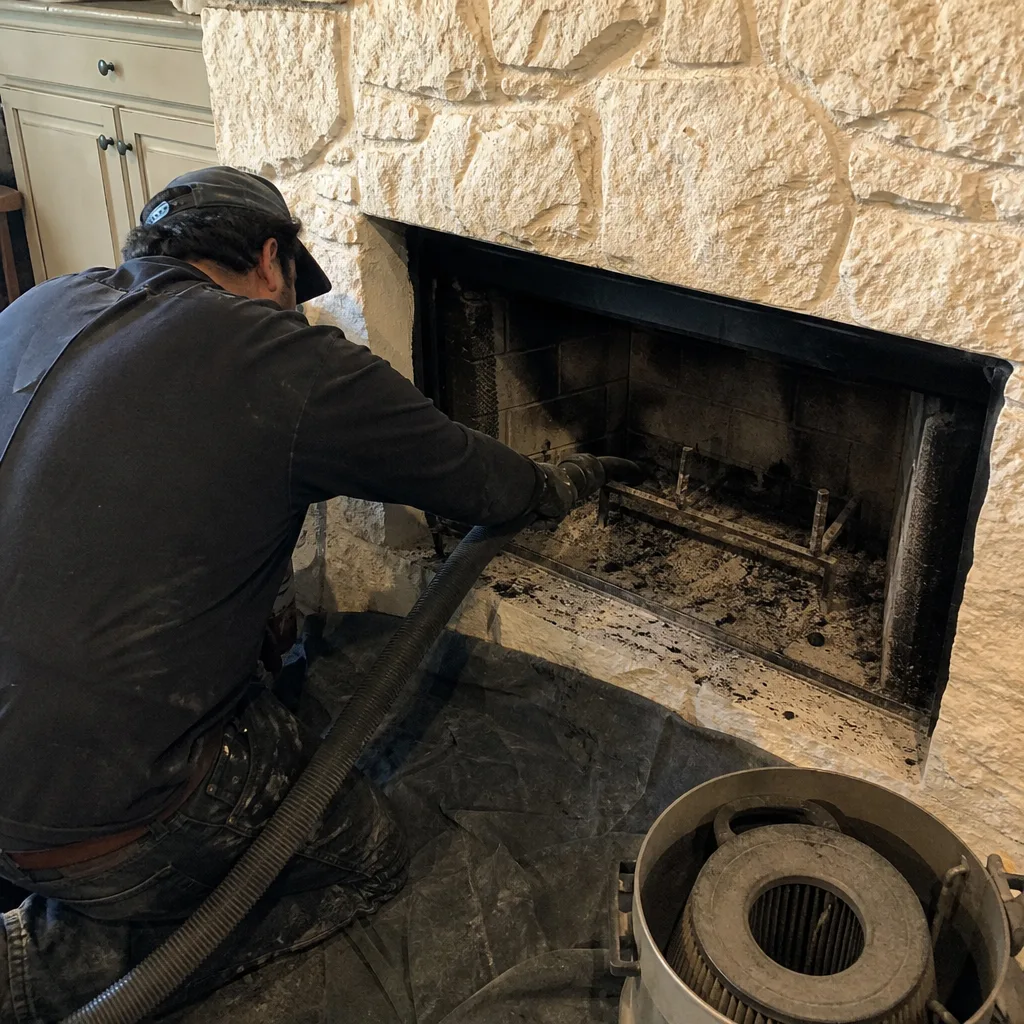 Before
 After
After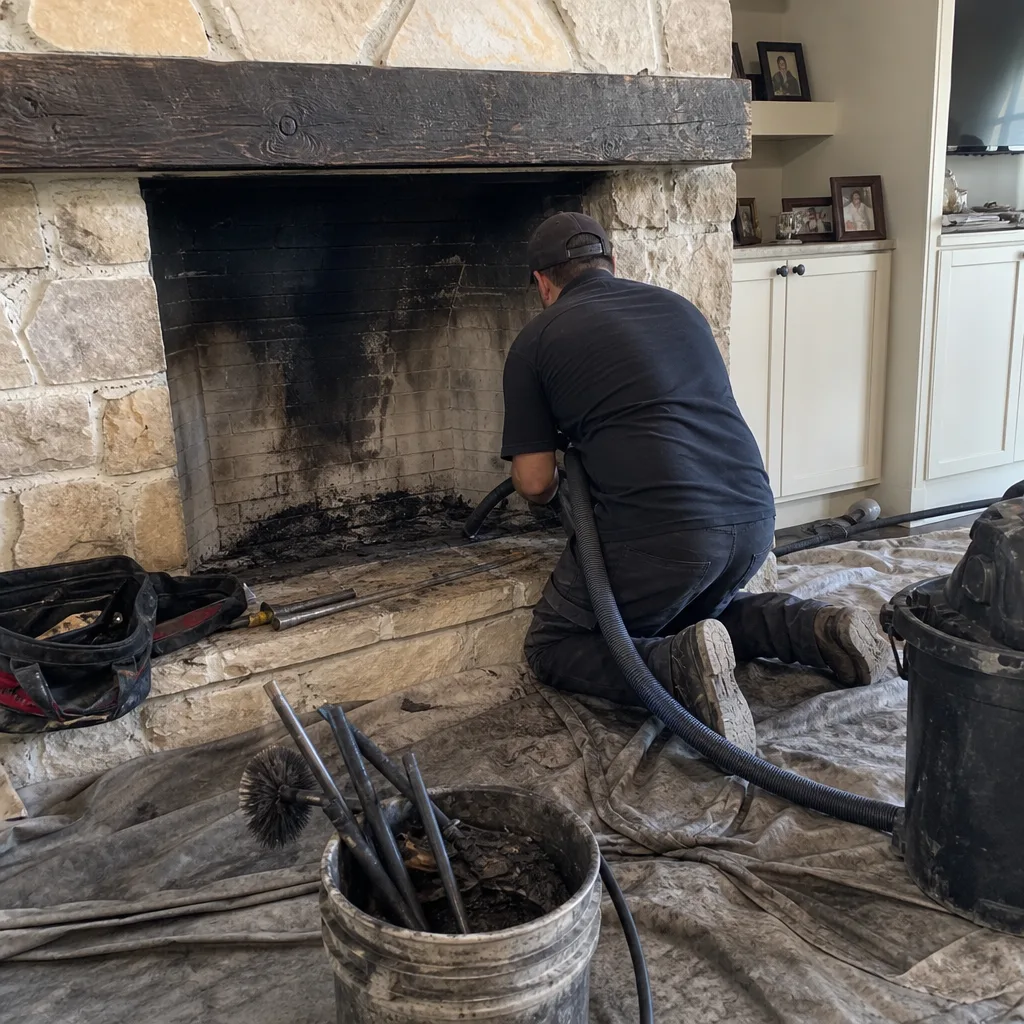 Before
 After
AfterCreosote Removal in Fort Worth, TX
Creosote removal in Fort Worth typically costs between $350 and $700 for a standard single-flue fireplace, with heavy or glazed buildup pushing that closer to $900 to $1,500. It’s the process of removing the tar-like residue that condenses inside your chimney every time you burn wood, and it matters because creosote is the single most common cause of chimney fires in Tarrant County homes. At Kindling Chimney Fort Worth, we do this work with a written price in your hand before any tool comes off the truck. Call us at (682) 382-9934 and you’ll get a person, not a recording.
This page covers what creosote is, how to know when it needs to come out, exactly how our crew handles it, and what you can expect to pay in Fort Worth. If you’re new to us, you might want to start with our main Chimney Cleaning & Sweep in Fort Worth page for a broader look at how we work. But if you know creosote is your issue, keep reading.
Key Takeaways
- Creosote removal in Fort Worth runs roughly $350 – $700 for standard buildup, $900 – $1,500 for Stage 3 glazed creosote.
- Creosote accumulates faster in homes that burn unseasoned wood, run fires low and slow, or have masonry chimneys that stay cold in winter.
- Kindling Chimney Fort Worth uses professional-grade products from Chimney Cleaning & Sweep manufacturers like HeatShield and Copperfield when creosote damage requires resurfacing, never as a cheap workaround.
- Every visit includes shoe covers, drop cloths, and a photo of the clean-up before we leave.
- The 365-Day Done Right Promise covers this job. If the creosote removal isn’t done right, we return and make it right at no charge.
What Creosote Actually Is (and Why Fort Worth Homes Get It)
Creosote is the byproduct of incomplete wood combustion. When smoke cools as it rises through your flue, it condenses on the interior walls as a black or brown deposit. That deposit has three stages: Stage 1 is a flaky, sooty film that brushes off easily. Stage 2 is a thicker, crusty layer that requires scraping. Stage 3 is glazed, hardened creosote, which looks like tar and can’t be removed by a standard wire brush alone.
In Fort Worth, our climate plays a specific role. Winters here are mild compared to the upper Midwest, but they’re inconsistent. One week it’s 65 degrees, the next it’s 28. That means fireplaces get used intermittently, and masonry chimneys spend most of their time cold. A cold chimney produces more condensation when you do light a fire, which means faster creosote collection in a shorter burn season. Homes in Arlington Heights, Wedgwood, and Ridglea Hills with older brick chimneys tend to see Stage 2 buildup after just one season of regular fires.
The other factor is what people burn. Live oak and post oak are common firewood choices around Fort Worth, and they’re excellent fuels if seasoned properly. But a lot of homeowners buy “seasoned” wood that was split six weeks ago. Wet wood smolders, produces less heat, and deposits creosote at a much faster rate. We see this pattern constantly in neighborhoods like Fairmount and Mistletoe Heights, where fireplaces are original to 1920s and 1930s homes and the chimneys still have clay tile liners that cool quickly.
When You Need Creosote Removal
Not every chimney needs creosote removal every year. Here are the signs that yours does:
- You see black, shiny, or flaky buildup on the damper or firebox walls. If it’s thicker than a credit card in spots, you likely have Stage 2 or Stage 3 creosote that a simple sweep won’t fully address.
- You smell a sharp, acrid odor coming from the fireplace, especially on humid days. Fort Worth summers are humid, and Creosote absorbs moisture from the air. That smell is your chimney telling you there’s a deposit inside.
- Your fire doesn’t draw as well as it used to. A narrowed flue from creosote accumulation reduces draft, which pushes more smoke into your living room and deposits even more creosote. It’s a cycle.
- You’ve burned unseasoned wood or a lot of pine. Pine is common in East Texas and easy to get, but it’s resinous and builds creosote faster than oak or hickory.
- It’s been more than two years since your last inspection. Even if your fireplace is used sparingly, creosote can accumulate slowly and unnoticed. In older Fort Worth homes with unlined or clay-lined chimneys, two years is a long time.
- You hear a crackling or popping sound inside the flue during or after a fire. That’s often small creosote deposits igniting. Not a full chimney fire, but a warning sign that the buildup is getting substantial.
If any of these sound familiar, call (682) 382-9934. We’ll schedule a visit and give you a written price before any work begins.
Our Creosote Removal Process
We follow the same careful, room-by-room routine on every creosote removal job. Here’s what happens when our crew arrives at your home in Fort Worth:
- We protect your floors and furniture first. Technicians put down drop cloths from the front door to the fireplace and wear shoe covers the entire time. We won’t move anything without asking, and we’ll tell you exactly where we’ll be working before we start.
- We inspect the chimney before touching anything. Our technician examines the firebox, damper, flue, and exterior chimney cap to determine what stage of creosote you’re dealing with and whether there’s any structural damage underneath. This matters because glazed creosote sometimes hides cracks in clay liners that a basic sweep would miss.
- We match the removal method to the creosote stage. Stage 1 comes off with standard chimney sweeping brushes. Stage 2 requires rotary loop tools and a more aggressive mechanical approach. Stage 3 glazed creosote needs chemical treatment with a product like Chimney Cleaning & Sweep-grade removers before mechanical cleaning, or in some cases we recommend a resurfacing product like HeatShield to repair the underlying liner damage that glazed creosote often reveals.
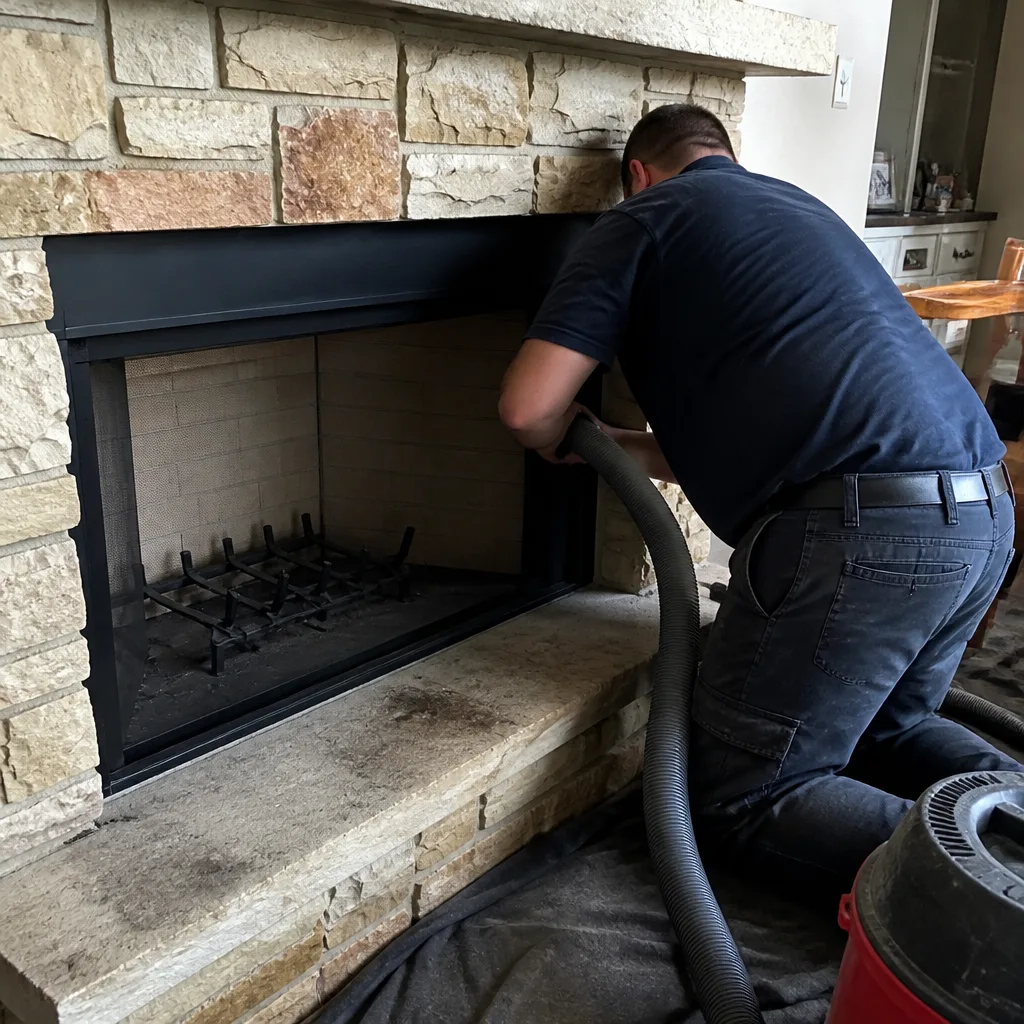
- We clean as we work, not after. Industrial vacuums run during the entire process to capture dust and creosote particles. We use containment methods that keep soot from entering your living space, which matters a lot if you have kids or pets at home during the visit.
- We show you what came out. After the flue is cleaned, the technician photographs the interior before and after, and photographs the clean-up area. You see what we see. No mystery, no vague assurances.
- We leave with a written report of what was done, what we found, and what we recommend next. That report is yours to keep, with the price finalized in writing, exactly as quoted before work started.
If we find damage during the creosote removal, you’ll know about it that day, with photos and a written estimate for any additional work. We will never start an unapproved repair.
Creosote Removal Pricing in Fort Worth
We don’t hide our pricing behind a “call for quote” wall, because you shouldn’t have to wonder what a job will cost before you pick up the phone. Here’s what creosote removal typically runs in Fort Worth:
| Service Tier | Typical Price Range | What’s Included |
|---|---|---|
| Standard creosote removal (Stage 1 – 2) | $350 – $700 | Mechanical brushing, full flue vacuuming, firebox clean-up, drop cloths, shoe covers, photo documentation, written report |
| Heavy creosote removal (Stage 2 – 3) | $700 – $1,100 | Rotary cleaning, chemical treatment, multiple passes, same clean-up and documentation |
| Glazed creosote removal with liner assessment | $900 – $1,500 | Chemical application, mechanical removal, liner inspection, written repair recommendation if needed |
| Creosote removal with HeatShield resurfacing | $1,500 – $3,500 | Full creosote removal plus ceramic liner resurfacing where Stage 3 creosote has compromised the flue |
Several factors move the price within those ranges. A two-story home in Mira Vista or Monticello with a tall chimney takes longer than a one-story ranch in Westcliff, simply because of ladder work and flue length. A fireplace that hasn’t been cleaned in five years costs more than one we serviced last season. If your chimney has multiple flues, that’s more square footage of surface area to clean. And if your creosote is Stage 3 and the liner is damaged, the price includes materials from brands like DuraFlex or HeatShield rather than just labor.
Every creosote removal estimate is free. We give you the number in writing before any work starts, and that number does not change unless we find something we didn’t know about and you approve it in writing first. Call (682) 382-9934 to schedule.
Why Creosote Removal Matters in Fort Worth Specifically
Fort Worth is a city of older homes. The neighborhoods around TCU, along White Settlement Road, and through the historic North Side are full of original masonry chimneys that have been burning wood since the Coolidge administration. Those chimneys were built well, but they weren’t built with modern liners. Many have deteriorated mortar joints between clay tiles, and creosote loves to collect in those gaps.
The other thing about Fort Worth is that our air is already working against chimneys. The humidity we get from spring through fall means creosote never fully dries out the way it does in a desert climate. It stays sticky, attracts more particulate, and builds layer on layer. A chimney that would be Stage 1 in Lubbock might be Stage 2 in Fort Worth after the same number of fires.
And of course, the occasional February freeze puts pressure on everyone’s fireplace. When the power goes out and a family in Ryan Place needs their fireplace for three straight days, that chimney earns its keep. But if the flue is half-clogged with creosote, the draft suffers, the glass doors smoke up, and the family ends up shivering with the damper cracked. Keeping creosote out isn’t just about appearance. It’s about the fireplace working when you actually need it.
Creosote Removal and Your Family’s Air Quality
When we talk to homeowners in Fort Worth about creosote, the fire danger is the headline. And it’s real: creosote is highly combustible, and a significant buildup is the primary fuel source for chimney fires. But there’s a quieter concern that matters just as much to the families we work with, and that’s indoor air quality.
Creosote isn’t inert. It off-gasses into the home, especially during humid months. That acrid smell you occasionally catch from the fireplace in August? That’s creosote releasing volatile compounds. For kids with asthma or allergies, and for pets that spend time near the hearth, that’s not a neutral odor. Tarrant County already has some of the worst air quality in Texas during summer ozone season. You don’t need your fireplace adding to the indoor load.
We use pet-safe products wherever there’s a choice in the creosote removal process. That means the chemical treatments we apply for Stage 3 glazed creosote are selected with an eye toward low-VOC options. We’ll tell you what we’re using before we apply it, and if you have specific sensitivities in the household, we’ll note that in our pre-work walkthrough.
The Kindling Approach: What You’ll Notice Different
We’re not the only chimney company in Fort Worth. We know that. Most of our customers in neighborhoods like Tanglewood, Bluebonnet Hills, and Overton Park have used other companies before they found us, and they tell us the same things: the crew left dust on the furniture, the price changed mid-job, or nobody showed up when they said they would.
Our approach is built around a simple idea. You should know exactly what will happen, what it will cost, and what you’ll get for it, and then that’s what should happen. No surprises. That’s why every creosote removal job includes:
- A written price before work starts. Not a verbal estimate. A written one, in your hand, before we open the tool bag.
- The Cedarwell Care Promise. Shoe covers and drop cloths go down on arrival. Nothing is moved without asking. A photo of the clean-up is taken before the crew leaves. If we don’t follow it, the 365-Day Done Right Promise applies.
- Background-checked, uniformed technicians. The person in your home is there because we trust them, and we want you to trust them too. They follow our C.A.R.E. values: Courtesy, Accountability, Respect, and Excellence.
- A live person on the phone, day or night. Call at 2 p.m. or 2 a.m., a person picks up. Danny and the team have never hidden behind a voicemail tree, and we don’t plan to start.
One more thing worth naming plainly: we use professional-grade materials when creosote damage requires repair. If your glazed creosote has damaged the flue liner, we don’t slap a patch on it. We recommend products like Chimney Cleaning & Sweep industry standards such as HeatShield or Gelco ceramic resurfacing systems, or a DuraFlex stainless liner where the original clay liner has failed. Those are the same brands used by fireplace manufacturers and masonry repair pros across the country. Using them means the repair is built to last, not patched to hold until the next sweep.
FAQs – Creosote Removal
How much does creosote removal cost in Fort Worth?
Creosote removal in Fort Worth typically costs between $350 and $700 for standard buildup, and between $900 and $1,500 for heavy, glazed (Stage 3) creosote that requires chemical treatment. Your exact price depends on flue height, how much creosote is present, and whether any liner damage needs addressing. Estimates are free, and we give you the number in writing before work begins. Call (682) 382-9934 to get yours.
Can you remove creosote the same day in Fort Worth?
In most cases, yes. Standard Stage 1 and Stage 2 creosote removal is completed in a single visit, usually two to three hours. Stage 3 glazed creosote often requires chemical treatment that needs time to work before mechanical removal, which may mean a second visit a few days later. We’ll tell you upfront which situation you’re in, and you’ll know before we leave whether the job will finish that day.
Is creosote removal dangerous to do yourself?
Yes, and we strongly recommend against it. The actual scraping is straightforward, but the danger is what you can’t see: standing on a roof without proper safety gear, dropping creosote debris into a living space, and failing to catch liner damage that only a camera inspection reveals. Creosote dust is also an eye and respiratory irritant, and Stage 3 creosote requires chemical treatments that are not available at retail and should be handled by a trained professional. If you’re tempted to DIY it, call us first and we’ll give you an honest recommendation, even if that’s “you can probably wait another season.”
How often should Fort Worth homeowners have creosote removed?
Most Fort Worth homeowners who use their fireplace regularly need creosote removal every one to two years. If you burn seasoned oak and have a modern stainless liner, you might extend that to two or three years. If you burn pine or unseasoned wood, or if you have an older clay-tile chimney, you’re likely on an annual schedule. The only way to know for sure is a camera inspection, which is part of every Chimney Cleaning & Sweep in Fort Worth visit.
What’s the difference between a chimney sweep and creosote removal?
A standard chimney sweep removes Stage 1 and light Stage 2 creosote with brushes and vacuuming. Creosote removal is the more involved process of addressing heavier Stage 2 and Stage 3 buildup with rotary tools, chemical treatments, and sometimes liner resurfacing. If your chimney has only a light coating from last season, a sweep may be all you need. If you have tar-like deposits, that’s creosote removal, and that’s a different job with different tools and a different price. We’ll tell you which you need before any work starts, not after.
Ready to Schedule Creosote Removal?
One phone call gets you a real person, a free estimate, and a technician who will protect your floors, show you the proof, and give you a written price before any work begins. Danny Cortes and the Kindling Chimney Fort Worth team serve all of Fort Worth, from the Near Southside to Saginaw to Benbrook. Call (682) 382-9934 any time. We answer.
Written by Danny Cortes, Owner at Kindling Chimney Fort Worth, serving Fort Worth.